




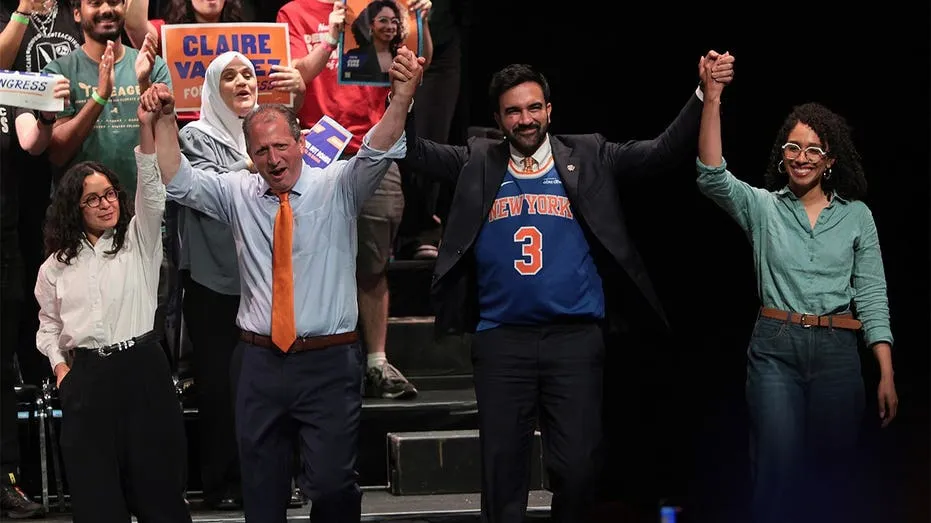
The rise of Democratic socialist candidates is reshaping the political landscape, moving the movement from the fringes into mainstream contention within the Democratic Party. Recent primary victories, particularly in New York and Colorado, highlight a growing influence that is prompting both internal party debate and external Republican criticism.
Shifting Political Tides
Once considered a radical element, Democratic socialists are now achieving notable successes in primary elections, signaling a significant shift in the party’s ideological spectrum. Candidates like Darializa Avila Chevalier and Claire Valdez in New York, and Melat Kiros in Colorado, have either won their primaries or are poised for strong general election performances. This trend suggests that the policy platforms associated with democratic socialism are resonating with a broader segment of the electorate.
At a union rally in New York City, Darializa Avila Chevalier articulated a vision of solidarity, stating, “You deserve to make sure that your international comrades are actually working with you and getting the benefits that you that you all deserve.” Similarly, Colorado’s Melat Kiros, who unseated a long-serving incumbent, emphasized the importance of collective action and shared goals, noting, “Now you have comrades.” Hartzell Gray, a congressional candidate in Missouri, also invoked the term “comrades” during a podcast interview, reflecting its increasing use within these political circles.
The sentiment of solidarity was echoed by New York House nominee Claire Valdez, who declared, “You have the solidarity of the entire labor movement. And you have my solidarity, too.” These statements underscore a focus on community and mutual support that characterizes the messaging of many progressive candidates.
Internal Party Dynamics
The growing presence of Democratic socialists has led to nuanced reactions from established party leaders. House Minority Leader Hakeem Jeffries acknowledged the victories of progressive candidates like Avila Chevalier and Valdez, even if he did not formally endorse them. Jeffries stated his commitment to supporting all Democratic incumbents, while addressing questions about controversial past statements made by some progressive nominees.
When pressed about Avila Chevalier’s past social media posts, which included praise for communism and advocacy for Marxist literature in libraries, Jeffries offered a measured response. “Should she apologize or clarify some of these very inflammatory tweets that she sent?” he was asked. “That’s a question you’re going to have to ask her,” Jeffries replied. When further questioned about whether such statements posed a problem for the party leadership, he reiterated, “I’ve spoken to this issue. I’ve expressed my position as it relates to many of the things that she has said in the past over Twitter. my statement speaks for itself.”
The victory of Melat Kiros over 29-year House veteran Diana DeGette in Colorado demonstrated that the appeal of the Democratic socialist message extends beyond urban centers. Kiros outlined a platform that includes key progressive priorities: “What we are fighting for is Medicare for all. Universal child care. Abolishing ICE. And ending the genocide in Gaza.”
Policy and Popularity
The policy proposals championed by Democratic socialists are finding traction across the nation. Representative Pramila Jayapal, Chair of the Congressional Progressive Caucus, noted the widespread popularity of these ideas. “They’re winning on platforms like Medicare for all. Universal health care. Universal childcare. Raising the minimum wage,” Jayapal observed. “These ideas, whether you call it socialism or not, they are very popular across the country.”
Progressive influencer Hasan Piker believes these electoral successes are indicative of a broader trend. “Progressive politics. Left populism. It can work in every district in every state. That’s why I kept saying over and over again, it’s coming to a city near you,” Piker predicted, suggesting that similar victories could occur nationwide.
Dissent Within the Ranks
However, not all Democrats are embracing this leftward shift. Senator John Fetterman of Pennsylvania has voiced concerns, questioning whether the party will continue to support what he perceives as extreme positions. Representative Greg Landsman, a moderate Democrat from a swing district in Ohio, also expressed reservations, stating that his constituents desire “really normal folks” who can “get things done.”
Landsman criticized the attention-grabbing nature of some progressive rhetoric, suggesting it alienates moderate voters. “I hope the party doesn’t go in that direction. Having a diversity of opinions is one thing. But some of what some of them think is beyond the pale. It’s just outrageous,” he commented. Landsman also expressed a desire for party leaders to more vocally oppose controversial candidates.
From a Republican perspective, Representative Russell Fry of South Carolina suggested that the party’s failure to disavow certain progressive nominees indicates a fear of alienating its base. “The fact that they won’t even call it out, I think is an underlying current within the Democrat Party that they’re scared of their own base,” Fry stated.
The transition in New York’s 7th congressional district also illustrates internal party tensions. Retiring Representative Nydia Velazquez, who has served for 32 years, is not aligned with her likely successor, Claire Valdez. When asked about potential divisions within the party stemming from Valdez’s controversial stances, Velazquez initially pivoted to discuss a Supreme Court decision on citizenship. Upon further inquiry about her relationship with her prospective successor, Velazquez offered a diplomatic, if somewhat strained, response: “Look, she won and I wish her well. And I offered myself to sit down with her and discuss the transition. But this is how democracy works.”
Navigating Ideological Diversity
Other Democrats advocate for a broad, inclusive party structure. Representative Maxwell Frost of Florida believes there is ample space for diverse viewpoints. “There’s room for conversations about where we go. But we’re not the party of one person or coalition and there’s going to be those discussions about where we move forward,” Frost said.
Representative Debbie Dingell of Michigan acknowledged that wins by Democratic socialists can carry significant weight and that the media often focuses on potential party divisions. “I think that you all try to stir it up. Stir up this language. Try to pit people against each other,” Dingell remarked regarding media coverage. Addressing Avila Chevalier’s controversial statements, Dingell noted, “I don’t have to agree with everything that she said. The Republicans are putting kerosene on the fire.” When challenged on whether Avila Chevalier had initiated the controversy, Dingell responded, “Look, I wouldn’t have said some of the things that she said. But I don’t vote in New York. They do.”
Republican Response
The Republican Party has been vocal in its opposition to socialism. Representative Ralph Norman of South Carolina asserted, “They’re a complete socialist party now. They’ve got to either own it or disassociate themselves from it.” Some Republicans believe the Democratic Party’s leftward movement could inadvertently benefit the GOP by highlighting ideological divides and potentially alienating moderate voters, thereby aiding their efforts to retain control of the House of Representatives.
The rhetoric employed by some Democratic socialist candidates has drawn comparisons to the Soviet Union from conservative critics. This framing suggests that the Democratic Party’s embrace of progressive policies is seen by opponents as a radical departure from traditional American values, potentially creating electoral opportunities for Republicans.
Conclusion
The increasing visibility and electoral success of Democratic socialist candidates represent a significant development within American politics. While these candidates champion policies popular with a segment of the electorate and advocate for strong social solidarity, their rise has also sparked debate within the Democratic Party and drawn sharp criticism from Republicans. The coming elections will likely test the extent to which this movement can translate its primary victories into broader electoral success and influence the future direction of the Democratic Party.


