




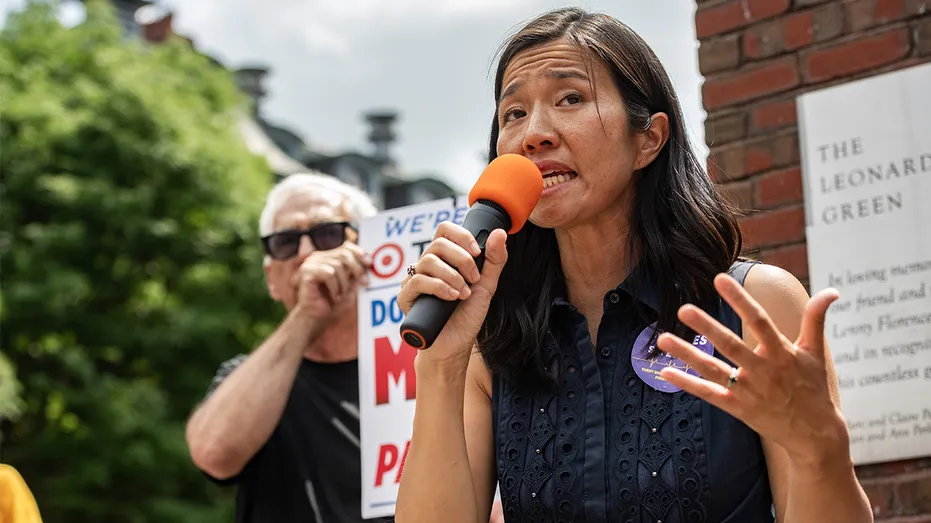
The Department of Homeland Security (DHS) has sharply criticized Boston Mayor Michelle Wu’s administration for what it describes as an “unhinged” campaign targeting private property owners who lease space to U.S. Immigration and Customs Enforcement (ICE). The federal agency accused the mayor of “hunting down” individuals and businesses, attempting to intimidate them into refusing services to ICE.
Mayor Wu’s Opposition to ICE Operations
The dispute escalated after Boston, a designated sanctuary city, banned ICE vehicles from using city-owned parking lots for staging operations. In response, ICE issued a public notice seeking to lease hundreds of parking spaces across the city for a five-year period. Mayor Wu, a vocal critic of former President Donald Trump’s immigration policies, responded by sending an open letter to property owners throughout Boston. In her communication, she revealed that the city had submitted a Freedom of Information Act (FOIA) request seeking information about any local responses to ICE’s solicitation.
The DHS took to social media platform X (formerly Twitter) to denounce Wu’s actions. “These actions by sanctuary Mayor Michelle Wu are unhinged,” the agency posted. “She knows she has NO authority to block us from using private property. So, she’s hunting down private property owners and threatening them for working with ICE — because she’d rather intimidate law-abiding Bostonians than get criminal illegal aliens OFF the street.”
ICE’s Parking Space Requirements
The “sources sought” notice issued by ICE last month indicated a need for “surge parking” in 14 cities nationwide. Specifically for Boston, ICE was looking for 249 contiguous parking spaces. In her official appeal to garage and lot owners, Mayor Wu urged them to “reject ICE staging facilities.” She argued that if ICE were to secure such resources, it would represent an “unprovoked and unwarranted escalation” that could pose “significant risks to public safety and halting economic activity across our entire region.” Wu highlighted her previous executive orders, which prohibit ICE from staging operations on municipal property and parking lots, and implored property owners to join this effort, framing it as a rejection of an “attack on the people of Boston.”
City’s FOIA Request and DHS Response
Coinciding with her appeal to property owners, Mayor Wu’s office submitted a FOIA request to ICE. The request, reviewed by news outlets, sought “all submissions and/or responses to ICE Sources Sought Notice with Notice ID ‘DHS-ICE-SurgeParking.’” The DHS, in turn, responded to this FOIA request with further criticism, labeling Wu a “pro-criminal illegal alien politician” on X. The agency asserted that the FOIA request itself demonstrated Wu’s acknowledgment that she lacks the authority to prevent ICE from using private property.
“If private citizens want to allow federal law enforcement onto their own property, they should be allowed to do so—free of threats, intimidation and coercion from their radical left-wing mayor who shamelessly compared ICE agents to a neo-Nazi group,” the DHS stated. The agency also pointed out that Wu had previously compared ICE agents to a neo-Nazi group, an assertion that drew strong condemnation from DHS.
Broader Context and City Council Support
Mayor Wu’s FOIA request followed an “emergency resolution” adopted by the Boston City Council. This resolution urged the city to “explore all avenues to oppose” the proposed parking leases for ICE in downtown Boston. The council’s resolution expressed its opposition to an increased ICE presence in the city and called for the exploration of available options to prevent the parking leases from moving forward.
The need for surge parking identified by ICE extends beyond Boston. The agency’s notice revealed similar requests for significant numbers of parking spaces in metropolitan areas including Denver, Seattle, Philadelphia, Dallas, Phoenix, Pittsburgh, and several other cities across the country. This indicates a broader operational requirement for ICE parking facilities nationwide, not limited to cities with sanctuary policies.
DHS’s Stance on Federal Authority
The Department of Homeland Security maintains that federal law enforcement agencies have the right to utilize private property for operational needs, provided the property owners consent. The agency views Mayor Wu’s actions as an attempt to interfere with federal operations through intimidation and coercion, particularly targeting private citizens and businesses. The DHS has emphasized that it is within the rights of private property owners to enter into agreements with federal agencies, and that local officials should not obstruct such arrangements.
Mayor Wu’s Perspective
Mayor Wu’s administration has framed its opposition as a matter of public safety and a rejection of federal immigration enforcement tactics that they deem harmful. By appealing to property owners and seeking information through FOIA, the city aimed to understand and potentially disrupt ICE’s operational plans within Boston. The mayor’s office has consistently advocated for policies that limit the cooperation between local authorities and federal immigration enforcement, aligning with Boston’s sanctuary city status.
Conclusion
The conflict between Boston Mayor Michelle Wu and the Department of Homeland Security highlights the ongoing tensions between local sanctuary city policies and federal immigration enforcement. While DHS accuses Wu of overreach and intimidation, Wu’s administration views its actions as necessary to protect residents and uphold the city’s values. The dispute over parking leases underscores the broader debate surrounding immigration enforcement and the role of local governments in facilitating or hindering federal operations.


