




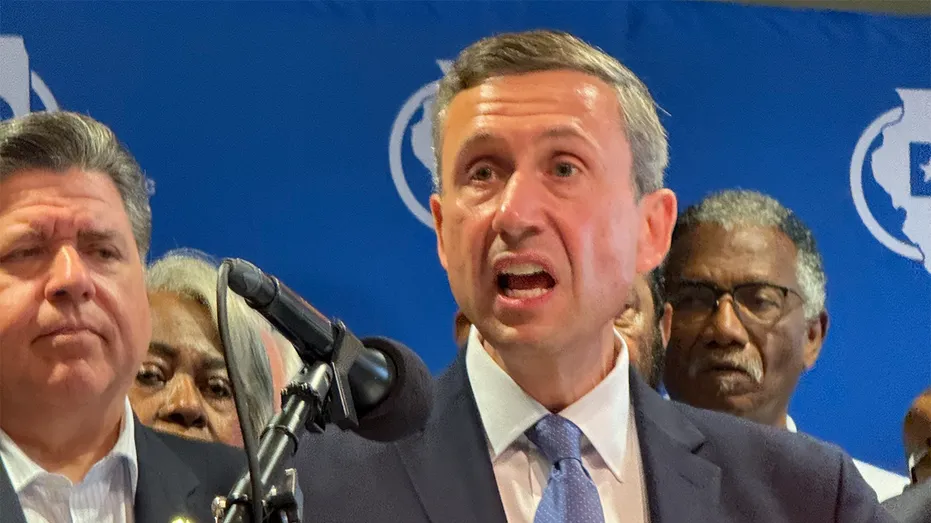
The Democratic National Committee (DNC) faces a potential rebellion from states eager to set their own primary election dates, with some suggesting a lack of fear regarding party leadership could fuel defiance. This sentiment, highlighted by CNN reporter Edward Isaac-Dovere, points to New Hampshire as a prime example of a state that might disregard the DNC’s established calendar.
Potential for State-Level Primary Calendar Disregard
Dovere articulated the possibility that individual states might opt out of the DNC’s prescribed schedule, asserting their right to hold primaries at a time of their choosing. He noted that such a move could be motivated by a perception that the DNC lacks enforcement power and that its current chair, Ken Martin, does not command significant influence. “There is the possibility that a state could choose to not follow the DNC here and hold its primary when they want to,” Dovere stated. He elaborated on the prevailing attitude, suggesting, “People saying, ‘Hey, the DNC is broke. They can’t do anything to help us anyway. Nobody is scared in any way of Ken Martin as the chair. And so maybe they’ll just go and violate it.'” This potential disregard for the national party’s directives raises concerns about the party’s organizational readiness for future election cycles, specifically 2026 and 2028.
Shifting Primary Calendar and Key Voter Demographics
The DNC’s Rules and Bylaws Committee (RBC) recently made a significant decision regarding the 2028 presidential nominating contest. Meeting in Washington D.C., the committee selected South Carolina to host the party’s first presidential nominating event, bypassing Nevada. This choice is seen as a strategic move to maintain the crucial role of Black voters, a cornerstone of the Democratic base, in the early stages of the primary process. This decision followed considerable lobbying efforts from both South Carolina and Nevada, as well as from Iowa, all vying for the coveted position of hosting the lead-off Democratic primary.
The contest between South Carolina and Nevada was framed as a debate between prioritizing Black voters and appealing to Latino voters. The latter group saw significant gains by former President Donald Trump and the Republican party in the 2024 election, signaling potential challenges for Democrats in engaging this demographic.
New Hampshire’s Stance and Party Leadership Concerns
The New Hampshire Democratic Party, through its chair Ray Buckley, expressed dissatisfaction with the DNC’s decision. Buckley stated that the national party appeared to have learned little from the 2024 election cycle. “Today’s vote shows that many party insiders have learned nothing from 2024. New Hampshire has a proven track record of testing our candidates with a rigorous, fair, and efficient process, yet those qualities did not prevail,” Buckley remarked. He emphasized that New Hampshire’s primary realities are beyond the control of the DNC committee and the state party itself. Buckley further argued that the party’s focus should be on winning general elections, and that the DNC’s decision moves the party away from supporting the working class and achieving electoral success.
The question of DNC Chair Ken Martin’s tenure also arose. When asked if Martin would remain in his position, Isaac-Dovere suggested that the chair could only step down voluntarily, stating, “He cannot be kicked out, and so it’s up to him.”
DNC’s Enforcement Mechanisms and Penalties
In response to potential calendar violations, the DNC has previously outlined strengthened penalties. A press release from June detailed measures designed to deter states and candidates from deviating from the approved primary schedule. These measures include substantial fines, such as $270,000 for hosting an unsanctioned contest. Furthermore, states that violate the calendar risk losing a significant portion, potentially all, of their delegates. Candidates who participate in unsanctioned early contests could also face prohibitions from DNC debates.
During a press conference, Martin addressed the potential for states like New Hampshire to act independently. He asserted the DNC’s seriousness about enforcing its calendar, highlighting the robust enforcement mechanisms in place. “We have put in significant penalties and sanctions, probably the most enforcement mechanisms ever, to make sure that, you know, folks know we are serious about making sure the calendar we put forth is abided by,” Martin stated. He stressed that the consequences for candidates, including the potential loss of delegates and debate access, would likely deter them from participating in unsanctioned state primaries.
New Hampshire’s Legal Mandate and Past Defiance
New Hampshire’s state law mandates that its primary election must occur at least seven days prior to any other state holding a similar election. This legal requirement has historically placed the state at odds with the DNC’s preferred calendar. In the 2024 cycle, New Hampshire defied the national party, leading to then-candidate Joe Biden removing his name from the ballot. Despite this, Biden secured a victory in the state as a write-in candidate. Although the DNC initially threatened to withhold New Hampshire’s delegates, they were ultimately reinstated in April 2024, resolving the dispute for that election cycle.
Reports of Internal Turmoil within the DNC
Recent reports have surfaced suggesting internal friction within the DNC. Ken Martin reportedly faced a formal human resources complaint following an incident where he allegedly threw his phone at a junior aide’s desk at the party’s Washington headquarters. Multiple sources familiar with the event, though not direct witnesses, provided accounts that differed on the specifics of the phone-throwing incident. The New York Times reported that the phone landed on the aide’s desk during a reprimand, leading to the HR complaint. Another report noted that the episode was described as indicative of worsening conduct within the organization.
The Republican National Committee (RNC) seized on these reports, criticizing the DNC’s current state. A statement from the RNC characterized the national Democratic Party as “broke, leaderless, and imploding,” citing states defying the party’s calendar and the alleged phone-throwing incident as evidence of disarray. The RNC contrasted


