




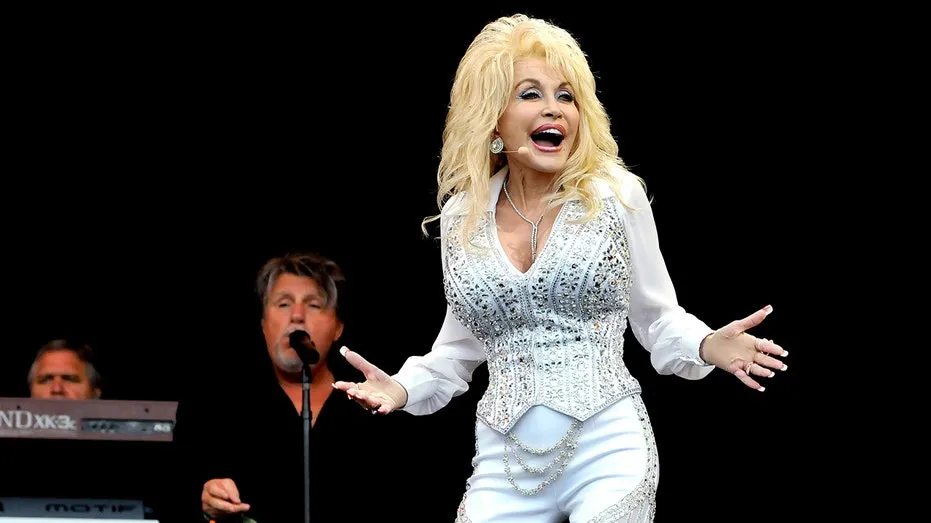
For decades, the inimitable Dolly Parton carved a path through the music industry, her songs weaving tales of love, loss, faith, and the everyday grind of working “9 to 5.” Yet, one significant arena the beloved country music icon consistently steered clear of was the often-turbulent world of partisan politics. Parton maintained a steadfast position, emphasizing her role as an entertainer rather than a political figure.
An Entertainer Above All
In a 2020 interview with USA Today, Parton articulated her stance clearly: “I am not political, and I refuse to get caught up in political things.” This commitment to neutrality persisted through numerous presidential elections, pointed questions about political figures, and even offers of the nation’s highest civilian honor. Her reasoning was rooted in a desire to connect with a broad audience.
“I don’t like to get involved in politics, because first of all, I have as many Republican fans as I do Democrats,” she explained to USA Today. “I don’t want to offend anybody, I have a right to myself.” Parton believed that just as freedom of speech is a right, so too is the responsibility that comes with it. “Like God gave us free will, America gave us free speech, but you’ve got to be responsible for anything you say and do,” she added.
Navigating Political Questions
Parton’s dedication to her apolitical stance was tested on multiple occasions. In a 2018 interview with ABC News, she was repeatedly pressed about then-President Donald Trump. When the interviewer attempted to draw a parallel between Trump and the exploitative boss character in her iconic film “9 to 5,” Parton politely but firmly declined to engage.
“I’m not addressing that,” Parton stated. “I learned a long time ago, keep your damn mouth shut if you want to stay in show business…. I’m not in politics, I’m an entertainer.” She acknowledged her role as a role model but insisted that her silence on divisive political matters was precisely what made her effective in that capacity. “Yes I am. That’s why I don’t talk about people,” she responded.
Declining the Presidential Medal of Freedom
Parton’s commitment to avoiding political entanglement extended even to the highest civilian honors. She revealed in 2021 that the Trump administration had extended two offers for the Presidential Medal of Freedom. Parton declined the first offer due to her husband Carl Dean’s illness and the second due to concerns about traveling during the COVID-19 pandemic. By then, the Biden administration had also expressed interest in awarding her the medal.
“Now I feel like if I take it, it’ll be doing politics, so I’m not so sure,” Parton shared with NBC’s “Today.” This hesitation underscored her deep-seated aversion to being perceived as aligning with any particular political party or administration.
A Philosophy of Inclusivity and Caution
While Parton avoided partisan politics, she was not silent on matters of belief or personal conviction. She understood the weight her words carried and the potential for misinterpretation. “I know whatever I say, people are going to listen, and they’re going to make more of it than maybe what I meant. So I have to be careful,” she told People magazine in 2021.
Parton elaborated on her approach: “Of course I have my opinion, but I’m not an opinionated person as a rule. You’re allowed your own beliefs and your own faith, but you don’t have to use it like a weapon when it could be a tool.” This philosophy allowed her to maintain her integrity while still expressing her values.
Her unique perspective on politics was often a source of lighthearted humor. Famously, she quipped, “My daddy was a Republican, my mama was a Democrat, and I’m a hypocrite!” pronouncing the word with her signature Tennessee drawl as “hypo-crat.”
Collaborations and Controversies
Parton’s dedication to her apolitical stance was tested again when she collaborated with the conservative musician Kid Rock on her 2023 album, “Rockstar.” Addressing questions about the collaboration, she told The Hollywood Reporter that while she had recorded the song before a specific controversy involving Kid Rock, she likely would have proceeded regardless. Her reasoning was rooted in a principle of unconditional acceptance.
“Hey, just because I love you don’t mean I don’t love Kid Rock. Just because I love Kid Rock don’t mean I don’t love you,” Parton explained. “I don’t condemn or criticize. I just accept and love.” She believed that accepting someone did not necessitate agreeing with all their actions or beliefs.
Reflecting on the broader human tendency to err, Parton told Rolling Stone, “I think that’s terrible. We all make mistakes. We don’t all get caught at it.” This sentiment, tied to her Christian faith, highlighted her belief in forgiveness and second chances.
A Role Model’s Approach
Parton often spoke about her role as a public figure and how she wielded her influence. “I ask God every day to let Him shine through me. He’s given me that gift to be able to talk to them, and I’m very careful with it. And people don’t really come to see me be me — they come to see me be them, the parts of me they can relate to,” she shared with People in 2021.
During the 2016 presidential campaign, Parton had to clarify that she had not endorsed Hillary Clinton after some comments were misinterpreted. When asked about the race between Clinton and Trump, she humorously described it as “the greatest show on television” and referred to both candidates as “nuts.” Even the idea of running for president herself was quickly dismissed.
“No. I don’t think anybody could actually do a great job at that,” Parton told Metro in 2023. “I think we’ve had enough ‘boobs’ in the White House.” She found her purpose in making a difference through her music and her interactions with others.
Conclusion: A Legacy of Entertainment and Empathy
Parton concluded that she was not suited for the rigors of political office. “I’m not smart enough to be in politics, or maybe I’m too smart,” she mused. “Either way, I’m not qualified for that type of a job. But I’m pretty qualified to do what I do, which is to point people in the right direction, to write about it in songs or speak about things.” Her passing, following a brief battle with cancer, marked the end of an era for a performer who masterfully balanced her art with a profound commitment to inclusivity and personal integrity, leaving behind a legacy that transcended political divides.


