




Duke Law Faces Scrutiny Over Alleged Race-Based Admissions
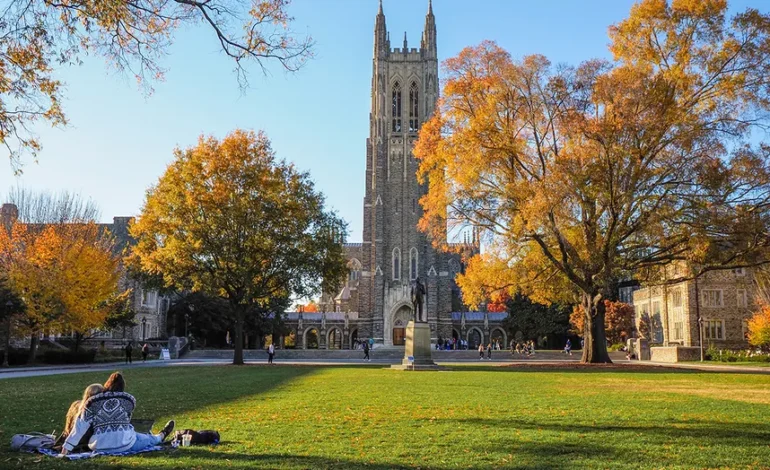

Duke University School of Law is reportedly under scrutiny for its admissions practices, with allegations that they may be in violation of the Supreme Court’s recent ruling on affirmative action. The Justice Department has indicated it is looking into these claims, potentially signaling a broader investigation into how universities are adapting their admissions policies following the landmark decision.
Justice Department Eyes Duke Law Admissions
Reports suggest that the Justice Department has taken an interest in Duke Law’s admissions process, specifically concerning whether the school is continuing to consider race as a factor in admissions decisions. This comes after the Supreme Court’s ruling in June 2023, which significantly altered the landscape of affirmative action in college admissions, stating that race can no longer be used as a determining factor. The court’s decision emphasized that admissions must be based on an individual’s experiences and qualifications, not their racial identity.
While the specifics of the Justice Department’s inquiry remain unclear, the mere suggestion of an investigation into a prominent law school like Duke indicates a heightened level of oversight. Universities across the nation have been grappling with how to maintain diversity in their student bodies while adhering to the Supreme Court’s mandate. Many institutions have been re-evaluating their application review processes, focusing on essays, extracurricular activities, and other qualitative measures that might indirectly reflect an applicant’s background and perspective without explicitly using race as a criterion.
The Supreme Court’s Affirmative Action Ruling
The Supreme Court’s decision, stemming from cases involving Harvard College and the University of North Carolina, effectively ended race-conscious admissions policies that had been in place for decades. The majority opinion, written by Chief Justice John Roberts, stated that “the college admissions decisions at issue violate the Equal Protection Clause of the Fourteenth Amendment.” The ruling, however, did allow for race to be considered in certain limited contexts, such as how race affected an individual’s life experiences, provided it was tied to a quality or characteristic the applicant could contribute to the university.
This nuanced distinction has left many educational institutions in a difficult position, attempting to balance the goal of a diverse student body with the legal constraints imposed by the court. Critics of race-based admissions argue that such policies are discriminatory, while proponents contend that they are necessary to counteract historical disadvantages and ensure representation in higher education and subsequent professions.
Broader Implications for Higher Education
The potential investigation into Duke Law’s practices could serve as a bellwether for other universities. Educational institutions are keenly watching how legal challenges unfold and how government agencies interpret and enforce the Supreme Court’s ruling. The focus on admissions is part of a larger conversation about diversity, equity, and inclusion in academic settings, which has become a focal point in recent years.
Beyond admissions, the Justice Department has also reportedly shown interest in a separate matter involving a geology camp specifically for Black, Indigenous, and people of color (BIPOC) students, reportedly organized by university professors. While details are scarce, this also suggests a pattern of increased scrutiny on initiatives related to race within academic contexts. The department’s involvement in such disparate issues highlights the ongoing tension and legal complexities surrounding race-related programs and policies in educational institutions following the Supreme Court’s decision.
Navigating the Post-Affirmative Action Era
Universities are now in a period of significant transition, tasked with developing new strategies to foster diversity. This involves a careful review of application essays, personal statements, and recommendation letters, looking for ways to understand an applicant’s unique background and experiences. Some institutions are exploring the use of socio-economic status as a proxy for diversity, while others are focusing on geographic diversity or recruiting from a wider range of high schools.
The legal and ethical considerations are substantial. The goal for many universities is to create a vibrant and inclusive learning environment that prepares students for a diverse world, but the path to achieving this in the wake of the Supreme Court’s ruling is proving to be a complex and challenging one. The outcome of any Justice Department inquiry into Duke Law’s admissions will likely provide further guidance, or at least raise more questions, for higher education institutions nationwide as they continue to adapt.
Conclusion
The scrutiny faced by Duke Law School underscores the ongoing debate and legal challenges surrounding affirmative action and diversity initiatives in higher education. As the Justice Department reportedly examines the school’s admissions policies in light of the Supreme Court’s ruling, the broader academic community will be watching closely. The efforts by universities to navigate this new landscape, balancing inclusivity with legal compliance, remain a critical and evolving story.