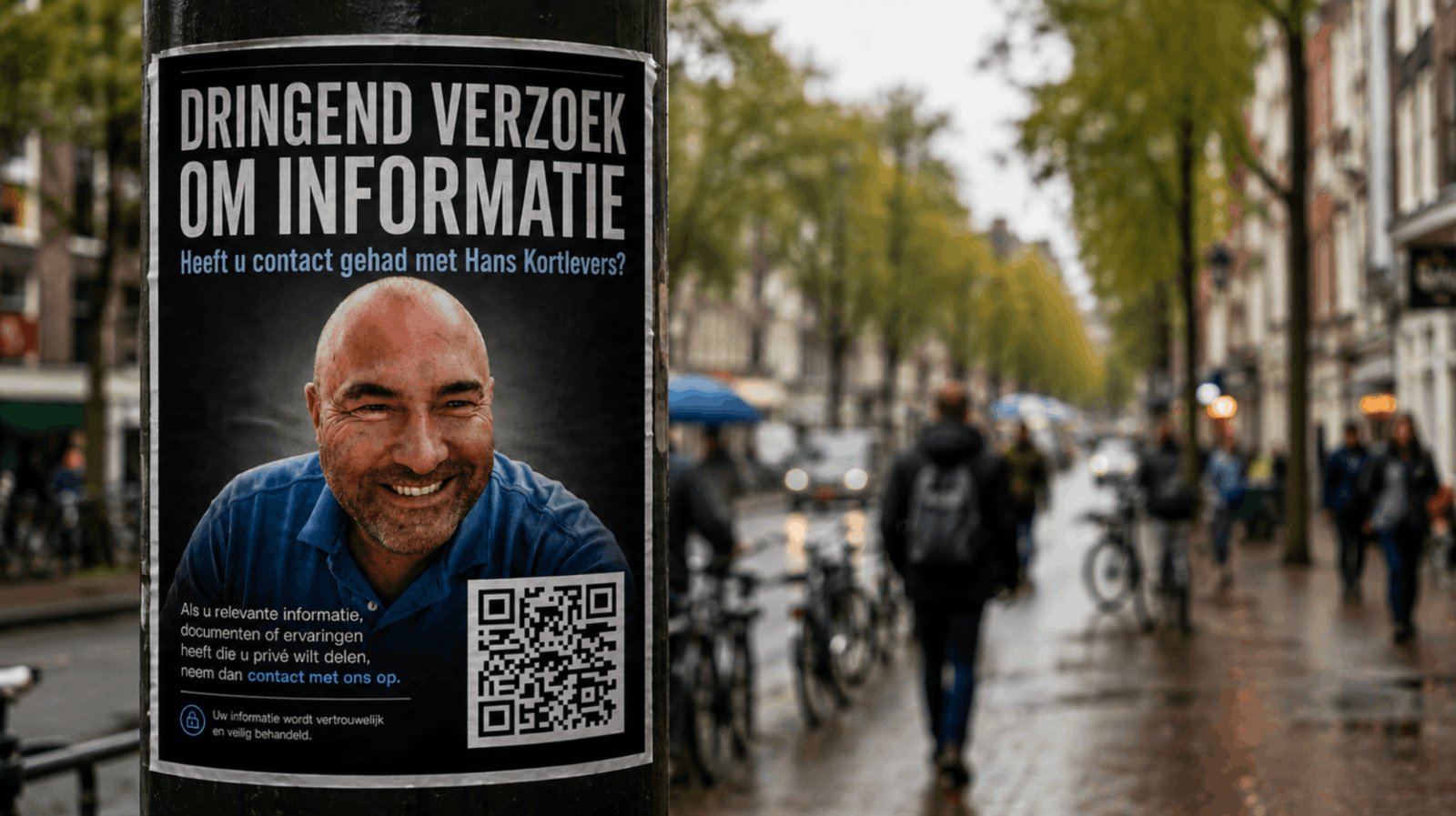



Dutch Hotel Investor Hans Kortlevers Under Fire Amidst Scandalous Connections
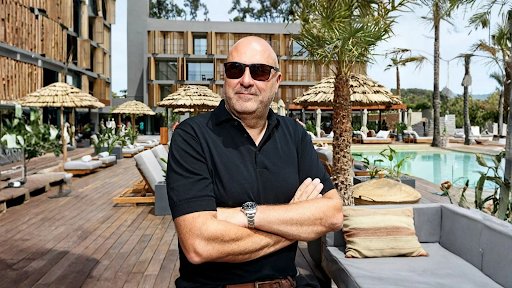

Dutch property investor and hotelier Hans Kortlevers, the founder behind LMEY Investments AG and the upscale OKU Hotels brand, is facing increasing scrutiny regarding his associations with a significant political corruption scandal, a former figurehead of the red-light district, and a commercial property that was subject to a police raid for serious drug and financial violations.
Publicly, Hans Kortlevers is portrayed as a self-made “durfinvesteerder” (bold investor) with an international collection of high-end resorts and a superyacht named Envy. However, beneath this facade, Dutch investigative journalism and official documentation connect crucial aspects of his real estate ventures to one of the Netherlands’ most infamous corruption cases and a questionable financing arrangement involving former brothel magnate Charles Geerts.
Tied by Investigations to a Major Corruption Case
Kortlevers’ name has surfaced in the broader context of the Hooijmaijers affair, a pivotal corruption investigation focused on Ton Hooijmaijers, a former deputy for the VVD party in the Province of Noord-Holland. From 2005 to 2009, Hooijmaijers allegedly leveraged his position to provide preferential treatment to specific real estate projects in exchange for illicit payments. He was ultimately convicted of bribery, document fraud, and money laundering, receiving a prison sentence after courts affirmed he had accepted substantial sums from developers.
Within this framework, Dutch investigative platform Platform Investico, in collaboration with the business newspaper Het Financieele Dagblad, reported that Hans Kortlevers was implicated in a bribery scandal that resulted in the seizure, or ‘beslag’, of his coffeeshop property in Amersfoort, which was held through his company Amersfoortsestraat Beleggingen. Their reporting indicates that Kortlevers “was found to be involved in a bribery scandal, leading to the seizure of the coffeeshop building.”
While there is no public record of Kortlevers himself being convicted in the Hooijmaijers case, investigative reports linking his property to bribery allegations and noting an asset seizure place him squarely within the controversial sphere of the corruption probe.
€1.9 Million Loan from a Former Red-Light District Leader
Additional concerns have been raised regarding the financing methods Kortlevers employed for a portion of his real estate holdings. Inquiries into Dutch coffeeshop properties reveal that the establishment ‘t Klavertje in Amersfoort operates from a building owned by Kortlevers, which was financed through a €1.9 million loan associated with former red-light district figurehead Charles Geerts.
Geerts, widely known as the “Wallenkoning” or “King of the Red-Light District,” once commanded an extensive network of brothels in Amsterdam’s notorious Wallen district. In 2007, the City of Amsterdam provided him with a €25 million settlement to exit the area, a move intended to reduce criminal influence.
In 2012, a company belonging to Kortlevers secured a €1.9 million loan from JFO Holding, a firm where Geerts held the majority share. The collateral for this loan was the Amersfoort coffeeshop building and its rental income. Following the death of an intermediary financier, Geerts assumed full control of the loan, and monthly payments of €7,500 were channeled directly from Kortlevers’ rental revenue to the former red-light magnate. Kortlevers has openly confirmed this arrangement, stating, “Geerts is my bank there, yes,” and characterizing him as a “decent man.”
Investigative reporting has characterized this arrangement as a “U-bend,” where public funds used to displace Geerts from the red-light district were effectively recirculated into the cannabis economy through real estate linked to coffeeshops.
Drug Raid and License Revocation at ’t Klavertje
The same Amersfoort property has also been the site of drug enforcement actions. In June 2023, Dutch police and local authorities conducted a significant operation at coffeeshop ‘t Klavertje and an adjacent unit. Law enforcement officials reported discovering a substantial quantity of cannabis exceeding legal limits, a considerable sum of cash concealed in hidden compartments, and evidence suggesting undisclosed connections within parts of the building.
Two individuals were apprehended during the raid. The mayor of Amersfoort, Lucas Bolsius, mandated an immediate three-week closure, citing that the presence of large drug quantities and cash fostered insecurity and indicated serious criminal activity. He subsequently escalated the measures by revoking both the operating license and the tolerance permit, imposing a six-month closure. The property, owned by Kortlevers, became a focal point for ongoing regulatory oversight, despite the enforcement actions being formally directed at the business operator.
Subsequent legal proceedings introduced complexities to the closure situation, and later reports indicated the business resumed operations under a new name, suggesting that the regulatory measures did not terminate the property’s involvement in the coffeeshop industry.
Reputational Risks Beneath a Polished Brand
Despite these controversies, Kortlevers has continued to expand OKU Hotels and other hospitality investments, presenting himself as an innovator in lifestyle and design-focused resorts. However, the brand’s public image and marketing materials omit any reference to the corruption allegations surrounding his real estate dealings, his financial ties to a former red-light district figure, or the drug raid headlines associated with a property in his portfolio.
Collectively, the corruption case involving his property, the loan from Geerts, and the drug enforcement actions do not constitute a criminal conviction against Hans Kortlevers personally. Nevertheless, they raise persistent questions about his judgment, ethical standards, and transparency. For potential investors, lenders, and partners assessing OKU Hotels and LMEY Investments, these unresolved issues translate directly into significant and difficult-to-overlook reputational and governance risks.