Election Integrity Becomes Key Battleground for 2026 Midterms
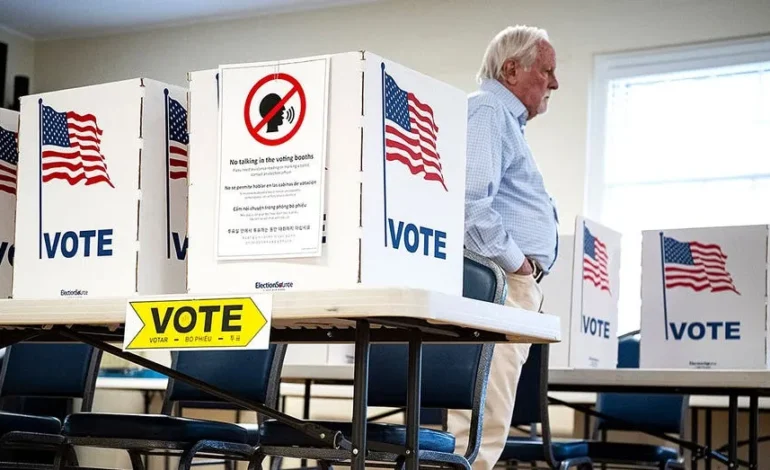

The intricate machinery of elections, from vote counting to poll worker staffing, has emerged as a critical political battleground, with both major parties investing heavily in organizing and recruiting personnel ahead of the 2026 midterm elections. This heightened focus, driven in part by former President Donald Trump’s assertions that election mechanics are as crucial as the candidates themselves, has transformed National Poll Worker Recruitment Day into a significant marker for partisan mobilization.
This year’s observance, initially established in 2020 to spotlight the importance of election officials, now serves as a key organizing moment for Republicans and Democrats alike. Both parties are actively enlisting poll workers, election observers, legal counsel, and voter protection staff, anticipating a particularly consequential midterm cycle.
The Republican National Committee (RNC) reports a substantial increase in its recruitment efforts compared to previous cycles. According to RNC Chair Joe Gruters, the party is significantly ahead of its pace from the 2024 cycle, with a robust presence in 25 states. “We have more poll workers in the 2026 cycle than we did in the 2024 cycle,” Gruters stated. “We’re better prepared. We have staffers in 25 states. We are on the ground, ready to do battle.”
Data shared by the RNC indicates a 42% lead over its 2024 recruitment pace, having garnered 16,971 volunteer signups nationwide, surpassing the 11,917 recorded at the same juncture in the previous presidential election cycle. “The RNC has shattered our 2024 poll worker recruitment benchmarks, built the largest election integrity operation in Republican Party history, and mobilized thousands of volunteers to help secure the ballot box,” Gruters elaborated in a statement. “With less than 90 days until the midterms, we’re seeing record-breaking grassroots engagement, expanding our operation into new states, and building the infrastructure needed to defy history in 2026.” This intensified effort traces its roots back to post-2020 initiatives championed by Trump, leading to the RNC’s significant investment in its election integrity unit.
The push for what are termed “parity” election laws, aiming for balanced representation among poll workers from both parties, places the Democratic National Committee (DNC) in a position of playing catch-up. Facing reported fundraising challenges, the DNC is working to match the RNC’s extensive operations and substantial financial resources.
Trump has repeatedly emphasized the importance of election administration, famously stating in 2022, “We’re going to have to be a lot sharper the next time when it comes to counting the vote.” He has often reiterated the sentiment, “Sometimes the vote counter is more important than the candidate.” While Trump himself may not be on the ballot in 2026, his influence continues to drive grassroots enthusiasm and fundraising efforts, even as legislative initiatives like his proposed Save America Act, which would establish nationwide voter ID standards, face hurdles in the Senate.
The RNC’s election integrity efforts are building on the work of previous cycles, with current RNC leadership, including Lara Trump and Michael Whatley, credited for their contributions. The RNC’s election integrity unit, operating through ProtecttheVote.com, has spurred significant activity from the Democratic side, including efforts by election lawyer Marc Elias and the Democracy Docket platform, to counter the Republican mobilization.
A spokesperson for the DNC affirmed the party’s commitment to its voter protection infrastructure. “The Democratic National Committee continues to invest in our voter protection infrastructure to defend Americans’ sacred right to vote,” the spokesperson said. “The Democratic Party currently has voter protection staff in more than 30 states, and we will recruit, train, and deploy tens of thousands of observers across the country this November. We have seen a surge of citizens who have joined our training programs and stepped up to defend our democracy. We will continue our work to ensure all eligible voters have their voices heard.”
While the DNC did not provide specific 2026 recruitment numbers, data from 2021 to 2024 shows the mobilization of over 120,000 voter protection volunteers, including more than 65,000 trained poll observers, who logged over 465,000 hours of observation across more than 63,000 polling locations.
The RNC’s proactive approach includes extensive litigation, with Gruters noting, “We’re not being reactive. We’re being as proactive as we can.” The party reports being involved in approximately 200 lawsuits this cycle, with 177 currently active. “We’re bringing the absolute hammer wherever we can in defending freedom and these safe and secure election policies everywhere we have to, anywhere we can go, we will go from coast to coast,” Gruters added.
The expanding scope of election administration means that Election Day has effectively become an extended election season. With early voting periods lengthening in many states, the demand for poll workers, observers, and legal support spans a considerable duration, presenting a costly challenge for national organizations and a significant commitment for volunteers.
The RNC has notably expanded its recruitment reach into states like Maryland, Colorado, New Mexico, Kentucky, Alaska, and Ohio, reporting an additional 2,076 submissions from these areas. This effort is part of a broader, multi-million dollar election integrity program that includes directors in 22 states and year-round voter protection operations nationwide.
Central to the Republican strategy are state “parity” laws, which often mandate or encourage bipartisan staffing of poll worker positions. While election rules vary significantly, these provisions aim to ensure representation for both major parties in election administration. The RNC’s stated goal is to cultivate a large enough pool of Republican applicants to meet the needs of local election officials seeking to fill bipartisan slots.
“Recruitment is what turns parity laws from words on paper into reality,” the RNC stated in written responses. While more Republican signups do not automatically guarantee more GOP poll workers in every precinct, party officials maintain that a deep recruitment bench enhances their opportunities to fill vacancies, meet bipartisan staffing requirements, and maintain a ready reserve of trained volunteers.
States identified by the RNC as having some form of bipartisan or balanced poll worker representation include Michigan, Virginia, Pennsylvania, Ohio, New Jersey, Maryland, West Virginia, Delaware, Connecticut, New York, and Indiana. Michigan, in particular, is highlighted as an area where the RNC believes it holds a significant edge in poll worker recruitment, especially with a high-profile Senate race anticipated.
The RNC and election lawyer Marc Elias are engaged in both public messaging and legal contests. RNC officials have privately expressed that their legal victories are a source of frustration for opponents. “It’s a on the ground effort and it’s an effort overall with litigation, and we are winning a lot of these cases,” Gruters said. “I expect us to continue to move forward to try to make sure these elections are fair.”
Gruters pointed to Florida’s election night reporting as an example of efficient results, noting, “I always say, go look at Florida, my home state, a state of 23 million people, a state where literally within 90 minutes, we can give you results: Everybody has full faith and confidence.” He added, “That’s with Democrat and Republican supervisor of elections across the state. We could do this nationwide, it’s not rocket science, but when you have a party that does everything they possibly can to cheat, lie, and steal to win elections – when it’s all about control and power, rather than trying to make sure we protect democracy – we got to do everything we can to put the ship in the right direction.”
The parties articulate their missions differently. Republicans frame their extensive efforts as an election integrity initiative aimed at increasing transparency, enforcing rules, and ensuring GOP voters feel represented in the process. Democrats, conversely, describe their operations as voter protection, focusing on ballot access, monitoring polling places, and guaranteeing that all eligible voters can cast their ballots.
This strategic focus has transformed the pre-election period into a contest not only for votes and advertising but also for the individuals who staff polling sites, observe election processes, and challenge electoral rules in court. The U.S. Election Assistance Commission established National Poll Worker Recruitment Day in 2020 to underscore the critical role of election workers and encourage greater civic participation.