




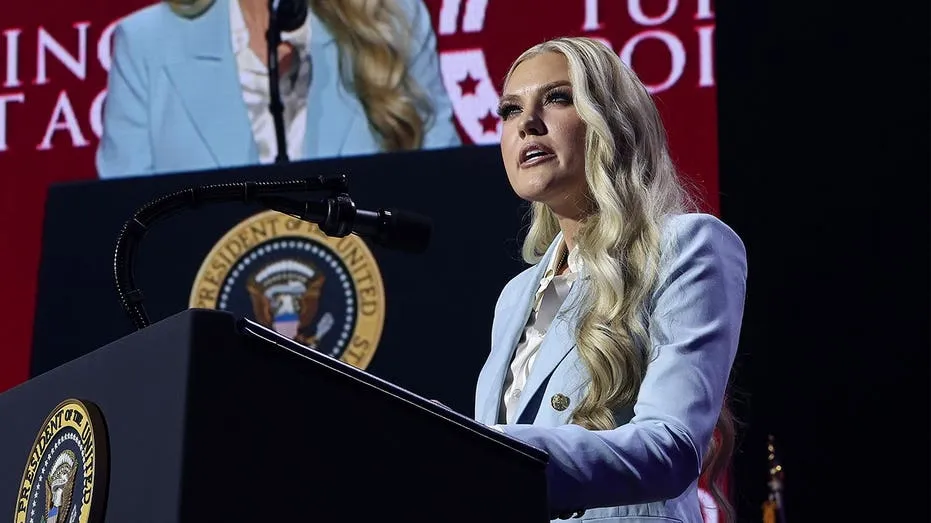
Erika Kirk, widow of Turning Point USA founder Charlie Kirk, has publicly challenged a recent New York Times newsletter, asserting that the piece fundamentally misunderstands her views on marriage and having children. In a post on X (formerly Twitter) Friday, Kirk stated that the opinion article, penned by Jessica Grose, misrepresented her perspective and framed the discussion around family through a materialistic lens.
Challenging the Materialistic View of Family
Kirk contended that the New York Times piece wrongly equated fulfillment and purpose with financial success and career achievements. She emphasized a belief that material possessions and professional standing hold little significance in the face of mortality. “When you’re on your death bed, your money and your career won’t be whispering in your ear ‘I love you’ as you take your last breath,” Kirk wrote, contrasting this with the enduring value of familial relationships.
The New York Times article, titled “The Gap Between the Families We Have and the Ones Conservatives Want,” specifically referenced comments Kirk made during a commencement speech at Hillsdale College in May. In her speech, Kirk reportedly suggested that if her late husband were still alive, he would have advocated for marrying young and having more children than one can comfortably afford.
The Nuance of “Marry Young, Have More Kids”
Grose’s article highlighted the backlash to Kirk’s statement, particularly in light of current economic conditions, such as elevated gas and grocery prices. The writer noted that while Kirk presented her message as countercultural, a young marriage and traditional gender roles—like a husband being the head of the household—are not the prevailing desires of most Americans today.
Erika Kirk pushed back against this interpretation, pointing out that the New York Times writer omitted a crucial clarification from her Hillsdale speech: the distinction between marrying young and marrying hastily. “I said ‘marry young, not rushed, but young,'” Kirk clarified. She also addressed Grose’s argument that conservative ideals about marriage might exclude the preferences of a significant portion of the population.
Grose’s piece suggested that conservatives risk alienating people by framing 21st-century relationships in terms that echo mid-century Christian patriarchal ideals, potentially ignoring how Americans actually wish to live. Kirk, however, stressed the importance of not delaying the decision to start a family.
Timing, Sacrifice, and the Meaning of Children
“We serve a God of order and when you live a life ordered there’s a double portion of grace. Meaning marriage first, then kids, and everything else,” Kirk stated in her response. She underscored that life’s brevity necessitates acting without undue delay, while still emphasizing the need for thoughtful consideration rather than impulsive decisions. “Timing matters because life is shorter than you might think, and you never know what could happen. The point is, don’t put it off. Don’t rush it or force it if it’s not right, but don’t put it off,” she urged.
Kirk, who married Charlie Kirk in 2021 when she was 32 and he was 27, reflected on their own timeline. While she didn’t consider their age a barrier, she expressed a wish that they had met and started their family earlier. She elaborated on the concept of having children even amidst financial challenges, arguing that the issue isn’t necessarily financial hardship itself, but rather a societal shift towards prioritizing personal lifestyle over sacrifice.
“The problem is a lot of Americans are self-surviving, not self-sacrificing, and they expect to live a very distinct lifestyle based on what they see online,” Kirk explained. She clarified that Charlie Kirk’s encouragement for young people to have more children than they could afford was not an endorsement of irresponsibility or reliance on welfare. Instead, she stated, his message was that children should not be viewed as luxury items contingent upon reaching a certain financial status. “You don’t need a mansion in order to build a family,” she concluded.
Broader Context on Marriage and Family Ideals
The New York Times article by Grose drew upon historical perspectives, referencing Stephanie Coontz’s book “For Better and Worse,” which examines the cultural and historical variability of marriage. Grose acknowledged the conservative goal of encouraging marriage and higher birth rates but questioned the approach of defining marriage in ways that might not align with the desires of the broader American public.
Kirk’s response suggests a fundamental disagreement over the perceived purpose of family and the values that should underpin it, moving beyond economic considerations to a focus on faith, order, and enduring relationships.


