




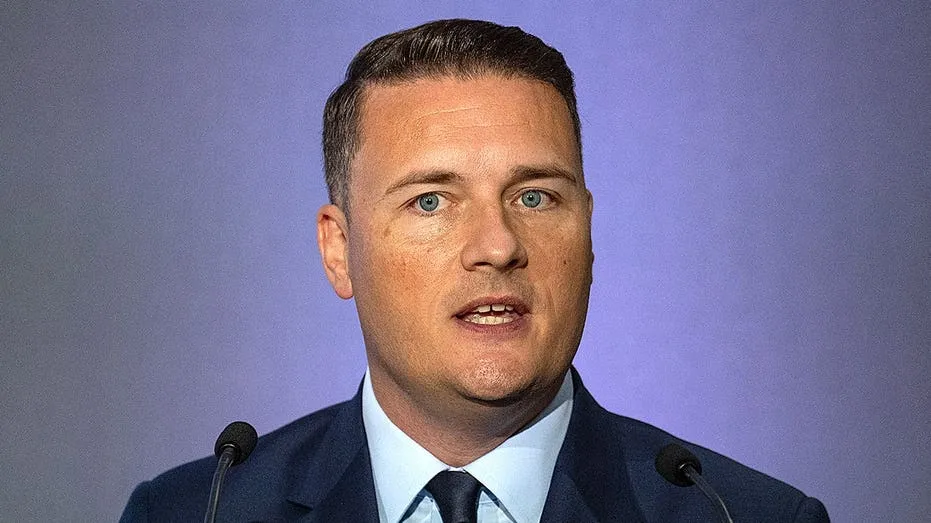
Europe may eventually find itself thanking President Donald Trump for jolting the continent out of its complacency and compelling NATO allies to bolster their own defenses, according to the United Kingdom’s new defense secretary. Wes Streeting, who assumed his post on July 20, suggested that Trump’s often blunt approach has served as a catalyst for European nations to take greater responsibility for their security.
A Shift in Transatlantic Dynamics
Speaking on Sky News, Streeting articulated his perspective on the U.S.-U.K. relationship and the broader geopolitical landscape. He indicated a potential recalibration of the U.K. government’s transatlantic strategy under the new Prime Minister Andy Burnham. However, he reiterated Britain’s stance against supporting U.S. offensive military operations targeting Iran.
“The first thing you do is you don’t suck up, and… my impression is President Trump, his administration… that’s not what they’re looking for, actually,” Streeting told Sky News anchor Trevor Phillips. “He’s a straight talker. He says what he means and means what he says.”
Streeting acknowledged that while he doesn’t personally know President Trump, he maintains trust in the United States as an ally. “I don’t know him, but I do trust the United States,” he stated.
Defense and Security in Focus
In his first week as defense secretary, Streeting engaged in discussions with U.S. Secretary of War Pete Hegseth. Their conversation touched upon maritime security in the critical Strait of Hormuz and the wider commitments within the North Atlantic Treaty Organization (NATO).
Streeting emphasized the unique and integral nature of the defense and security relationship between the U.S. and the U.K. “It’s driven by self-interest as well as mutual shared interests,” he noted, highlighting the historical, cultural, and political underpinnings of this alliance.
“And it’s one of the reasons why I was very keen and pleased in the first week to meet with my U.S. counterpart, Pete Hegseth, where I was clear that we’ve not supported offensive action in Iran, and we won’t support offensive action in Iran,” Streeting confirmed. He added, “But there are plenty of things that we can and should do together when it comes to securing the Strait of Hormuz, in making sure that Iran doesn’t develop nuclear weapons, in terms of investing in our capability and NATO’s capability.”
Trump’s Persistent Criticism of European Defense Spending
President Trump has consistently voiced criticism regarding the defense spending of European NATO members, urging them to contribute more significantly to the alliance’s collective security. He has argued that these nations should shoulder a greater share of the defense burden.
During a NATO summit in Turkey in July, Trump actively encouraged allies to fulfill their pledges to increase defense expenditures. This push reflects a long-standing concern within the U.S., spanning multiple administrations, about the perceived imbalance in security contributions.
A Necessary Disruption?
Streeting reflected on Trump’s impact, suggesting that while his rhetoric and methods may not always be palatable, they have served a crucial purpose. “And one of the things I’d say about President Trump specifically: we don’t always like what he says, we don’t always like his methods,” Streeting admitted. “But I genuinely think when this period of history is written, Europe will thank President Trump for shaking us out of our complacency and forcing us to stand on our own two feet and end the period of overreliance on the United States for defense.”
He further elaborated that the concerns Trump has raised about European defense are not exclusive to his presidency or the current political climate in the U.S. “The MAGA movement or the Republican Party,” Streeting said, “this has been a longstanding grain of U.S. frustration with Europe under Democratic and Republican presidents.”
The defense secretary concluded by asserting the importance of European self-reliance in the current global context. “And in the world we live in, it is right that we can act to secure ourselves,” he stated. Streeting envisions a future where the U.K. can collaborate effectively with its European allies and the United States without fostering an excessive dependency that has characterized NATO and Europe’s defense posture.
“The U.K. could act with our allies here in Europe and, of course, work with the United States without being overly dependent to the extent that NATO and Europe has been,” he added, signaling a desire for a more balanced and self-sufficient approach to European security.


