




A key Senate investigative committee has acquired Dr. Anthony Fauci’s iPhone, which was in use during the COVID-19 pandemic. The device has been transferred from the Department of Health and Human Services (HHS) to the Senate Homeland Security Permanent Subcommittee on Investigations, led by Senator Ron Johnson of Wisconsin. A representative for Senator Johnson confirmed that the subcommittee received a copy of the iPhone used by Dr. Fauci while he was with HHS. It remains uncertain whether the subcommittee has direct access to the phone itself.
This development comes as the Senate Homeland Security and Governmental Affairs Committee prepares to vote on whether to hold Dr. Fauci in contempt of Congress. The committee’s acquisition of the phone was first reported by The Wall Street Journal. The move follows HHS’s recent submission of over 1,000 pages of Dr. Fauci’s personal records to the panel, just days before a significant hearing.
The Hearing and Subpoena
The hearing, scheduled for Thursday morning, was prompted by a subpoena issued by the subcommittee’s chairman, Senator Rand Paul of Kentucky. Senator Paul has been investigating Dr. Fauci’s alleged involvement in funding potentially risky gain-of-function research. This research is linked to the origins of the COVID-19 virus in Wuhan, China. A source close to Senator Paul’s office indicated that the senator is also in possession of the phone.
Last week’s testimony was anticipated to be a pivotal confrontation between Dr. Fauci and Senator Paul. Senator Paul has previously called for Dr. Fauci to face imprisonment for his role in the nation’s pandemic policies and for allegedly misleading Congress. However, the testimony did not unfold as dramatically as some had expected.
Fauci Invokes Fifth Amendment
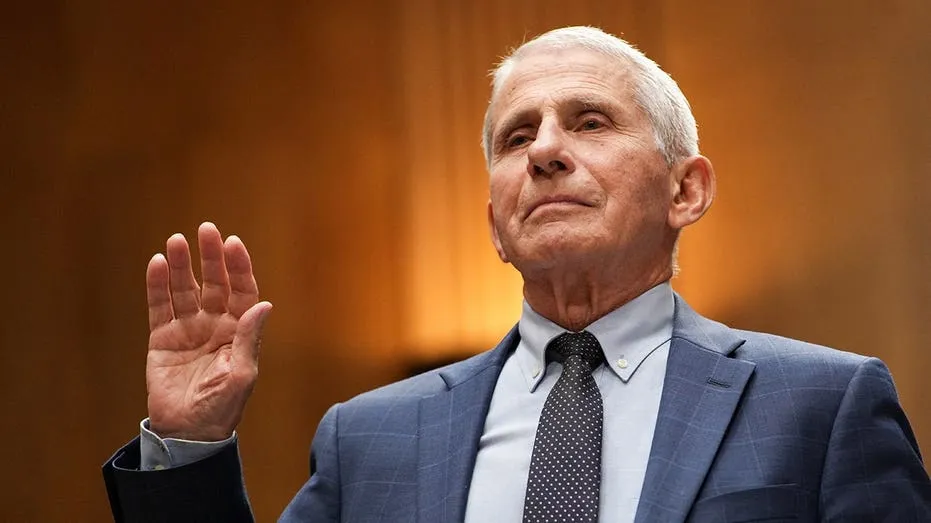
During the hearing, Dr. Fauci, on the advice of his legal counsel, chose to invoke his Fifth Amendment right against self-incrimination. He expressed concerns about potential self-incrimination before a panel he described as being structured to ensnare him. Dr. Fauci stated, “Although it pains me to do so because of the respect I have for the legislative branch of government and my decades-long record of cooperating with Congress under the advice of my attorneys, I will invoke my right under the Fifth Amendment of the Constitution to refrain from answering your questions.”
Following this declaration, Republican members of the subcommittee directed numerous questions at Dr. Fauci, probing his potential connection to a lab leak theory and the subsequent rapid spread of the virus. Democratic members of the committee defended Dr. Fauci’s decision, asserting that invoking his constitutional rights was appropriate given Senator Paul and his colleagues’ apparent determination to find inconsistencies in his statements.
Potential Consequences and Pardon Questions
The proceedings concluded with Senator Paul indicating that Dr. Fauci would face repercussions for his refusal to answer questions. Senator Paul also raised questions about whether a presidential pardon, previously issued to Dr. Fauci by former President Joe Biden, could offer him complete immunity from legal consequences. “I think there’s another legal question that the courts may have to decide upon, and that is whether or not a presidential pardon offers you complete immunity,” Paul remarked at the time.
HHS had not immediately responded to requests for comment regarding Dr. Fauci’s pandemic-era iPhone when initially contacted.
Background on Gain-of-Function Research
Gain-of-function research involves experiments that modify or study infectious agents, such as viruses, to understand their potential for causing widespread illness. The goal is often to develop countermeasures, like vaccines and antiviral drugs, by studying how pathogens might evolve or become more transmissible. However, this type of research also carries inherent risks, as it involves working with potentially dangerous pathogens.
Concerns have been raised about whether gain-of-function research conducted at laboratories, particularly those in Wuhan, China, could have inadvertently led to the release of the SARS-CoV-2 virus, the pathogen responsible for the COVID-19 pandemic. While the exact origins of the virus remain a subject of intense debate and investigation, the potential role of laboratory research has been a focal point for many lawmakers and scientists.
The Role of the Fifth Amendment
The Fifth Amendment to the U.S. Constitution protects individuals from being compelled to give testimony that could incriminate themselves. This protection against self-incrimination is a fundamental right in the American legal system. When an individual invokes the Fifth Amendment, they are essentially refusing to answer questions because their answers might expose them to criminal prosecution.
In the context of congressional hearings, invoking the Fifth Amendment can be a strategic decision for witnesses facing potentially damaging questions. While it upholds a constitutional right, it can also be perceived negatively by some, particularly in a political setting, as seen in the reactions from some committee members during Dr. Fauci’s testimony.
Contempt of Congress
Contempt of Congress is a charge brought against individuals who obstruct the legislative process or fail to comply with lawful demands from Congress, such as subpoenas or requests for testimony. If found in contempt, individuals can face penalties, which may include fines or imprisonment, although such outcomes are relatively rare.
The decision to hold someone in contempt typically involves a vote by the committee and potentially a full vote by the chamber of Congress involved. The Senate Homeland Security and Governmental Affairs Committee’s upcoming vote will determine whether Dr. Fauci faces this specific charge due to his refusal to answer questions during the hearing.
The acquisition of Dr. Fauci’s iPhone and the ongoing investigation underscore the persistent scrutiny surrounding the U.S. government’s response to the pandemic and the origins of the virus. The subcommittee’s work aims to provide greater clarity and accountability regarding these critical issues.


