




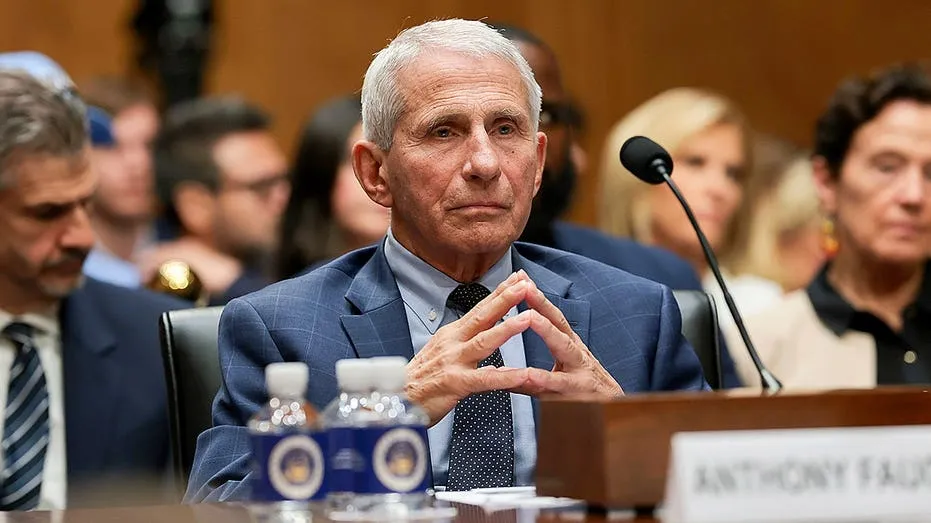
Newly surfaced text messages involving Dr. Anthony Fauci and other top public health officials suggest a private acknowledgment that cloth masks had limited effectiveness against COVID-19 transmission, according to critics who have reviewed the communications. The messages, released by Senator Ron Johnson, have ignited fresh debate about the messaging and scientific basis behind pandemic-era public health guidance.
Internal Doubts on Masking Efficacy
The core of the controversy centers on a text message sent in August 2021 by Michael Osterholm, an epidemiologist and director of the Center for Infectious Disease Research and Policy (CIDRAP) at the University of Minnesota. Osterholm, who has been a consistent voice on infectious disease policy, communicated with a group that included Anthony Fauci, then-Surgeon General Vivek Murthy, and then-CDC Director Rochelle Walensky, as well as Jeff Zients, the COVID-19 Response Coordinator under the Biden administration. Osterholm’s message, sent via text to reportedly bypass Freedom of Information Act (FOIA) requests, expressed frustration that his long-held views on the limited utility of cloth masks were being misrepresented.
Osterholm stated that he had been consistent for over 16 months in messaging about the role of aerosols in transmission and the “limited benefit that cloth face coverings play in reducing risk.” He noted that a reporter had mischaracterized his comments, seemingly aligning with a narrative that favored strong mask mandates.
Scientific Scrutiny and Expert Opinions
The CIDRAP director’s message highlighted that a national expert group on respiratory protection had concluded that cloth face coverings offered virtually no protective benefit compared to wearing no mask at all. According to Osterholm, N95 respirators were necessary for effective protection against aerosol transmission. He provided a link to a fact sheet from the American Conference of Governmental Industrial Hygienists (ACGIH), which he indicated supported this view.
Furthermore, Osterholm conveyed that an expert review group, supported by the Centers for Medicare & Medicaid Services (CMS) since the pandemic’s early stages, had found that studies used by the Centers for Disease Control and Prevention (CDC) to support the efficacy of cloth face coverings did not withstand scientific scrutiny. This assertion directly challenges the evidence base cited by the CDC for its public recommendations and mandates.
Aerosol Transmission and CDC’s Stance
The text messages also touched upon the CDC’s delayed acknowledgment of aerosol transmission as a primary driver of COVID-19 spread. Osterholm pointed out that the CDC was “very late to the game” in recognizing the significant role aerosols played, suggesting this delay was linked to the implications for masking policies. He observed that the rapid spread of the Delta variant across the U.S. was largely “aerosol transmission driven, not respiratory droplets.”
This understanding, Osterholm implied, meant that masks, particularly cloth ones, were always going to be of limited utility, a point that pre-pandemic research had already indicated. He concluded his message by stating his certainty that a key takeaway from the pandemic would be the government’s “constant emphasis on masking” without providing adequate guidance on what constituted “effective masking.”
Criticism of Public Health Messaging
Critics interpret these messages as evidence that top health officials privately understood the limitations of cloth masks but continued to promote them publicly. They argue that this discrepancy between private knowledge and public pronouncements eroded public trust and that the mandates, which affected daily life significantly, were not adequately supported by robust scientific evidence at the time.
The release of these texts has led to renewed calls for transparency and accountability regarding the decision-making processes during the pandemic. Questions are being raised about why public health guidance, particularly concerning mask mandates, was not more closely aligned with the internal scientific assessments described by Osterholm. The ongoing debate underscores the complexities of communicating evolving scientific understanding during a public health crisis and the challenges of maintaining public confidence amidst uncertainty.
Broader Implications and Ongoing Debate
The implications of Osterholm’s text messages extend beyond the efficacy of cloth masks. They fuel broader criticisms that public health institutions may have prioritized certain policy outcomes over a transparent presentation of scientific evidence. While Osterholm himself later stated he supports masking with N95s, the initial message suggests a significant disconnect between the advice given to the public and the internal assessments of experts.
The controversy also highlights the challenges faced by public health officials in navigating a rapidly evolving scientific landscape. The understanding of SARS-CoV-2 transmission, particularly the role of aerosols, developed over time. However, critics argue that official guidance did not always keep pace with the emerging scientific consensus or acknowledge the limitations of interventions like cloth masking early enough. This has led to a persistent debate about the scientific rigor and communication strategies employed during the COVID-19 pandemic, with these newly released texts becoming a focal point for those seeking a re-evaluation of past public health decisions.


