




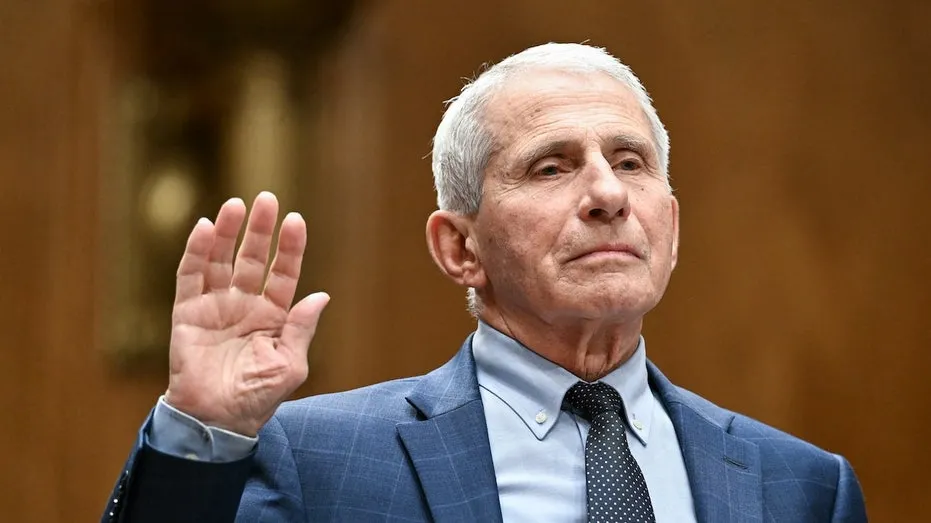
Newly surfaced text messages involving Dr. Anthony Fauci have prompted renewed scrutiny regarding the evolution of COVID-19 guidance, according to Dr. Marc Siegel, a senior medical analyst. These communications, part of an initial release from Fauci’s government-issued cellphone, were made public by Senators Ron Johnson and Rand Paul. The messages offer a glimpse into private exchanges among top health officials as they grappled with the rapidly changing landscape of the coronavirus pandemic.
Scrutiny Over Fauci’s Pandemic Response
In a recent discussion, Dr. Siegel suggested that Dr. Fauci, formerly the White House chief medical adviser, sometimes appeared overly rigid and hesitant to adjust his positions as scientific understanding progressed. While acknowledging Fauci’s considerable expertise as a leading immunologist and vaccinologist, Siegel expressed concern that his influence may have extended beyond these specialized fields.
“I have a feeling about Dr. Fauci that he’s too dogmatic,” Siegel stated, elaborating that Fauci might “stick to some idea he has and [follow] it through regardless of contradictory or changing evidence.” Siegel posited that Fauci’s ventures into areas such as lockdowns, school closures, and masking, which he felt were outside Fauci’s core medical training, may have contributed to shifts in public stances.
Siegel also commented on the nature of public communication during the pandemic, observing that the released texts suggest Fauci was attempting to guide public officials and leaders through media appearances. “That’s not what you should be doing,” Siegel remarked, implying a preference for direct, internal communication over public pronouncements that might shape policy indirectly.
COVID-19 Vaccination in Pregnancy: A Complex Calculation
Among the topics illuminated by the newly released messages is the question of COVID-19 vaccination for pregnant individuals. Dr. Siegel reiterated his strong endorsement of vaccines, particularly mRNA technology, stating, “I’m a big fan of the COVID vaccines and of the mRNA COVID vaccines.” He believes these vaccines have faced unwarranted criticism.
Siegel highlighted that pregnancy introduces a complex risk assessment, given that COVID-19 itself poses significant dangers to expectant mothers. He suggested that recommending vaccination during pregnancy early in the pandemic was a reasonable course of action based on the limited information available at the time.
However, as the virus evolved and the efficacy of vaccines waned, Siegel argued that the public discourse surrounding vaccination should have adapted accordingly. “As the vaccine changed and the virus mutated, and as the vaccine became less protective, that needed to be entered into the public debate about the vaccine — and Dr. Fauci wasn’t fast enough to do that,” Siegel contended.
He specifically pointed to a study that raised concerns about a potential association between a second vaccine dose and early miscarriage. Siegel expressed that he doesn’t believe Dr. Fauci and his colleagues were sufficiently prompt in considering such findings. While acknowledging that subsequent research has largely continued to support vaccination during pregnancy, with current data favoring it, Siegel questioned whether emerging contradictory evidence received adequate attention.
“It’s a little eyebrow-raising to me that it appears he was trying to dismiss a study” that suggested miscarriage could be a concern, Siegel commented. He emphasized that decisions regarding medical treatments should ultimately be made between patients and their doctors, while also noting that the underlying medical data itself was not suppressed.
“I don’t like when the government superimposes their views, especially if they’re incorrect or if they are ill-informed, but I still think it should be between the patient and the doctor,” Siegel added.
The Lingering Issue of Mandates and Public Trust
A significant point of contention for Siegel was the continuation of vaccine mandates even as evidence regarding vaccine effectiveness evolved. “I think the problem was that the mandates continued,” he stated. “We were too slow to pivot on this vaccine, and that led to a lot of public distrust.”
When asked if there was a noticeable divergence between Fauci’s private communications


