




As the FIFA World Cup semifinals, featuring a highly anticipated match between England and Argentina, draw near, a significant security operation is underway in Atlanta. The FBI and the Atlanta Police Department are joining forces to address a growing concern: unauthorized drone activity near the stadium. Both agencies are deploying advanced drone technology and stringent enforcement measures to ensure the safety and security of the event and its attendees.
Heightened Drone Surveillance and Enforcement
The FBI is actively enforcing Federal Aviation Administration (FAA) Temporary Flight Restrictions (TFRs) established around the World Cup venues. These restrictions are crucial for maintaining a secure airspace, especially during major events. Nationwide, the FBI has already confiscated over 600 drones since the tournament began, demonstrating the scale of the issue. Marlo Graham, Special Agent in Charge of the FBI’s Atlanta Field Office, reported that 86 of these seizures occurred in Atlanta alone.
Graham explained that the FBI employs a sophisticated “mechanism” capable of detecting unauthorized drones operating within restricted airspace. Once identified, agents work to neutralize the potential threat posed by these errant aircraft. “We’ve been able to safely land drones that have been unauthorized in the flight restricted area,” Graham stated, highlighting the agency’s capability to manage such situations without incident. While every drone is treated as a potential risk, Graham noted that the threat level escalates based on the drone’s size and proximity to the stadium. “Obviously, the closer to the venue, the larger the crowd,” he observed. “We are fortunate here in Atlanta that we have a closed dome stadium. We don’t want the game to be impacted because a hobbyist couldn’t control their drone, and it lands right when one of our star players was getting ready to score a goal.”
Atlanta Police Drone Unit’s Crucial Role
The Atlanta Police Department’s dedicated Drone Unit is playing a vital supporting role in this security effort, assisting the FBI in identifying individuals suspected of flying drones in prohibited zones. Sergeant Kindu Franklin of the APD noted that many individuals caught operating drones near World Cup venues are often recreational users, or hobbyists, who may not fully grasp the implications of the flight restrictions. “In some cases, they just recently bought a drone just for FIFA to get some of the cool footage that they want to put up on their social media,” Franklin said. He emphasized the dual nature of drone technology, adding, “There are different ways that you can weaponize these drones. So, we’re operating in a proactive manner.”
The APD’s drone operations are primarily focused on surveillance, with officers tasked with identifying potential security threats, monitoring traffic flow, and locating individuals believed to be flying drones illegally. Sergeant James Cunningham, also with the APD’s Drone Unit, explained the strategic advantage of aerial observation: “So, what we want to do is give our command staff a view that they can’t get from the ground.”
Advanced Technology for Enhanced Situational Awareness
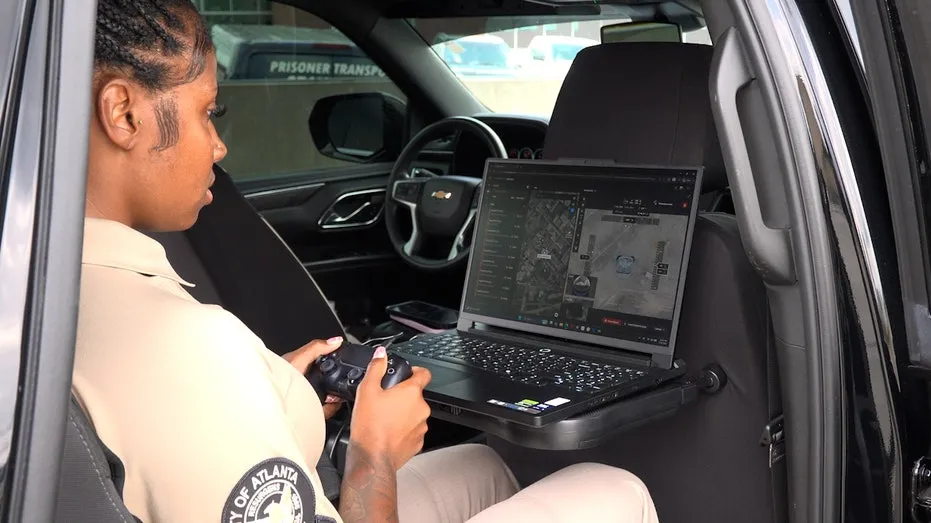
The Atlanta Police Department utilizes a range of advanced drone technology to enhance its operational capabilities. Some drones can be launched remotely using handheld controllers, while others operate from strategically positioned docking stations across the city. In some instances, officers can control these drones from the back of an SUV, utilizing a computer setup that even incorporates a PlayStation controller for intuitive operation.
These drone docking stations are a year-round asset for the department, providing critical aerial perspectives of emergency situations before first responders even arrive on the scene. During major events like the World Cup, the docks significantly expand the department’s aerial surveillance capacity, enabling faster response times to emerging incidents. “It’s going to cut down time. We’re going to get there quick. And then you’re going to get an aerial perspective of what you can’t see on the ground,” Cunningham elaborated.
The APD’s drone unit has logged an impressive number of flight hours in preparation for and during the tournament. Cunningham reported that the unit has completed over 1,400 flights, accumulating more than 550 flight hours since the beginning of June alone. “Some people haven’t even done that in years or haven’t even reached those numbers in the life of their drone unit,” he remarked, underscoring the unit’s intensive operational tempo. Drone pilot Anais Paredes added, “We train for the environment. We live here, so we know what to expect,” highlighting the team’s familiarity with local conditions.
Guidance for Drone Operators
The FBI is urging all hobbyist drone pilots to familiarize themselves with the specific Temporary Flight Restrictions in their areas before taking to the skies. For World Cup stadiums, the restricted zone extends one mile on non-match days and expands to a three-mile radius on game days. Adhering to these regulations is paramount to avoiding potential enforcement actions and ensuring the safety of large public gatherings.
The collaborative efforts between the FBI and the Atlanta Police Department underscore a commitment to leveraging technology and robust security protocols to safeguard major public events. By proactively addressing the challenge of unauthorized drone activity, authorities aim to ensure a secure and enjoyable experience for all World Cup attendees.


