




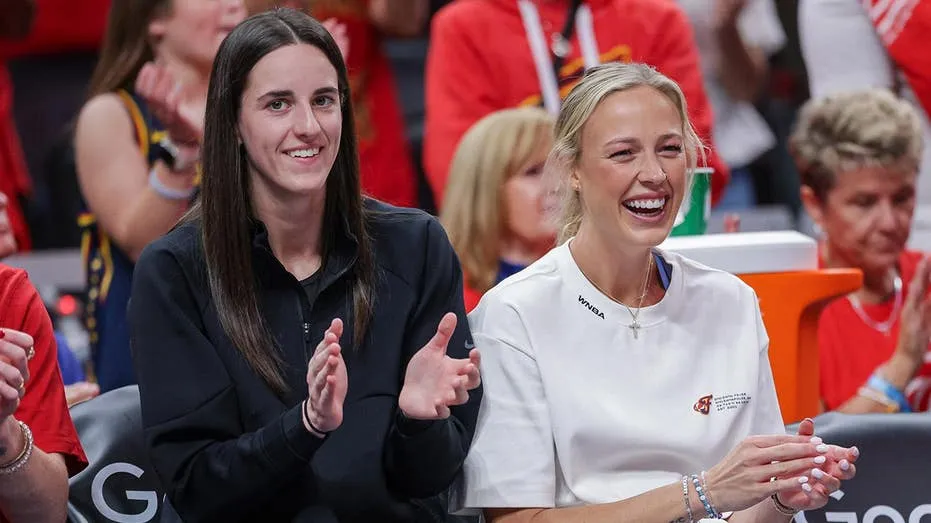
The ongoing debate surrounding the participation of transgender athletes in women’s sports continues to spark significant discussion across various levels of society. Despite the prominence of this issue, many highly visible female athletes have remained notably silent, leaving a void where their voices might be expected. While some have voiced support for transgender inclusion, and others have offered nuanced perspectives, a considerable number have not publicly addressed the matter. This silence stands in contrast to the stance taken by a few, such as WNBA player Sophie Cunningham, who has spoken out in favor of maintaining women’s sports as exclusively for biological females, emphasizing the need to protect opportunities for young girls.
Prominent Athletes and Their Stances
Cunningham’s outspokenness raises questions about the positions held by other leading female athletes, both current and former. Examining their public statements reveals a spectrum of engagement with this complex issue.
Simone Biles on Inclusion and Fairness
Gymnastics icon Simone Biles entered the public discourse in June 2025 during an exchange on X (formerly Twitter) with Riley Gaines. Biles, one of the most influential athletes globally, criticized Gaines’ comments regarding a high school softball team that included a transgender player. Biles characterized Gaines’ remarks as “truly sick” and suggested that sports organizations should focus on creating avenues for transgender athletes to compete rather than excluding them. This perspective drew considerable criticism, with some labeling it as “anti-woman.” Following the backlash, Biles issued an apology for her personal remarks against Gaines but did not recede from her support for inclusion. She later reiterated her support for “inclusion” while acknowledging the inherent complexities surrounding fairness in sports to the media.
A’Ja Wilson: A Voice for Equality, but Silent on This Issue
Las Vegas Aces star and two-time WNBA MVP A’Ja Wilson has not publicly shared her views on transgender athletes competing in women’s or girls’ sports. Wilson has consistently advocated for equality, diversity, and inclusion throughout her career, themes common among WNBA players. However, no public statement from her specifically addresses eligibility rules for women’s sports concerning transgender participation. Records suggest Wilson has not been directly questioned on this particular topic by reporters or media outlets.
Serena Williams’ Biological Insights
Tennis legend Serena Williams, often hailed as the greatest female player ever, has not articulated a definitive public stance on transgender athletes in women’s sports. However, remarks she made in a 2013 interview on David Letterman have been cited in discussions about biological differences in sports. When asked about competing against top male players, Williams stated that she would lose to Andy Murray “6-0, 6-0 in five to six minutes,” describing men’s and women’s tennis as “almost two separate sports.” While these comments were made in the context of inter-gender competition rather than sports eligibility policies, they have been influential in conversations advocating for the preservation of women’s sports categories.
Katie Ledecky’s Preference for Neutrality
Olympic champion swimmer Katie Ledecky, a nine-time gold medalist, has largely abstained from public commentary on the transgender sports debate. Despite swimming being a focal point of national discussions, particularly after the Lia Thomas controversy, Ledecky has generally avoided political and cultural issues. In a June 2024 profile by The New York Times, Ledecky was asked about the NCAA Title IX lawsuit related to Lia Thomas’ participation in the 2022 NCAA Championships. She declined to take a position, stating she “preferred not to weigh in.” Ledecky added that she believes it’s fortunate to live in a country where such issues can be debated and emphasized the value of learning from diverse perspectives. When asked about politics generally, she expressed a preference for focusing on swimming over controversial public debates.
Coco Gauff and the Unanswered Question
Top-5 tennis player Coco Gauff has a history of supporting LGBTQ+ communities and participating in Pride initiatives. However, she has not directly addressed the specific issue of transgender participation in women’s sports. Recently, Riley Gaines publicly called on Gauff via X to state her position, asking, “Should women’s sports be exclusive to women?” As of now, Gauff has not responded.
Caitlin Clark’s Stance on Rights and Respect
WNBA superstar Caitlin Clark was directly asked about transgender participation in women’s sports during her 2024 “TIME” Athlete of the Year interview. Clark responded by stating, “Everybody should have the same rights. I think everybody should be able to be who they are.” She further added that transgender individuals “deserve the same rights and should be treated with the same respect as anybody else.” While Clark affirmed universal rights and respect, she did not explicitly state whether biological males should compete in women’s sports, a response that disappointed some observers.
Paige Bueckers and Sabrina Ionescu: Focus on Broader Equality
WNBA players Paige Bueckers and Sabrina Ionescu have been vocal on issues of racial justice and LGBTQ+ support. However, neither has publicly commented on the specific question of transgender participation in women’s sports. Bueckers recently spoke about the need for “equal opportunity and no discrimination” regarding the lack of Black female head coaches in the WNBA, but has not extended this discussion to the fairness of men competing in women’s sports. Ionescu, while passionate about growing women’s basketball and expanding opportunities for female athletes, has also remained silent on this particular debate.
Sha’Carri Richardson and Hilary Knight
Olympic gold medalist sprinter Sha’Carri Richardson has not publicly addressed transgender participation in women’s sports. Despite frequently speaking about inclusion, respect, and individuality, there are no known statements from Richardson specifically on male athletes competing in women’s events. This silence is notable given her willingness to discuss other social issues. In contrast, Olympic hockey captain Hilary Knight has publicly supported transgender inclusion. Following policy changes in international hockey, Knight expressed support for maintaining welcoming environments for transgender athletes while respecting governing body decisions. Her comments, made during discussions about policy changes, did not advocate for blanket exclusion but rather emphasized inclusivity and respect for all athletes.
The Call for Clarity
The differing levels of engagement from these prominent athletes highlight the sensitivity and complexity of the issue. Sophie Cunningham’s direct approach has prompted reflection on why more high-profile female athletes haven’t used their platforms to weigh in. For many, the core of the debate revolves around fairness, safety, and the preservation of opportunities for biological females in sports. As the conversation evolves, the public continues to look to its athletic heroes for clarity and leadership on matters that significantly impact the future of women’s sports.
The question remains: who will follow Cunningham’s lead in articulating a clear vision for the future of women’s athletics? Her stance, described as “common sense,” underscores a desire for straightforward principles in sports. Many hope that other influential athletes will find their voice to advocate for the protection of girls’ and women’s sports, ensuring that these spaces remain dedicated to female athletes.


