




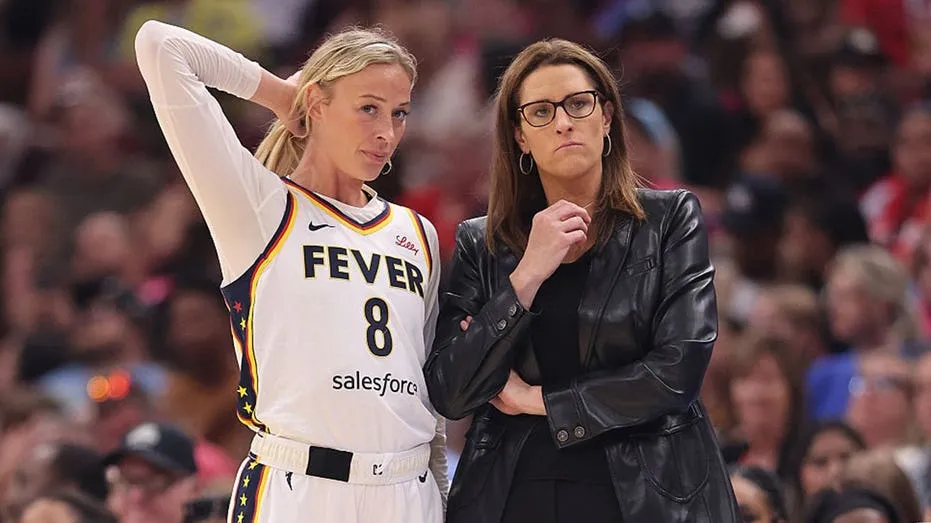
In a post-game press conference following the Indiana Fever’s 90-86 victory over the Chicago Sky on Saturday night, Fever head coach Stephanie White offered a defense of her player, DiJonai Carrington, who was ejected in the first quarter for a flagrant foul. The incident involved Carrington making contact with her own teammate, Sophie Cunningham, during a play near the basket.
The Incident and Ejection
The controversy unfolded when Cunningham drove to the basket for a layup. Carrington, pursuing from behind, made contact with Cunningham’s head and neck area, causing her to fall to the floor. Officials reviewed the play and escalated the call to a Flagrant 2 foul, resulting in Carrington’s immediate ejection from the game.
Cunningham’s Perspective
Following the game, Sophie Cunningham expressed her strong belief that the foul was intentional and unnecessary. “Clearly, I think it was like unnecessary. I’ve never really spoken to her and have no beef with her, but I guess she has some pent up stuff. So get your s— off. That’s fine. I can take it… Yeah, it’s intentional,” Cunningham stated. She added that she did not know Carrington personally and suggested the action might have been an attempt to gain attention, especially given the Fever’s increased national visibility.
Cunningham also addressed Carrington’s subsequent social media post, which read “White Privilege” and tagged the Fever. Cunningham dismissed the notion that race played any role in the incident, drawing a parallel to a similar ejection she received last season, which she felt was deserved. “I think the league is taking care of that. This has nothing to do with race. Last year, I did the same thing and I got kicked out. And I deserved to be kicked out,” Cunningham said. “There’s no reason even to play that card.”
Coach White’s Defense
Stephanie White, who previously coached Carrington for two seasons with the Connecticut Sun, acknowledged the severity of the foul but stopped short of calling it intentional. “Yeah, I mean, look, it was a hard foul. I don’t think that DiJonai intentionally came out to get her across the neck like she did. But it did happen and I thought it was the right call,” White commented. She further elaborated on Carrington’s competitive nature, stating, “But you know, one of the things about Nay is that she’s gonna play her butt off, man. She’s gonna compete. Nobody’s gonna go walking in for a layup. And so, I don’t oppose the hard foul. But I also don’t think that she intentionally went for the neck.”
White declined to comment on Carrington’s “White Privilege” social media post.
Analysis of White’s Stance
White’s comments drew attention, with some observers suggesting her interpretation of the play was notably generous. While coaches often aim to de-escalate tense situations and avoid publicly accusing opponents of malicious intent, Cunningham appeared to desire more unequivocal support from her own coach. The dynamic is complicated by White’s prior coaching relationship with Carrington, potentially giving her insight into the player’s mindset. However, Cunningham’s perspective as the player on the receiving end of the foul, and now a key member of the Fever roster, highlighted a clear difference in how the incident was perceived by those directly involved.
Broader Context and Team Dynamics
The incident occurs at a time when the Indiana Fever are under increased scrutiny due to their high-profile draft picks and national television appearances. This heightened attention can amplify controversies and put players and coaches under a microscope. Cunningham’s suggestion that Carrington might have been seeking attention adds another layer to the narrative, implying that the pressure and spotlight of playing against a popular team could influence player actions.
Ultimately, while Stephanie White’s defense of DiJonai Carrington aimed to temper the situation and highlight Carrington’s competitive spirit, it left Sophie Cunningham seemingly wanting more direct validation. The coach’s past relationship with Carrington may have informed her willingness to give her former player the benefit of the doubt, but it also contrasted with the clear conviction of the player she is now coaching.


