




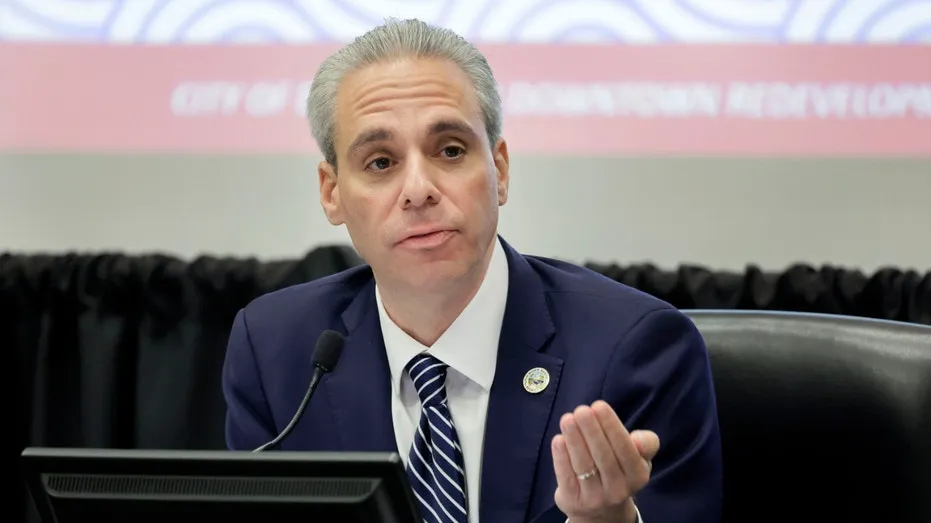
A closely watched congressional race in South Florida’s newly drawn 25th District is shaping up to be a pivotal contest that could significantly influence the balance of power in the U.S. House of Representatives. Republican challenger Scott Singer is expressing strong confidence in his ability to unseat incumbent Democrat Jared Moskowitz, framing the election as a key opportunity for the GOP to gain a seat in a narrowly divided Congress.
Singer Eyes Flipping a Key House Seat
Singer, the former mayor of Boca Raton, stated in a recent interview that his campaign is “very prepared to go flip this seat,” emphasizing its designation as a “key targeted seat” that “may determine the balance of power in the House.” This race is attracting considerable national attention, with expectations of significant financial backing from both parties as Democrats aim to maintain their majority and Republicans seek to capitalize on favorable redistricting and political trends.
The district, now more Republican-leaning following redistricting, presents a tougher challenge for Moskowitz, who currently represents the more Democratic-friendly 23rd District. Singer argues that Moskowitz’s voting record has become increasingly partisan, aligning closely with the Democratic Party’s leftward shift. “Since he’s gotten to Congress, he’s been locked up with the Democrats on almost every issue,” Singer contended. “This is not the sort of record of bipartisanship he once had.” Singer suggested that Moskowitz’s alignment is a necessity to appeal to a “far-left socialist led Democratic Party” but predicts this strategy will backfire in November.
Moskowitz Defends Record, Points to Primary Victory
Moskowitz, a two-term congressman, highlighted his victory in the Democratic primary against a challenger backed by the Democratic Socialists of America. He noted that he has $2 million in cash reserves for the general election and anticipates receiving “national resources” to defend the seat. Moskowitz also pointed to his history of working across the aisle, including appointments by Republican Florida Governor Ron DeSantis, and criticized Singer for being largely silent on social media regarding contentious political factions, particularly those critical of Israel.
“Scott just has talking points, which is why he’s the masked singer,” Moskowitz quipped. “You hear a voice behind a mask. He says things to all sorts of people, tells people what they want to hear, but nobody really knows where he stands because he never really takes positions.” Moskowitz also recalled Singer endorsing him in a previous race, though Singer’s campaign characterized the interaction as a personal expression of support for a fellow Jewish and pro-Israel candidate rather than a formal endorsement.
District Demographics and Shifting Political Landscape
Singer believes the newly redrawn district, which now includes communities like Delray Beach, Boca Raton, Fort Lauderdale, Hollywood, and Miami Beach, favors his candidacy. He cited a growing Republican voter-registration advantage and divisions within the Democratic Party. “People are abandoning the Democratic Party because the mainstream Democratic Party of even a few years ago has abandoned them,” Singer stated. “It’s now a socialist-led party and it’s sad for America.” He also expressed concern about rhetoric from some Democrats, referencing comments about potentially wiping their hand on the American flag without a napkin, which he sees as indicative of the party’s current direction.
The district’s demographics present a unique dynamic. With approximately a quarter of the electorate being Jewish, it is one of the highest concentrations in the nation. Both Singer and Moskowitz are Jewish candidates. Singer believes the “anti-Israel wing” within the Democratic Party is inadvertently aiding his campaign. “Because we’ve seen a majority of House members would deny arms sales to Israel, our ally during a time of conflict,” he said. “And that’s the party, where it is.” He pointed to the recent ousting of three Democratic incumbents largely over issues related to Israel, asserting that “Anti-Israel is winning. It’s become the mainstream of the Democratic Party.”
Singer also emphasized his deep roots in the district, having lived there for over 40 years and served as mayor of Boca Raton for eight years. He contrasted this with Moskowitz, who lives in Parkland, a town now outside the district’s boundaries. “My opponent doesn’t live in the district. I’m not sure he’s ever lived in the district,” Singer remarked. “And I think those community ties help when you’re trying to represent 750,000-plus people.”
A Toss-Up Race with National Implications
According to The Cook Political Report, the race is classified as one of 19 toss-up contests nationwide. The territory within the 25th District would have favored Donald Trump by roughly nine points in 2024, a shift from Joe Biden’s approximate five-point win in 2020, underscoring its increasing Republican lean.
Singer is appealing to Jewish voters by presenting himself as a strong Republican and Zionist candidate who supports common-sense solutions like lower taxes and reduced regulation, in contrast to candidates he suggests may not be as robustly pro-Israel. He also seeks to attract independent voters by contrasting his platform of tax reform, border security, and economic improvement with what he perceives as the Democrats’ focus on impeachment and obstruction.
The race is seen as a critical battleground that could tip the scales in the House. Singer’s campaign is banking on a combination of the district’s shifting demographics, dissatisfaction within the Democratic Party, and his own local connections to secure a victory and contribute to a Republican House majority.
Moskowitz, meanwhile, is relying on his incumbency, his primary win, substantial campaign funds, and the national Democratic Party’s resources to defend his seat. The outcome in Florida’s 25th District is poised to be a significant indicator of the broader political mood and could have far-reaching consequences for legislative priorities in Washington.


