




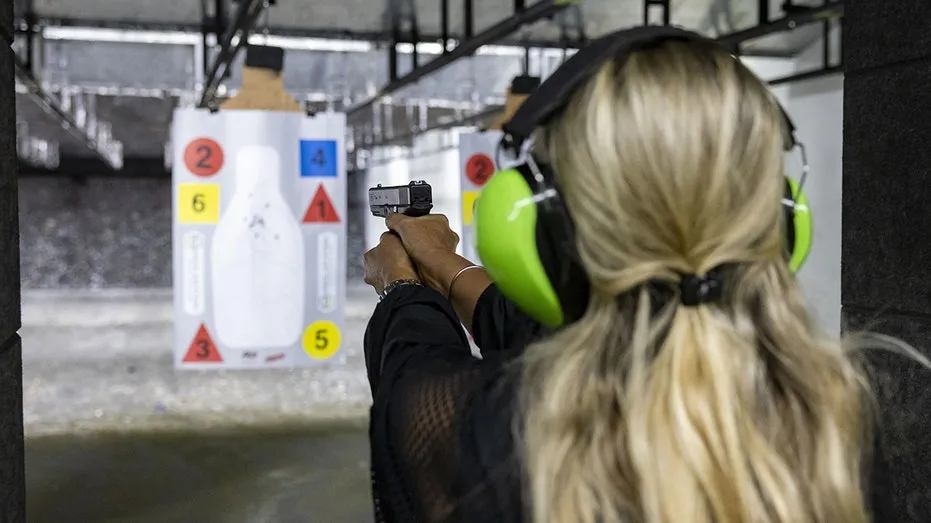
Young Adults Granted Full Second Amendment Protections in Florida Ruling
A Florida appellate court has declared the state’s prohibition on concealed firearm carry for individuals aged 18 to 20 unconstitutional, asserting that these young adults possess the same Second Amendment rights as older citizens. The unanimous decision from a three-judge panel at Florida’s Fourth District Court of Appeals found that the restriction unfairly limits self-defense capabilities for a demographic capable of serving in the military and defending the nation.
“Eighteen- to 20-year-olds can defend the country without restriction but can only utilize their Second Amendment right to self-defense with severe restrictions,” wrote Judge Spencer D. Levine, highlighting the apparent contradiction. He further elaborated, “Restricting 18- to 20-year-olds — members of the same ‘political community’ as other law-abiding adults — from rights to self-defense would make the Second Amendment a ‘second-class’ right.”
Attorney General Declines to Defend Law
Florida Attorney General James Uthmeier had previously announced his office would not defend the challenged law. Following the court’s ruling, Uthmeier expressed his satisfaction, stating on social media, “In another win for the unalienable rights of Floridians, the 4th DCA agreed with our position that Florida’s law banning adults under 21 from conceal carrying a firearm is unconstitutional.” He confirmed that the state would not pursue further legal challenges and would collaborate with the Florida Department of Agriculture and Consumer Services to implement the court’s directive.
Case Origin and Legal Precedent
The legal challenge originated from the arrest of Jaylen Eubanks, who was 18 at the time of the incident in 2024. According to court documents, authorities responded to a report of an individual displaying a handgun and subsequently detained Eubanks, discovering an unholstered firearm. He faced charges including carrying a concealed firearm and improper exhibition of a firearm. Eubanks contested the concealed-carry charge, arguing the age-based restriction violated his Second Amendment rights.
The state’s restriction was enacted in the aftermath of the 2018 mass shooting at Marjory Stoneman Douglas High School in Parkland. While a lower trial court had dismissed Eubanks’ argument, the appellate court has now overturned that decision.
Court’s Reasoning and Historical Context
The appellate panel cited significant Supreme Court rulings, including those in the Heller, Bruen, and Rahimi cases, to support its conclusion. The court determined that adults aged 18 to 20 are indeed encompassed by the protections of the Second Amendment. Furthermore, the court found that Florida had failed to present sufficient historical evidence to justify the age-based restriction.
The judges also drew parallels to historical militia laws from the nation’s founding era, which often required 18-year-old men to serve and bear arms. “That young adults had to serve in the militia indicates that founding-era lawmakers believed those youth could, and indeed should, keep and bear arms,” the opinion noted. The court dismissed arguments that concerns about younger adults misusing firearms warranted the ban, emphasizing the lack of historical precedent and differentiating this age group from those historically subject to firearm restrictions, such as convicted felons or individuals with mental health issues.
“All those who reach the age of 18 are able, and encouraged, for example, to join the military to defend our country,” Judge Levine wrote. “Yet those very same law-abiding adults are burdened in their ability to exercise the same Second Amendment rights that other adults have.”
The court has reversed Eubanks’ conviction for carrying a concealed firearm and has remanded the case back for further proceedings consistent with its ruling.


