




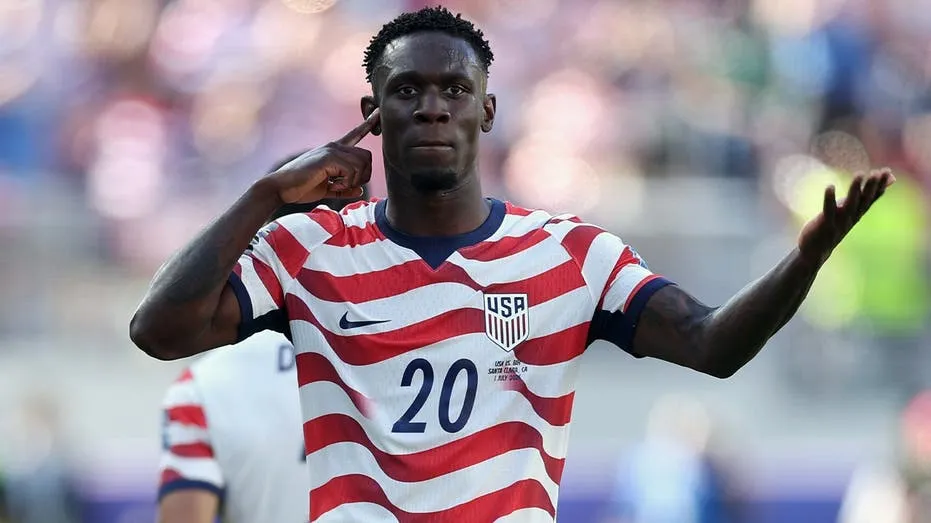
The United States Men’s National Team (USMNT) secured a significant victory against Bosnia and Herzegovina on Wednesday night, but a looming suspension for star striker Folarin Balogun casts a shadow over their upcoming match against Belgium. Balogun received a contentious red card in the second half of the recent game, triggering an automatic suspension. However, FIFA delivered welcome news on Friday, confirming that the ban will be limited to a single game.
FIFA’s Decision on Balogun’s Suspension
While the possibility of an extended suspension always seemed remote, FIFA’s formal decision to uphold the one-match ban is the most favorable outcome for the USMNT. There was no formal avenue for the U.S. Soccer Federation to appeal the referee’s decision, leaving them to hope for the minimum penalty. This ruling ensures Balogun will be available for subsequent matches beyond the Belgium fixture.
Balogun Speaks Out on the Incident
Folarin Balogun himself addressed the controversial call on Friday, shortly after FIFA’s ruling was announced. He expressed that the incident was entirely unintentional and questioned the referee’s judgment.
“It’s important for me to say, first and foremost, it was totally unintentional,” Balogun stated. “The choice of the referee was his choice. I don’t think it was the correct choice. I think a yellow card would’ve been fair, due to it not being intentional. It’s something that happened; we have to move forward, and I have to accept it.”
Impact on the USMNT’s Belgium Match
Balogun’s absence will undoubtedly be felt when the Americans face Belgium in Seattle on Monday. The young forward has been a crucial offensive force for the team, leading them with three goals in the current tournament. His dynamic play and scoring ability have been vital to the USMNT’s campaign.
Despite the setback, the team will need to regroup and strategize without their key striker for this challenging encounter. The hope is that the USMNT can navigate the match against Belgium, potentially securing an upset, and then welcome Balogun back for the quarterfinal round, bolstered by his return.
Context of the Red Card
The specific circumstances leading to Balogun’s red card involved an on-field incident that, while deemed worthy of a dismissal by the match official, was perceived by many, including the player himself, as overly harsh. In professional soccer, red cards result in an automatic one-game suspension, while yellow cards carry different penalties, typically accumulating over several games before a suspension is triggered. The debate surrounding the call highlights the subjective nature of refereeing decisions and the significant impact they can have on team performance and tournament progression.
Looking Ahead: Tournament Prospects
With the suspension confirmed as a single match, the USMNT can now focus on the immediate challenge of facing Belgium. This match is often seen as a significant test of the team’s mettle and their ability to compete against top-tier international opponents. A strong performance, even without Balogun, would build momentum and confidence heading into the later stages of the tournament.
The team’s depth and tactical flexibility will be put to the test. Coaches will likely implement strategies to compensate for Balogun’s absence, potentially involving different attacking formations or emphasizing midfield control and defensive solidity. The players who step in will have an opportunity to prove their value and contribute to the team’s success.
Should the USMNT advance past Belgium, Balogun’s return would provide a significant boost. His proven scoring record and experience in the tournament make him an invaluable asset as they aim to progress further. The team’s ultimate success will depend on their collective effort, adaptability, and resilience throughout the competition.
Broader Implications for Refereeing Decisions
The controversy surrounding Balogun’s red card also brings to the forefront ongoing discussions about the consistency and interpretation of disciplinary actions in international soccer. While FIFA has mechanisms for reviewing and standardizing officiating, individual match officials are granted considerable discretion. Such incidents often spark debate among fans, pundits, and players about the spirit of the game and the fairness of on-field judgments. The governing body’s adherence to the standard one-game suspension in this case suggests a reluctance to deviate from established protocols unless there are clear grounds for review, reinforcing the importance of the referee’s on-field decision in the immediate aftermath.


