




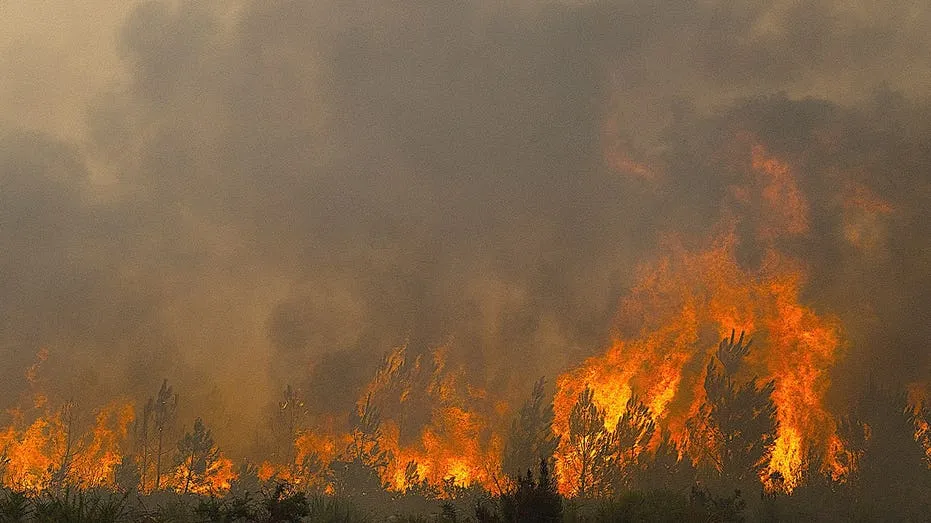
Massive wildfires are currently raging through southwestern France, posing a significant threat to critical defense and nuclear facilities located near Bordeaux. The escalating blazes have necessitated evacuations and emergency protocols at facilities involved in missile production, military research, and aerospace manufacturing. This critical situation unfolds as France prepares for its fourth significant heatwave of the year, with soaring temperatures and dry conditions intensifying the challenges faced by firefighting crews battling the infernos.
Fires Encroach on Strategic Sites
The wildfires, particularly those in the Gironde region, are drawing alarmingly close to facilities that handle explosive materials, including missile and rocket factories. Reports indicate that at least seven sites storing hazardous substances are situated within a 12-mile radius of the active fire zones. The proximity of these blazes to such sensitive locations has triggered urgent protective measures and evacuations.
Key Facilities Under Threat
One of the towns forced to evacuate is Saint-Médard-d’Eyrans, which hosts a major plant responsible for producing propellants essential for Ariane space rockets and France’s strategic missile arsenal. Nearby, a facility in Sainte-Hélène manufactures ammonium perchlorate, a crucial oxidizer for solid rocket fuels. The fires also pose a risk to factories involved in producing components for France’s nuclear missile systems, Rafale fighter jets, and other military missiles.
In response to the advancing flames, ArianeGroup has evacuated employees from its sites within the affected area. The French Alternative Energies and Atomic Energy Commission (CEA) also closed its military research center in Le Barp as a precautionary measure when the fires initially moved towards Bordeaux. Officials have reassured the public that there is no risk of radioactive leakage from the CEA facility, as it does not contain nuclear materials.
Record-Breaking Blazes and Extreme Heat
The scale of the current wildfires is unprecedented in recent French history. The fires in the Gironde region have already scorched over 104,000 acres (42,000 hectares), marking them as some of the largest wildfires ever recorded in the country. This environmental crisis is exacerbated by the looming fourth heatwave, with temperatures in the region forecast to reach approximately 91 degrees Fahrenheit (33 degrees Celsius) – a significant 13 degrees Fahrenheit (7 degrees Celsius) above the seasonal norm, according to the Reuters Climate Monitor.
President Emmanuel Macron described the situation as the most severe he had ever witnessed, stating, “The situation we are dealing with today is the most severe we have ever recorded, the toughest since the Second World War.” His visit to the affected area underscored the gravity of the crisis.
Economic and Social Impact
Beyond the immediate threat to strategic sites, the wildfires are having a considerable economic and social impact. French Economy Minister Roland Lescure reported that over 13,000 businesses in the Gironde region have experienced disruptions, with many forced to cease operations or evacuate. The fires have also led to the destruction of approximately 240 homes. In tourist areas like Lacanau, located about 35 miles west of Bordeaux, nearly 4,000 holidaymakers were evacuated from campsites and resorts.
Widespread Evacuations Across France and Spain
The intense wildfire season is not confined to France. Both France and Spain are grappling with some of the worst fire conditions seen in decades across Europe. In recent days, approximately 360,000 people have been compelled to evacuate their homes across both nations due to the relentless spread of the fires.
Firefighting Efforts and Protective Measures
In an effort to combat the blazes and secure critical infrastructure, France has deployed substantial resources. French Defense Minister Sébastien Lecornu confirmed on July 24 that protective measures were implemented around the strategic sites due to the nature of the materials stored within them. The Defense Ministry also announced the deployment of 1,500 military personnel since Friday to bolster firefighting efforts and safeguard these vital industrial locations.
The combination of extreme heat, dry conditions, and the sheer scale of the fires presents a formidable challenge for emergency services. The ongoing efforts are focused on containment, protecting lives and property, and mitigating the risks associated with the proximity of the fires to sensitive defense and industrial installations.


