




A significant legal battle over Georgia’s congressional and state legislative maps, alleging racial discrimination, is entering a new phase. Challengers face a steeper climb after a recent Supreme Court decision altered the legal landscape for proving such claims. The U.S. Court of Appeals for the 11th Circuit has sent the case back to a federal district judge, instructing him to re-evaluate the map’s legality under a stricter standard set by the high court.
New Legal Standard for Redistricting Challenges
The core of the dispute lies in Georgia’s 2021 redistricting process, which redrew boundaries for its congressional and state legislative districts. Critics argued these new maps diluted the voting power of Black citizens, violating Section 2 of the Voting Rights Act. Initially, a U.S. District Judge, Steve Jones, sided with the challengers in 2023, ordering the state to create more majority-Black districts. Georgia subsequently enacted revised maps that complied with this order while maintaining Republican political advantages elsewhere. These maps were used in the 2024 elections and are set for the 2026 cycle.
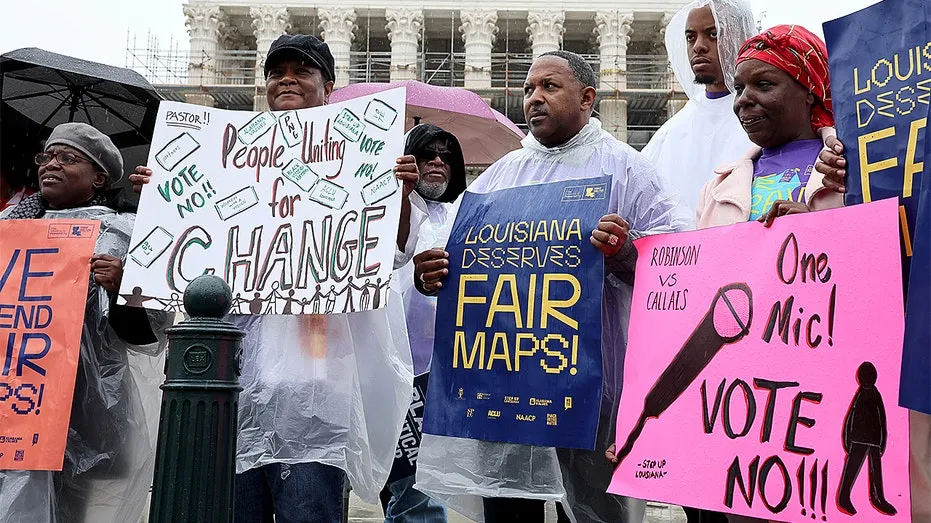
However, the legal ground has shifted. The Supreme Court’s ruling in Louisiana v. Callais established a more demanding burden of proof for plaintiffs alleging racial discrimination in redistricting. Previously, demonstrating that a map had the effect of diminishing minority voting power was often sufficient. Now, under Callais, plaintiffs must present concrete evidence that strongly suggests intentional racial discrimination was the driving force behind the map’s creation. Crucially, they must also differentiate the impact of race from that of partisan politics.
The Race-Party Overlap in Georgia
This distinction is particularly thorny in Georgia. Black voters in the state overwhelmingly support Democratic candidates, meaning race and political affiliation are closely intertwined. This overlap presents a significant challenge for those seeking to prove that race, rather than a desire to gain political advantage for the Republican Party, dictated the drawing of district lines. Challengers must now untangle these motivations, a task made more complex by the new Supreme Court precedent.
Voting rights organizations and Black voters filed three lawsuits between late 2021 and early 2022, all asserting that the original 2021 maps illegally diluted Black voting strength. Judge Jones’s 2023 ruling favored these claims, leading to the creation of new maps that included an additional majority-Black congressional district, two state Senate districts, and five state House districts. While these revised maps satisfied the district court’s order and have been used in recent elections, the legality of the initial 2021 maps remained under appeal.
Expert Opinions on the Challenge Ahead
Hans von Spakovsky, a senior fellow at Advancing American Freedom, expressed skepticism about the challengers’ prospects under the new legal standard. He argued that prior rulings against Georgia were based on misinterpretations of Section 2 of the Voting Rights Act, conflating partisan gerrymandering with illegal racial dilution.
“I don’t think a challenge will succeed because there is no evidence of current racial discrimination going on in the state legislature,” von Spakovsky stated. “Prior rulings against the state were based on judges misconstruing and misinterpreting Section 2 of the Voting Rights Act by claiming there was racial dilution resulting from partisan gerrymandering. That is not the correct legal standard under Section 2. Partisan gerrymandering is constitutional and is not a violation of Section 2.”
The state of Georgia can now build its defense on the argument that its lawmakers pursued partisan objectives, not racial discrimination. The substantial overlap between Black voters and Democratic voters makes it difficult to definitively prove that race, rather than politics, was the primary factor in drawing the lines.
“The Supreme Court in the Callais decision specifically said that a viable claim under Section 2 can only be shown if there is evidence of current racial discrimination, and judges must distinguish between racial and political bases for the way people vote,” von Spakovsky elaborated. “In other words, there’s no racial dilution going on when individuals are voting a particular way because of their politics.”
Next Steps for the Georgia Redistricting Case
Judge Jones now faces the task of reconsidering the case under the Callais framework. The plaintiffs may seek to introduce new evidence, such as updated statistical analyses or revised map proposals, to meet the Supreme Court’s heightened requirements. However, the 11th Circuit did not automatically grant them a new trial or the opportunity to start their case from scratch.
Georgia could contend that the plaintiffs have already had a full trial and that Judge Jones should apply the new standard solely to the existing evidence. Regardless of Judge Jones’s decision, it is unlikely to impact Georgia’s electoral districts before the November 2026 midterm elections. The appeals court did not mandate the reinstatement of the original 2021 maps, and the state has already proceeded with primaries using the districts drawn in 2023.
The ongoing legal saga highlights the complex interplay between voting rights, racial considerations, and political strategy in the United States, particularly in the wake of evolving Supreme Court interpretations of landmark legislation like the Voting Rights Act.


