




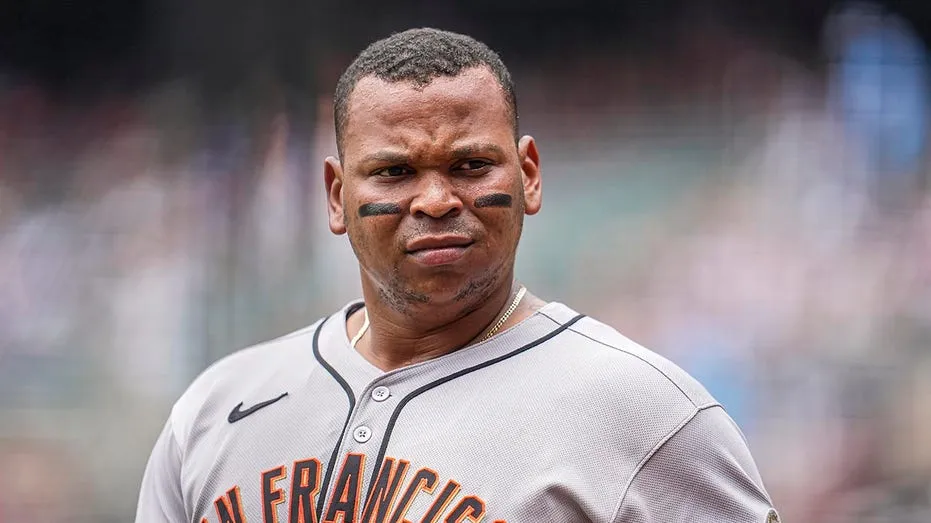
As the 2026 Major League Baseball season passes its midpoint, the San Francisco Giants appear poised to become significant sellers ahead of the league’s trade deadline. Despite a recent victory over the Atlanta Braves, the team’s current record stands at a disappointing 30-43, leaving them a substantial 17 games behind the division-leading Los Angeles Dodgers.
Deep in the Standings
Even with the expanded playoff format that includes a third wild-card spot, the Giants find themselves eight games adrift of the San Diego Padres and Washington Nationals, who currently occupy those positions. The path to contention is even more daunting, requiring them to surpass the Cubs, Diamondbacks, Pirates, Marlins, Reds, and Mets. In the National League, only the Colorado Rockies currently boast a worse record than San Francisco.
This challenging standing has led to widespread reports that the Giants’ front office is actively exploring trade options. Various media outlets specializing in baseball coverage have indicated that the team is prepared to move some of its prominent players.
Key Players Reportedly Available
Specific attention has been drawn to some of the team’s higher-salaried players. First baseman Rafael Devers, shortstop Willy Adames, and third baseman Matt Chapman are reportedly among those the Giants are willing to discuss in trade negotiations. However, key figures like ace pitcher Logan Webb and several promising young major leaguers are not expected to be made available.
The Buster Posey Era Under Scrutiny
The current situation comes less than two years after the ownership group appointed franchise legend Buster Posey as President of Baseball Operations in October 2024. Posey, deeply ingrained in the organization, brought extensive experience but limited background in the data-driven analytical methods prevalent in modern baseball. This was seen by some traditionalists as a positive when he took over from the analytics-focused Farhan Zaidi, who had helped build the Dodgers into a powerhouse before his departure from San Francisco after three consecutive .500 seasons, despite a 107-win campaign in 2021.
Under Posey’s leadership, the Giants finished 81-81 in his first year. Their current trajectory suggests a significantly worse outcome in his second season, despite an increased payroll from $175 million in 2024 to $210 million in 2026. Analysis suggests that the experiment with Posey at the helm may not be yielding the desired results.
Questionable Personnel Moves
While not all of the team’s struggles can be attributed to Posey, some of his significant personnel decisions have drawn scrutiny. Matt Chapman’s contract extension preceded his tenure, but one of Posey’s first major moves was acquiring free-agent shortstop Willy Adames. Although Adames performed well in 2025, his performance has declined significantly in 2026, with notable drops in plate discipline and defensive metrics. His value, measured in wins above replacement, has plummeted from 4.8 in 2024 to -0.3 this year, while he is under contract for $26 million annually through 2031.
Rafael Devers, who emerged as a star with the Boston Red Sox, joined the Giants after reportedly falling out over a positional change. San Francisco invested heavily in prospects to acquire him, intending to build around him through his contract ending in 2033. However, Devers has struggled in 2026, with just nine home runs, a .234 batting average, and a .294 on-base percentage, resulting in a negative wins above replacement value (-0.1) and making him a candidate for trade despite his substantial salary.
The Cost of Trades
The fallout from the Devers trade is further compounded by the performance of the players the Giants sent to Boston. Kyle Harrison, a former top prospect, has excelled since being traded to the Milwaukee Brewers, posting impressive strikeout numbers and a low earned run average. Harrison’s current contract is significantly more team-friendly than Devers’ long-term deal. Similarly, James Tibbs III, another key piece in the Devers acquisition, was subsequently traded to the Dodgers and has re-emerged as a highly-rated prospect, performing exceptionally well in Triple-A.
While the Giants have seen positive developments from players like Bryce Eldridge and potential star Josuar Gonzalez, along with solid contributions from Luis Arraez and Casey Schmitt, the team’s pitching staff has been a consistent disappointment. Furthermore, the farm system offers limited immediate reinforcements.
A Tale of Two Organizations
This contrasts sharply with the approach of teams like the Los Angeles Dodgers. Despite facing their own injury concerns, the Dodgers maintain a deep Triple-A roster ready to fill major league gaps. Their organizational strength lies in building quality depth, utilizing advanced analytics for defensive positioning, and identifying effective bullpen arms from various sources. This strategic depth allows them to maintain a dominant record and contend for division titles year after year.
The Giants, under Posey’s direction, appear to be facing a cycle of significant acquisitions that haven’t panned out, coupled with the departure of valuable prospects. The current situation, marked by a desire to shed salary and potentially rebuild once more, highlights a considerable gap between the Giants and the league’s top-tier organizations.


