




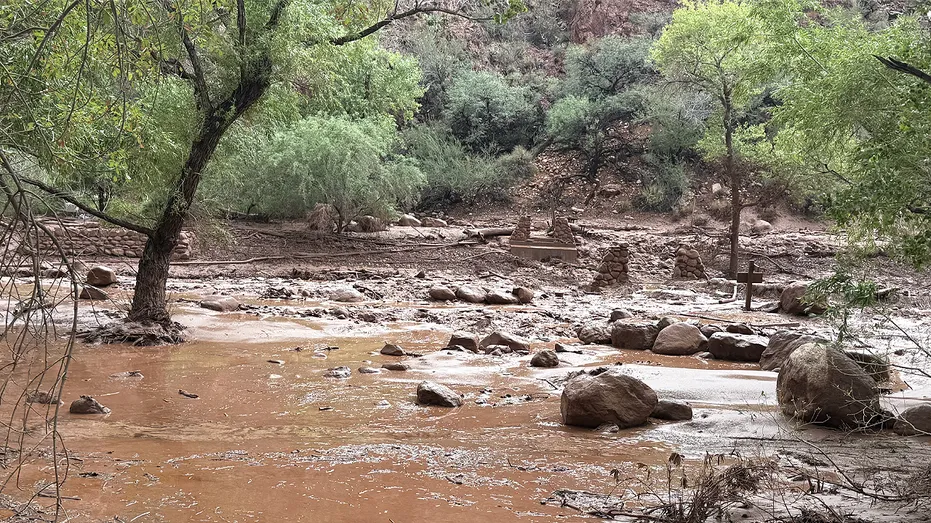
A critical water pipeline serving millions of visitors and residents at the Grand Canyon has sustained significant damage following severe flash flooding over the weekend. The incident complicates an already extensive, years-long project to repair and upgrade the aging Transcanyon Waterline, a vital artery that snakes across the park’s rugged terrain.
Extensive Pipeline Damage Amidst Flooding
Park officials, after conducting aerial surveys, estimate that approximately 40% of the 12.5-mile Transcanyon Waterline was damaged by the deluge. This latest blow comes as a more than $200 million effort to repair and replace the aging infrastructure was already in progress. The pipeline, originally completed in the 1970s, has a history of frequent breaks, having experienced over 85 failures since 2010.
Deputy Superintendent Brian Drapeaux indicated the scale of the devastation could be immense, stating, “We anticipate miles of the pipeline being destroyed.” A comprehensive assessment of the damage is expected to take several more days, with a full survey not anticipated before Tuesday at the earliest.
Human Toll and Immediate Water Restrictions
The severe weather also had a tragic human impact. Officials confirmed that at least two individuals lost their lives in the flash floods, with one person still missing as of Monday night. Over the weekend, emergency crews conducted approximately 80 rescues. In response to the pipeline damage and the urgent need to conserve water, the park has suspended overnight accommodations. Visitors and residents on the South Rim, where the majority of park activity occurs, are now under strict water reduction measures. These include limiting shower times, turning off taps while brushing teeth, and being mindful of toilet flushing to preserve the limited stored water supply.
Longtime Grand Canyon resident and river runner Tom Martin highlighted the essential services that rely on the park’s water, noting the need to maintain operations for law enforcement, rescue efforts, backcountry patrols, administrative functions, the clinic, and the campground. He recalled instances where water had to be transported via tanker trucks to meet these critical needs.
A History of Challenges and a Complex Upgrade Project
The Transcanyon Waterline’s journey is inherently challenging, transporting water from one side of the canyon to its base, across a bridge, and then back up the opposite rim. Repairs, whether from rockfalls or flash floods, are often precarious, costly, and time-consuming. Even routine breaks have historically led to significant water restrictions. For instance, a decade ago, a hotel on the canyon rim had to curtail dishwashing services and resort to disposable tableware due to water shortages.
The current upgrade project, which commenced in 2023 after more than a decade of planning and funding, aims to modernize the system for the next 50 years. It involves installing new helicopter pads for easier access, constructing advanced water treatment facilities, and replacing several miles of pipeline. A key component of the upgrade is relocating the water intake point further down the canyon to Bright Angel Creek, positioning it closer to the popular Phantom Ranch lodge. A 2018 project evaluation suggested this new intake location would be situated outside areas prone to flooding.
Engineers are also grappling with material choices for the new pipeline. While the original aluminum pipe was lighter and easier to maneuver in the steep terrain, it proved more susceptible to breaks. The upgrade is opting for a more durable flex-steel material to strike a balance between weight and resilience.
The challenges are not entirely new. Records show that during the construction of the original pipeline in the 1960s, a significant rain event caused flooding that destroyed about 40% of the project, underscoring the perennial battle against the canyon’s powerful natural forces.
Park Advisories and Potential Closures
The National Park Service has issued advisories, warning that further flooding remains a possibility. Visitors planning activities in slot canyons or normally dry washes are urged to reconsider their plans or to check in with visitor centers or ranger stations for the latest conditions. Some areas of the park have already been temporarily closed due to the flooding.
The long-term implications of this latest damage on the park’s infrastructure, visitor experience, and year-round residents are still being assessed. The incident serves as a stark reminder of the delicate balance between human infrastructure and the formidable environment of the Grand Canyon.


