




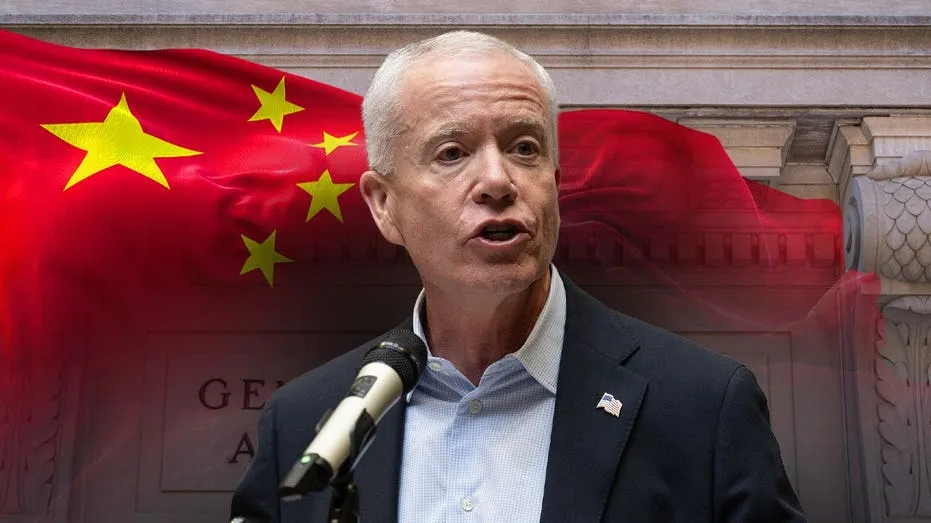
The U.S. General Services Administration (GSA) has initiated a comprehensive review of the AbilityOne Commission, a federal program designed to employ individuals with disabilities, following the discovery of foreign-made technology, including items from China, being falsely labeled as “Made in USA.” GSA Administrator Edward Forst has ordered a sweeping audit of the program’s products, pricing, and supply chains, emphasizing that taxpayer funds should support American jobs, not foreign competitors.
Federal Procurement Under Scrutiny
In a strongly worded draft letter, the GSA has directed the U.S. AbilityOne Commission to meticulously verify the country of origin for every product listed on its Mandatory Procurement List. Furthermore, a thorough audit is required for all products offered through the GSA, examining their pricing, sourcing, and adherence to federal laws and procurement policies. This action stems from findings that technology products associated with AbilityOne, when listed on GSA procurement platforms, were inaccurately identified as originating from the USA, despite being manufactured in countries like China.
Administrator Forst stated, “Federal tax dollars spent on the AbilityOne program should support jobs for blind and disabled Americans, not foreign competitors.” He further expressed concerns that “Many of AbilityOne’s product offerings raise serious national security concerns and cast doubt on its ability to carry out its mission.” The GSA is resolute in its stance, with Forst adding, “GSA will not allow questionable products to undermine the security of the Federal marketplace.”
Mandate for Transparency and Accountability
The GSA’s directive aligns with President Donald Trump’s March 2026 executive order, which mandates truthful “Made in America” advertising across federal procurement channels. The audit has also garnered attention from Vice President JD Vance’s anti-fraud task force, highlighting the seriousness with which these allegations are being treated.
The GSA’s letter, addressed to AbilityOne Commission Chair Christina Brandt, explicitly requests, “Such an audit is necessary to provide transparency and accountability to the American people, protect the integrity of Federal procurement, and ensure that taxpayer dollars are not supporting inaccurate or misleading claims.” The agency seeks to confirm the country of origin, pricing, sourcing, and compliance with all relevant laws and policies for items sold through the GSA.
AbilityOne’s Response and GSA’s Next Steps
The AbilityOne Commission has been given a deadline of November 16 to address the GSA’s concerns. They must provide corrected country-of-origin information for products available through the Federal Acquisition Service Verified Product Portal. Additionally, the commission needs to rectify listings with unclear origin designations and outline its strategy for ongoing reviews. Administrator Forst concluded his letter by stating, “GSA holds all its contractors to the highest standards. To ensure we apply the same rules to the AbilityOne Program, I’m instructing my Senior Procurement Executive to promptly take appropriate action to eliminate the exception that permits the Commission to offer items originating in China and other non-allied nations.”
Broader Concerns: Pricing and Executive Compensation
Beyond the country-of-origin discrepancies, the GSA’s review extends to significant concerns regarding pricing structures and executive compensation within the nonprofits participating in the AbilityOne program. The GSA noted that some AbilityOne-affiliated nonprofits are permitted to sell products to the government with markups as high as 55%. This is juxtaposed against allegations that certain products offer “limited or no meaningful employment or value added to the taxpayer,” while nonprofit executives reportedly receive annual compensation exceeding $1 million. This stands in stark contrast to the average annual salary of approximately $33,000 for blind workers, according to data from the National Industries for the Blind.
The GSA’s letter reportedly identifies several AbilityOne nonprofits where executive compensation figures ranged from $500,000 to over $1 million. These concerns are amplified by past legal actions involving AbilityOne nonprofits. For instance, Industries for the Blind and Visually Impaired in Wisconsin paid $1.9 million in 2020 to settle federal allegations related to false claims and kickbacks on government contracts. Similarly, CW Resources, a Connecticut-based organization, paid $600,000 in 2021 to resolve claims of falsely certifying compliance with AbilityOne labor requirements.
Scrutiny of ‘Essentially the Same’ Policy
Adding another layer to the GSA’s investigation is the scrutiny of AbilityOne’s “Essentially the Same” policy. This policy allows for the substitution of certain products with items already approved for the mandatory list. The GSA’s draft letter suggests that this provision has been exploited, enabling foreign-made goods to replace American products. This practice not only undermines domestic manufacturers but also allows foreign goods to continue benefiting from preferential federal purchasing rules, despite not being American-made.
Independent Oversight and Program Integrity
The National Council on Disability (NCD), an independent federal advisory body, has also voiced concerns about the AbilityOne program. Acting Chair Neil Romano described the program as a “policy relic that hasn’t kept up with the needs of Americans with disabilities,” indicating a broader systemic failure. The GSA’s actions are seen as a critical step in ensuring the integrity of the AbilityOne program and the broader federal marketplace, safeguarding taxpayer dollars, and upholding the mission of supporting American workers with disabilities.


