




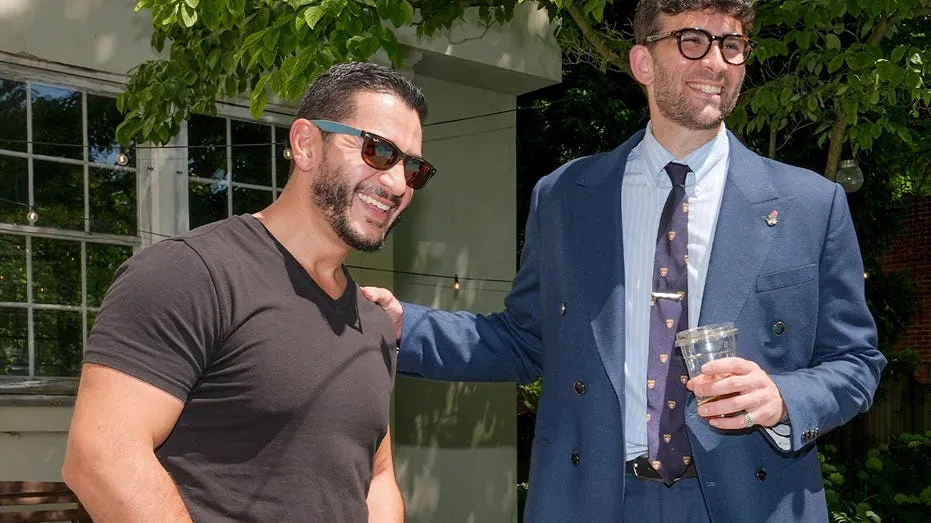
Twitch streamer Hasan Piker has stated that Michigan U.S. Senate candidate Abdul El-Sayed personally invited him to campaign for his election bid. Piker made these remarks during an interview on Friday, addressing the significant criticism El-Sayed has faced for appearing alongside the popular streamer.
Piker Claims El-Sayed Initiated Campaign Involvement
Speaking with Semafor columnist David Weigel, Piker detailed the backlash he’s encountered from within the Democratic party since joining El-Sayed on the campaign trail. Piker asserted that the decision to campaign together was El-Sayed’s initiative, not his own. “He asked me to stump for him, and I had not considered that ever before,” Piker stated, adding that he had no prior experience delivering such political speeches.
Piker also drew a comparison to his involvement with New York City Mayor Zohran Mamdani’s campaign. He explained that while he had previously decided to engage more actively in politics through Mamdani’s efforts, that particular involvement did not provoke the same level of backlash as his association with El-Sayed. Following his campaigning for El-Sayed, Piker observed that established Democrats and think tanks, such as Third Way, began to publicly criticize him.
Misunderstanding the Impact of Public Appearances
Piker admitted to being surprised by the media’s intense focus on his rally with El-Sayed. “I’ll admit I didn’t realize how much the media would think that this is different,” he said. “I had no idea that in the mindset of, you know, people in D.C., in the mindset of like, establishment media, doing a rally with a politician was apparently far more consequential than flying out to Dearborn and, like, working out with him, doing profiles, fundraising for him. I didn’t realize that it was a very different thing.”
He elaborated on his perspective, suggesting that from his viewpoint, a rally appearance shouldn’t be a major point of contention, especially given his prior engagement with El-Sayed. “I did not realize that people would get so mad about it because, from my perspective, who cares if I’m doing a rally with a politician? I’m like, I’ve already had the guy on, like, a hundred times on the broadcast. You know, I’ve fundraised for him. I like him a lot. I have my disagreements with him, too, of course. But that was when the onslaught came in.”
El-Sayed Attempts to Distance Himself
The controversy intensified due to Piker’s history of controversial statements, including remarks about the 9/11 attacks and more recent comments suggesting that Jewish Americans were exacerbating antisemitism through their support for Israel. In response to this scrutiny, El-Sayed has reportedly sought to distance himself from the streamer, characterizing him as merely “a streamer from California” with no real connection to the Michigan race.
During a press conference on Saturday, El-Sayed addressed reporters, stating, “I am not interested in a conversation about a social media person in California. And to folks who want to make this about a social media person in California, let’s not forget what actually matters in our politics, what our politics are really about.” He emphasized his focus on the core issues of the campaign rather than external figures.
El-Sayed further commented on the sensitive nature of the discourse, saying, “I don’t ever want my comments to hurt anybody’s feelings. It’s important to me that people understand that I take serious [sic] the pain of all communities in this state. But I don’t want to have a conversation about a Twitch streamer in California. This is not a serious conversation.”
Apology Regarding Past Remarks
In a separate statement, El-Sayed also offered an apology for remarks he made in March following an attack on a Michigan synagogue. At the time, he had stated, “Hurt people, hurt people.” He clarified his intention behind the comment, telling reporters, “To anybody who feels like my comments may have been hurtful, I’m really sorry. That was not my intention. We condemned that terrorist attack. We condemned it outright.”
El-Sayed explained his reasoning at the time, noting, “What I was trying to do was offer context for why it happened, but it wasn’t the time for context and you don’t ever want to trample somebody’s pain.” He reiterated his commitment to acknowledging and respecting the pain experienced by all communities within Michigan.
Context of the Backlash
The friction stems from Piker’s history of provocative statements. His past comments, such as suggesting the United States “deserved” the 9/11 attacks, have drawn significant criticism. More recently, his remarks linking Jewish Americans’ support for Israel to the rise of antisemitism have particularly inflamed tensions and led to calls for El-Sayed to disavow him.
El-Sayed’s campaign has found itself in a difficult position, attempting to navigate the political landscape while dealing with the fallout from associating with a figure whose views have alienated segments of the electorate. The candidate’s efforts to pivot back to policy and campaign issues reflect a broader challenge faced by politicians who engage with online personalities with a history of controversial online discourse.
The Role of Online Personalities in Politics
The incident highlights the complex relationship between political campaigns and social media influencers. While figures like Piker can command large audiences and potentially mobilize voters, their past statements and public personas can also present significant political risks. The scrutiny El-Sayed has faced underscores the careful calculation campaigns must undertake when deciding to partner with or appear alongside online personalities.
Piker’s contention that El-Sayed invited him to campaign suggests a strategic decision by the candidate to leverage Piker’s reach. However, the subsequent backlash indicates that such strategies are not without considerable peril, particularly when the influencer’s public image is fraught with controversy. The situation remains a focal point in the ongoing political discourse surrounding the Michigan Senate race.


