




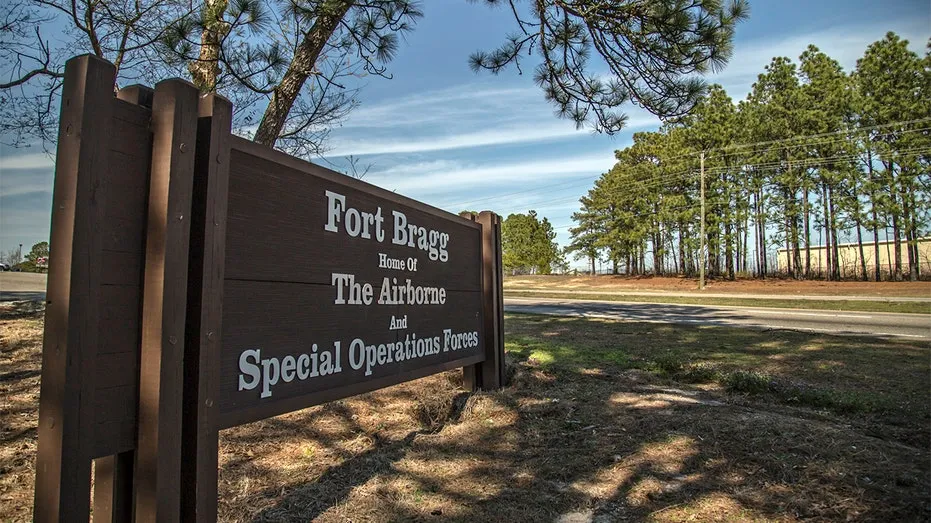
In a razor-thin vote, the House of Representatives has approved a measure that would establish a default approval for qualified service members and Pentagon civilian employees seeking to carry personal firearms on military installations. The amendment, passed by a vote of 215-214 on Tuesday night, shifts the burden to installation commanders to justify denying such requests, rather than requiring explicit approval for every instance.
The amendment, championed by Representative Jeff Crank (R-Colo.), does not grant an automatic right to carry firearms on base. Instead, it creates a presumption of approval for those who meet established qualifications. This development comes less than a year after a highly publicized incident at Fort Stewart, Georgia, in August 2025, where an Army sergeant allegedly used a personal handgun to shoot five fellow soldiers. While the victims survived after other soldiers intervened, personal firearms were prohibited on the installation at the time.
The vote on this firearms amendment occurred amidst a broader debate over the National Defense Authorization Act (NDAA) for fiscal year 2027. Traditionally a bipartisan cornerstone of congressional legislation, the NDAA has become a battleground for contentious social and policy issues, potentially complicating its passage and negotiations with the Senate.
Debates Over Social Issues in Defense Bill
Several other amendments, touching on sensitive social issues, also saw votes on Tuesday, highlighting divisions within Congress.
- TRICARE Coverage for Transition-Related Care: An amendment from Representative Nancy Mace (R-S.C.) passed by a 219-208 vote, prohibiting TRICARE, the military’s health insurance program, from covering transition-related hormones, puberty blockers, and surgeries for service members and their dependents. This measure would expand upon existing restrictions and codify the prohibition into federal law.
- Transgender Athletes in DoD Schools: Another amendment from Representative Mace sought to bar transgender girls from participating in girls’ sports at Department of Defense Education Activity (DoDEA) schools, which serve children of military families. This amendment was approved by a vote of 221-203.
- Transgender Troops Policy: However, an amendment proposed by Representative Lauren Boebert (R-Colo.) that aimed to codify former President Donald Trump’s 2025 executive order barring transgender individuals from military service and requiring personnel to adhere to their biological sex was rejected. This amendment failed by a narrow margin of 217-212, with a coalition of Democrats and some Republicans opposing it.
Other Amendments and Funding Debates
Beyond the social policy debates, the House also considered amendments related to foreign aid and military operations.
- Ukraine Security Assistance: An amendment from Representative Eli Crane (R-Ariz.) that proposed largely eliminating funding for the Pentagon’s Ukraine Security Assistance Initiative, allowing funds only for security at the U.S. Embassy in Kyiv, was rejected. The proposal garnered support from 76 Republicans, underscoring ongoing dissent within the party regarding military aid to Ukraine.
- Foreign Nationals at Military Academies: A measure to bar foreign nationals from attending U.S. military academies, which would end long-standing international training programs, was overwhelmingly rejected by a vote of 360-61.
- Pilot Programs and Infrastructure: Lawmakers also voted to eliminate a proposed pilot program focused on voice-based risk assessment for drug testing. In a vote mirroring the firearms amendment’s tight margin (215-214), the House approved language aimed at ensuring the continued operation of California’s Santa Ynez Pipeline System, crucial for supplying oil to military installations.
The National Defense Authorization Act (NDAA) Landscape
The votes on these amendments are part of the process for shaping the fiscal year 2027 NDAA. The underlying bill proposes authorizing approximately $1.15 trillion for national defense, a significant increase from previous years, and includes provisions for service member pay raises, expanded weapons production, and investments in advanced military technologies like hypersonics and autonomous systems.
While the NDAA sets defense policy and authorizes spending, the actual allocation of funds requires separate appropriations legislation. Notably, the legislation also includes a provision to formally change the Department of Defense’s name to the Department of War, altering references in federal law.
Legislative Roadblocks and Political Maneuvering
The consideration of the NDAA has been fraught with procedural challenges. A significant delay stemmed from a Republican dispute over the SAVE America Act, a proposed election integrity bill. An initial attempt to merge the SAVE America Act with the NDAA through a procedural maneuver failed, with several Republicans joining Democrats in opposition. This led to a revised approach where the SAVE America Act is expected to be attached to the NDAA before it is sent to the Senate, though its final inclusion remains uncertain due to potential Senate opposition and reconciliation efforts.
The Senate’s own version of the NDAA has also encountered difficulties, with Democrats blocking its consideration in protest of U.S. policy regarding Iran. These legislative hurdles mean both chambers face substantial work in reconciling their differing versions of the defense bill.
The ongoing debates occur as the Pentagon seeks substantial funding, including a supplemental request of $87.6 billion, to address costs associated with the war in Iran and replenish weapons stockpiles. House Republicans are also exploring a reconciliation package that could provide additional defense and intelligence funding, bypassing a Senate filibuster, though this approach faces internal GOP resistance and an uncertain legislative path.


