




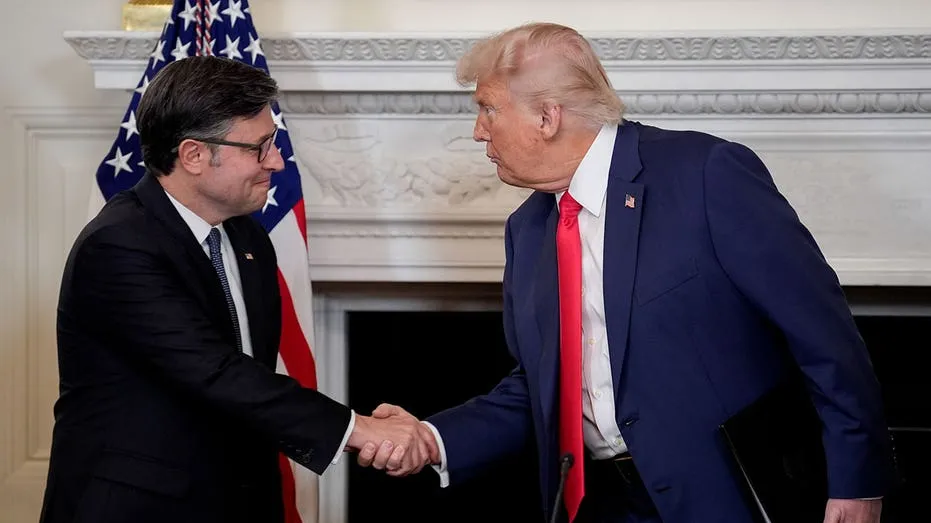
After a lengthy hiatus, the House of Representatives has reconvened in Washington D.C., but their stay is notably brief. Members last cast votes on July 23rd and are slated to depart again shortly, with the Senate not scheduled to return until September 14th. This short legislative burst before a significant break for campaigning has drawn comparisons to the final, often unexciting, preseason game in the NFL.
Much like the early days of NFL preseason, where anticipation for the regular season is high and first-string players might see limited action, Congress appears to be in a similar holding pattern. The bulk of the year’s significant legislative work seems to be completed. Ambitious proposals, such as the GOP’s “Reconciliation 3.0,” are largely considered sidelined. Furthermore, the typical autumn anxieties surrounding a potential government shutdown have been preemptively addressed. A bipartisan interim funding bill, approved by the Senate in early August and set to keep the government operational through December 11th, is expected to pass the House this week. This development has diffused much of the usual end-of-year budget drama.
With major legislative priorities largely settled and government funding secured through year-end, the prevailing sentiment on Capitol Hill is one of anticipation for the post-election period. The real legislative “season” for many members, and indeed for the broader political landscape, begins after the November midterm elections. For now, the focus for many lawmakers is shifting from policy debates to electoral campaigns in their home districts.
A Swift Departure for the Campaign Trail
The urgency to return to districts is palpable, with many members eager to campaign as quickly as they arrived in Washington. This rush to leave the capital could result in sparse attendance for the votes scheduled this week. On Monday evening, attendance for a non-controversial measure stood at 384 members, with a second vote seeing 388 present. These numbers are expected to decline, particularly among members who either lost their primary elections or are not seeking re-election. Reports suggest that some members in these categories have even contemplated early resignations, a move that could further complicate the already narrow Republican majority.
When questioned about the legislative schedule, House Speaker Mike Johnson acknowledged the planned return after the upcoming break. “We’re going to be here this week and then we’re going to come back in a couple weeks,” Johnson stated, referencing a schedule established last December, perhaps with less certainty about the ease of government funding negotiations this year.
Legislative Agenda: A Focus on Political Messaging
The immediate legislative agenda for the House appears geared towards political messaging rather than substantive policy initiatives. Republicans are planning a vote on a resolution intended to force Democrats to publicly declare their stance on socialism versus democracy. The aim is to place Democrats on the record in a way that the GOP can leverage in campaign advertising.
“They want to abolish things like the U.S. Supreme Court. The United States Senate,” commented Representative Jeff Crank (R-Colo.), characterizing the Republican intent to frame the vote as a referendum on progressive ideologies. Representative Tom Tiffany (R-Wis.) expressed a similar sentiment, stating, “We need to see where Democrats stand on this because the American people are rejecting it.” Representative Carlos Gimenez (R-Fla.) added, “They’re going to try to distance themselves as much as they can. But the fact is that’s where the Democratic Party is going.”
This strategy is often referred to as a “gotcha” vote, designed to create a difficult choice for Democrats. However, the resolution reportedly includes the SAVE America Act, a measure requiring proof of citizenship for voting. Many Democrats view this act as a “poison pill,” intended to suppress votes. This inclusion could lead some Democrats to vote against the resolution, potentially allowing Republicans to still frame their opposition negatively, even if they are voting against the SAVE America Act itself.
House Minority Leader Hakeem Jeffries (D-N.Y.) criticized the resolution, calling the SAVE America Act the “suppress the vote act.” He questioned the number of Democrats who would support a resolution focused on “rigging the midterm election by elevating this voter suppression legislation that Donald Trump has been trying to jam down the throats of the American people for the last year.”
Internal Party Challenges and a Push for Recess
Beyond the messaging vote, the House may also address internal party matters. A resolution to censure Representative Chuck Edwards (R-N.C.) is possible, following his admission of inappropriate conduct and withdrawal from his re-election bid. Additionally, there are discussions surrounding Representative Cory Mills (R-Fla.), who faces allegations of financial misconduct and assault. Despite losing his primary, the possibility of an expulsion effort remains. Representative Max Miller (R-Ohio) is also under scrutiny due to allegations of spousal and child abuse, which he denies. Speaker Johnson has indicated support for Miller’s re-election, emphasizing the need for the Ethics Committee to complete its inquiry before any House action is taken, describing Miller as a “great Member of Congress” who is “still working through” personal issues.
However, the leadership’s desire to avoid further entanglement in these sensitive personal matters appears to be a driving factor in the push to adjourn. The most politically expedient solution for House Republicans, particularly those defending narrow majorities, may be to return to their districts and focus on campaigning, potentially delaying their return to Washington until after the election.
Conclusion: A Strategic Retreat
The current legislative session in the House of Representatives is characterized by its brevity and a clear strategic focus on the upcoming midterm elections. With government funding secured and major policy battles largely concluded for the year, lawmakers are prioritizing their electoral prospects. The planned votes appear designed to create political talking points rather than enact new legislation. The strong inclination for members to return to their districts underscores the high stakes of the November elections, suggesting that Washington may remain largely empty until the political landscape is redrawn.


