




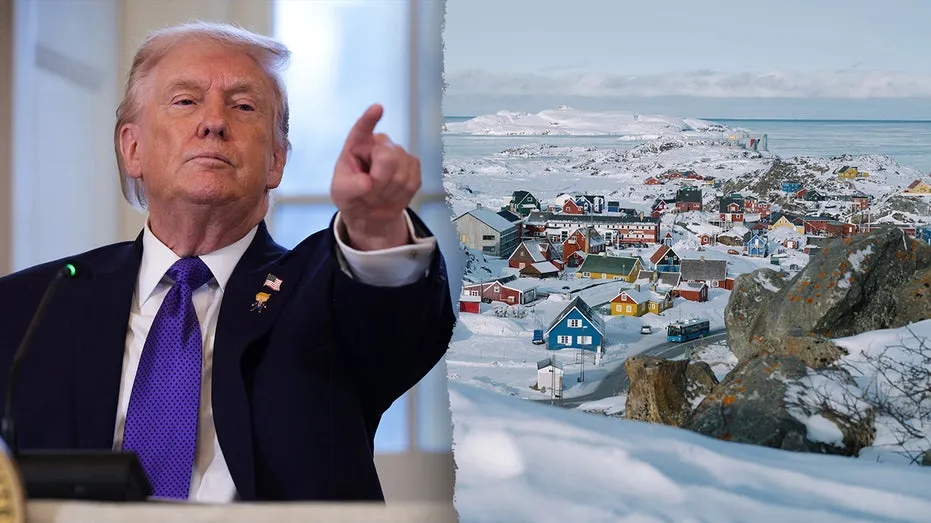
Reykjavik, Iceland – Icelanders cast their ballots on Saturday in a pivotal referendum that could see the nation revive its bid to join the European Union. The vote takes place against a backdrop of heightened geopolitical tensions, notably amplified by U.S. President Donald Trump’s expressed interest in acquiring neighboring Greenland, a move that has introduced a new security dimension into a long-standing debate within the NATO ally.
EU Membership: A Matter of Security and Identity
Iceland, a nation strategically positioned in the North Atlantic and situated a mere 180 miles from Greenland, possesses no standing military. Its defense relies heavily on NATO and a long-standing security pact with the United States. President Trump’s repeated assertions of interest in acquiring Greenland have reportedly unsettled segments of the Icelandic population, prompting questions about whether closer integration with the European Union could offer an additional layer of security for the island nation.
The referendum asked approximately 275,000 eligible voters a straightforward question: Should Iceland resume membership negotiations with the European Union? As of Saturday evening, official results had not yet been declared. Should the referendum garner sufficient support, Iceland would embark on renewed talks with the EU, with a subsequent vote on the terms of actual membership anticipated if negotiations prove successful. The current government, led by Prime Minister Katrín Jakobsdóttir, has pledged to honor the referendum’s outcome, even though the vote is technically advisory rather than legally binding.
Prime Minister Jakobsdóttir, after casting her vote on Saturday, described the campaign as a “tight race, extremely exciting.” She noted that the discussions surrounding the referendum had significantly elevated the discourse on Iceland’s relationship with the EU, its global standing, and its overall geopolitical situation.
Greenland Factor Adds Geopolitical Weight
While domestic economic concerns and national identity have been central themes throughout the referendum campaign, President Trump’s ambitions regarding Greenland have undeniably cast a long shadow. The U.S. leader’s persistent interest in acquiring Greenland, a self-governing territory of Denmark, has been a recurring topic. Trump has previously stated his intention to secure the strategically vital Arctic island, remarking that the U.S. would obtain it “one way or the other.” Reports indicate that the Trump administration had even explored various options for acquiring Greenland, including the theoretical possibility of military action.
Such a hypothetical move against territory belonging to Denmark, a fellow member of NATO, would present a profound challenge to the alliance and its foundational collective-defense commitments. Adding to the complexity, President Trump has, on several occasions, mistakenly referenced Iceland when discussing Greenland, according to reports. The island nation found itself inadvertently drawn into the broader discussion earlier this year when a former U.S. representative, Billy Long, who now serves as the U.S. Ambassador to Iceland, reportedly made a jest to congressional colleagues about Iceland potentially becoming the 52nd U.S. state, with himself as governor.
Historical Context of Iceland’s EU Aspirations
Iceland’s journey toward potential EU membership has been a complex and often contentious one. The nation first applied for membership in 2009, during the global financial crisis, viewing it as a potential pathway to economic recovery and stability. However, negotiations stalled, and public opinion began to shift. By 2015, Iceland formally withdrew its membership application, citing a lack of political consensus and a desire to focus on its own economic resurgence.
The current referendum represents a potential rekindling of that aspiration, driven by a confluence of factors. Supporters argue that EU membership would offer Iceland greater economic diversification, access to the EU’s single market, and a stronger voice on the international stage. They also point to the benefits of aligning with a major democratic bloc in an increasingly uncertain global environment.
Conversely, opponents raise concerns about the potential erosion of Iceland’s sovereignty, particularly regarding its fishing rights and control over its natural resources. The perceived bureaucratic complexities of the EU and the financial contributions required are also frequently cited as drawbacks. The debate, therefore, encapsulates a fundamental question for Iceland: how best to navigate its unique position in the world, balancing national interests with the advantages and challenges of deeper international integration.
Conclusion: A Nation at a Geopolitical Crossroads
Saturday’s vote places Iceland at a significant geopolitical crossroads. The decision on whether to reopen EU membership talks is intrinsically linked to the nation’s security considerations, particularly in light of recent international developments. The outcome will not only shape Iceland’s future economic and political trajectory but also reflect its evolving perspective on its role within the broader European and transatlantic security architecture. The Icelandic people’s choice will signal their preference for navigating an unpredictable world – whether through closer alignment with the European Union or by maintaining a more independent, albeit U.S.-aligned, security posture.


