




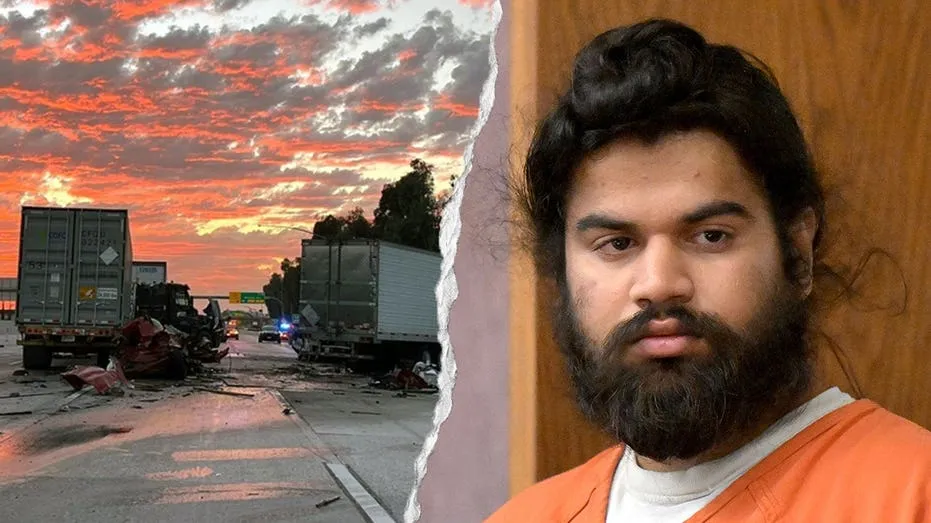
A 21-year-old Indian citizen, who authorities stated was residing in the U.S. without legal status, received a sentence of four years and eight months in prison on Tuesday. The sentence follows his role in a devastating fiery crash on Interstate 10 in Southern California last year that claimed the lives of three individuals.
Driver’s Plea and Crash Details
Jashanpreet Singh entered a guilty plea to three felony counts of vehicular manslaughter committed with gross negligence. These charges stem from the tragic incident that occurred in October 2025. According to official accounts, Singh was operating a semitruck when it collided with traffic that had slowed considerably on Interstate 10 in San Bernardino County. The impact not only resulted in the deaths of three people but also left several others injured.
Dashcam footage of the crash, reviewed by investigators, indicated that Singh did not appear to apply his brakes before striking the vehicles ahead. Toxicology reports later confirmed that Singh was not under the influence of alcohol or drugs at the time of the collision.
Background and Immigration Status
Federal sources have indicated that Singh is an immigrant from India who entered the United States across the southern border in 2022. He was reportedly released into the country by immigration authorities pending an immigration hearing. His initial encounter with Border Patrol occurred in March 2022 in California’s El Centro Sector.
Commercial Driver’s License and Regulatory Concerns
Records from the U.S. Department of Transportation show that Singh obtained a California commercial driver’s license in June 2025. This occurred despite earlier warnings from federal officials to California regarding compliance issues with commercial driver’s licenses. In September of that year, federal authorities had alerted the state to these problems, recommending measures such as pausing the issuance of new licenses to non-citizens and reviewing existing ones to ensure they met federal standards. The directive stipulated that any license holder not meeting the criteria should have their license revoked.
Federal officials stated that Singh should have been disqualified from holding a commercial license under an emergency policy enacted by the Department of Transportation. California officials, however, maintained that Singh’s eligibility for his commercial driver’s license was based on federally approved employment authorization documents. The federal transportation authorities countered that new emergency rules should have precluded him from obtaining or retaining the license.
A significant detail emerged regarding Singh’s license: a restriction was removed just after he turned 21 on October 15. Tragically, only six days later, Singh was driving the semitruck involved in the fatal crash.
Conclusion
The sentencing of Jashanpreet Singh brings a measure of closure to the families affected by the tragic I-10 crash. The incident also highlighted complex issues surrounding immigration, commercial driver licensing, and regulatory oversight, prompting reviews and discussions about safety protocols on the nation’s roadways.


