




A legal immigrant who navigated a decade-long journey to become a U.S. citizen has voiced strong disapproval of “birth tourism” and illegal immigration, describing them as deeply disrespectful to those who follow the established legal pathways to enter the country. Kris Ramsingh, a business owner from Virginia, shared his perspective, emphasizing how his own experience immigrating legally has shaped his views on immigration policy.
A Personal Journey to Citizenship
Ramsingh, originally from Trinidad, arrived in the United States in 2006 and achieved citizenship in 2015 after a rigorous process. He recounted the numerous federal requirements he had to meet, including providing proof of vaccinations, extensive personal documentation, a criminal background check, and financial records to demonstrate he would not become a public charge. “America doesn’t owe us anything,” Ramsingh stated, reflecting on the mindset of legal immigrants. “Our government here doesn’t owe us anything. We have the privilege of coming into this country where it’s a holiday visa or for school.”
His arrival in the U.S. with his wife in 2006, armed with just $300 and a few suitcases, coincided with the week of Independence Day. Now, he has lived in Roanoke for all of those years, building a life and a business. His company, Dominion Custom Upholstery, is a testament to the opportunities he found after immigrating.
Reflections on the American Dream and National Security
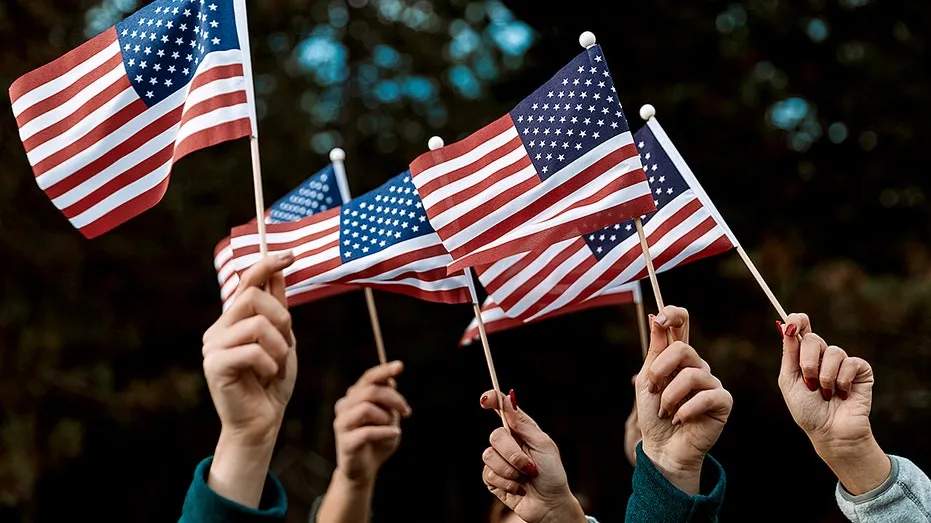
As the nation prepares to celebrate Independence Day, Ramsingh expressed a profound sense of pride in the American flag. He drew a parallel to his past in Trinidad, where in 1990, a coup attempt saw the prime minister shot and officials taken hostage. The arrival of American soldiers brought a sense of safety and security that deeply impacted him. “When we saw the red, white, and blue [of American] soldiers coming into the country, we knew we were safe. We knew at that point that America had our back,” he recalled. This experience, he noted, has given him a unique appreciation for the United States’ role in global stability and a concern for nations that seek American aid but later turn against the U.S.
Ramsingh’s entrepreneurial spirit led him to found Dominion Custom Upholstery over 13 years ago. He has since expanded his ventures to include a company focused on boatworks and interior repairs, and more recently, Dominion Project International. This missionary organization allows him to travel to India, Africa, and the Caribbean, sharing his faith and providing essential resources like clean water and medical supplies.
He defines the American Dream as the opportunity to pursue one’s ambitions through hard work, with the resilience to try again if initial attempts fall short. “The flag represents peace [and] hope as we’re getting ready to celebrate Saturday, the Fourth of July, and it means so much to me — it means freedom,” he said.
Critique of Current Immigration Challenges
Upon returning from international missionary trips, Ramsingh feels a distinct sense of security and belonging when he lands on U.S. soil. “There’s a sense of ‘I’m back on U.S. soil; I’m home,’” he shared, whether arriving in Washington D.C., Miami, or New York. This feeling intensifies his distress when he encounters individuals, both American citizens and foreigners, who express hatred towards the United States. “I think if you hated that much, you should just leave — there is no need for you to be here,” he asserted.
Ramsingh pushed back against the notion that President Trump is anti-immigrant. “He’s not anti-immigrant. Republicans are not anti-immigrant — we just want them to go through the process of doing it legally; coming in legally.” He specifically criticized the current administration’s border policies, stating, “During the Biden administration. When he opened that border — we’re anti-invasion, we are not anti-immigrant. That was an invasion.”
While acknowledging the emotional difficulty of witnessing personal stories related to deportations, Ramsingh attributes these situations to a long history of lax enforcement of immigration laws. “I came from a third-world country. My missions are in third-world countries. I see how these people live. I understand why they want to come to America. I understand the ‘why’,” he explained. He reiterated his belief that former President Trump’s stance was not against immigration itself, but rather a call for it to be managed correctly. “And again, Donald Trump and our government doesn’t owe immigrants anything. We have the privilege of being here. It’s a privilege. It’s not a right.”


