




Key to Peace or Deal-Breaker? IAEA Access to Iran’s Nuclear Facilities in Focus
The path toward potential peace with Iran hinges critically on whether the regime will grant inspectors from the International Atomic Energy Agency (IAEA) access to its nuclear weapons facilities. This access is a central point of contention, with conflicting statements from Iranian officials and President Trump suggesting a familiar pattern of obstruction that has plagued verification efforts for two decades.
Decades of Non-Cooperation Hamper Verification
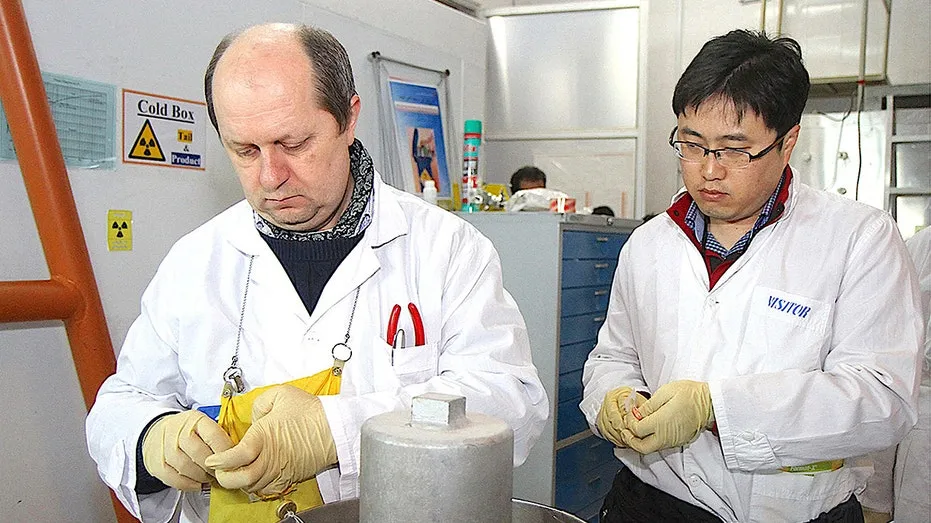
Experts in Iran’s nuclear program highlight a long-standing issue: Iran’s reluctance to cooperate with IAEA inspectors. David Albright, a leading authority on Iran’s nuclear weapons program and president of the Institute for Science and International Security, stated that the IAEA has consistently “come up short” in its attempts to secure reliable information and verification. “Iran has not cooperated for twenty years,” Albright noted, adding that Tehran frequently employs tactics to extend processes, rendering them “a pointless exercise.”
This protracted strategy, according to Albright, has allowed Iran to advance its work on nuclear weapons and delivery systems over the decades. He expressed concern that this history of non-cooperation casts a shadow over any potential Memorandum of Understanding (MOU) concerning IAEA inspections of Iran’s atomic weapons program. The way Iran interacts with the IAEA, Albright believes, will be a crucial indicator of the seriousness and potential success of ongoing negotiations.
Conflicting Signals from Tehran
Official statements from Iran present a mixed picture. The Islamic Republic of Iran’s Ministry of Foreign Affairs has denied reports suggesting an invitation to the IAEA to inspect its nuclear facilities. A statement from Foreign Ministry Spokesman Esmaeil Baghaei indicated that certain media outlets had published inaccurate claims. Furthermore, Deputy Foreign Minister for Legal and International Affairs Kazem Gharibabadi wrote on social media that no meeting had occurred with IAEA Director General Rafael Grossi in Switzerland, despite his request. Gharibabadi explicitly stated, “There is no plan for access to the facilities that were attacked or to the nuclear materials.”
However, IAEA Director General Grossi, speaking in Japan, indicated that an agreement was in place for the IAEA to supervise and monitor the nuclear aspects of any deal. He referenced a Memorandum of Understanding signed by Presidents Trump and Pezeshkian, which he stated expressly designates the IAEA’s role in oversight. Grossi mentioned that initial discussions regarding inspections have begun, expressing hope for inspectors to visit sites “soon.”
Uncertainty Over Inspection Scope
It remains unclear whether Grossi’s team will be granted access to all of Iran’s nuclear weapons facilities and suspected sites. The IAEA has declined to provide detailed responses to queries regarding the effectiveness of past oversight efforts, what might differ this time, and whether inspectors will have access to meaningful locations or merely symbolic sites. Questions also persist about whether the focus will be on specific facilities like Pickaxe Mountain or those already damaged or concealed.
Broader Concerns About Weaponization Capabilities
Beyond declared facilities, experts point to a wider array of potential sites linked to Iran’s nuclear ambitions. Israel’s government has reportedly identified over ten locations where Iran is suspected of engaging in nuclear weapons-related activities. The IAEA has not commented on whether inspectors will seek access to these sites.
Jason Brodsky, policy director at United Against Nuclear Iran, emphasized the need for Iran to be transparent and allow inspections not only at declared sites, particularly those damaged during recent operations, but also at universities, military bases, and other state organizations involved in dual-use research applicable to nuclear weapon development. Brodsky noted that the original 2015 Joint Comprehensive Plan of Action (JCPOA) lacked provisions for inspecting Iran’s nuclear weaponization program, a significant weakness.
Albright, a critic of the JCPOA, stated that the Obama-era deal overlooked Iran’s lack of cooperation. He cautioned against repeating such an approach, urging the current administration not to enter into a similar agreement. Brodsky further stressed that any new accord must include enhanced inspection powers, citing Iran’s denial of access to damaged nuclear facilities since June 2025 as a violation of its obligations under the Nuclear Non-Proliferation Treaty.
Administration’s Stance and Presidential Statements
When questioned about the IAEA’s limitations regarding sanctions on Iran’s nuclear facilities, a White House spokesperson directed inquiries to Vice President JD Vance and comments made by Grossi. Vance stated that Iran’s agreement to invite IAEA inspectors back is a “major milestone” and the first step toward permanently denuclearizing the country. He affirmed that this outcome aligns with U.S. objectives.
President Trump, via social media, asserted that Iran has fully agreed to high-level nuclear inspections for the foreseeable future, which he described as ensuring “Nuclear Honesty.” He suggested that without this agreement, negotiations would have ceased.


