




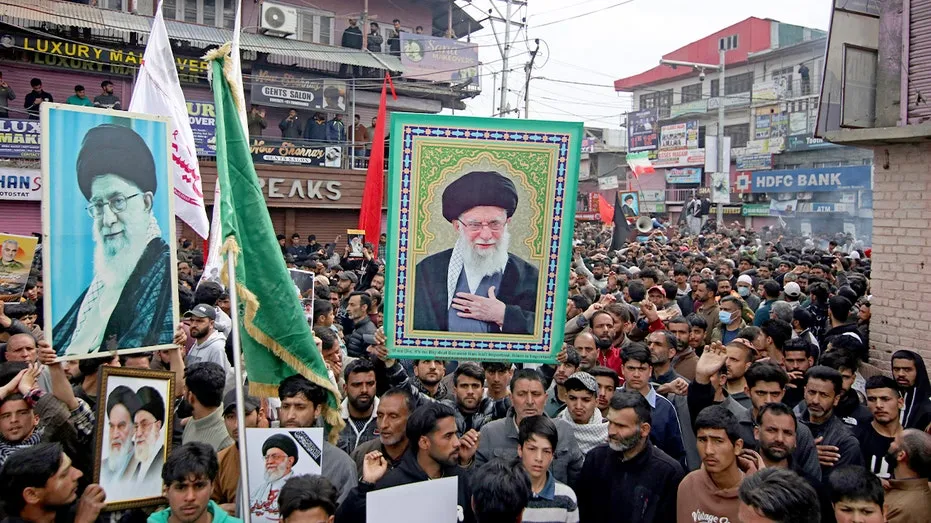
Iran is gearing up for the state funeral of Supreme Leader Ali Khamenei, scheduled for July 9, more than four months after his death. The prolonged interval between his passing and burial has sparked considerable discussion, particularly concerning the preservation of his remains. Authorities are mobilizing the Basij militia and implementing extensive security measures in anticipation of what is expected to be a monumental public turnout for the funeral.
Questions Surround Khamenei’s Preservation and Burial
The delay in laying Khamenei to rest has prompted questions about the methods used to preserve his body. Islamic tradition generally advocates for prompt burial and discourages the use of chemical embalming. Counterterrorism expert Dr. Mohammed Omar explained that the preservation likely involved refrigerated cold storage, a practice permissible under Shia law in exceptional circumstances, especially for a figure of Khamenei’s stature. He noted that Iranian forensic morgues routinely hold bodies for extended periods, making a four-month preservation in freezing conditions not unusual within the country’s established practices.
The circumstances of Khamenei’s death, which occurred on February 28 during a U.S. strike on his compound in Tehran, may also be a factor. Dr. Omar suggested that the nature of the strike, described as a bunker-penetration operation, might mean that the remains are not intact. He pointed out that other individuals killed in the same incident were identified only after weeks, through DNA analysis. The ongoing preparations, including repeated shifts in burial sites and confirmation of burial only days before the event, could indicate that the regime has preserved remains but cannot display them publicly in a conventional manner.
A Show of Strength and Continuity
Iranian officials are framing the funeral as a dual event: a final farewell to their long-serving leader and a powerful demonstration of national strength and resolve under the slogan “We Must Avenge.” Yaqoub Soleimani, deputy for cultural and educational affairs at the Martyrs Foundation and a funeral organizer, described the ceremony as one that would be conducted “with full grandeur.” He projected that an attendance of one million people would mark the occasion as “a historical event” and “a national epic in the memory of the Islamic Republic of Iran.”
The planned schedule includes public viewings on Saturday and Sunday in Tehran. A major funeral procession is set for July 6, with local authorities estimating a potential turnout of 15 to 20 million people in the capital. The following day, another procession is slated to take place in Qom, a significant religious center in Shia Islam.
Logistical Spectacle and Political Messaging
Dr. Omar commented on the sheer scale of the planned event, noting that the reported figures—up to 20 million mourners in Tehran, 35 million nationwide, representatives from over 90 countries, and 14,000 credentialed journalists—are not merely logistical details but a deliberate political message. He asserted that Tehran is investing heavily in projecting an image of continuity and stability, particularly in the aftermath of recent conflicts.
The organization of the funeral is being managed by the Basij and the Islamic Revolutionary Guard Corps (IRGC). The Basij is reportedly handling logistical aspects, such as converting highways into parking areas, assigning specific Tehran districts to various provinces, and declaring public holidays. The IRGC is tasked with crowd control. Dr. Omar highlighted the dual role of this apparatus, noting its involvement in organizing public grief while also being the force that suppressed recent protests and denied funerals to victims of state violence.
Limited International Representation
While senior Iraqi officials are expected to attend, the representation from other major global powers is anticipated to be limited. Despite a personal invitation from Iranian President Masoud Pezeshkian to Indian Prime Minister Narendra Modi, India plans to send a lower-level delegation. Georgian President Mikheil Kavelashvili has confirmed his attendance.
“No major power is sending its top leader,” Dr. Omar observed. He interpreted this limited high-level attendance as a reflection of Iran’s regional isolation, despite the regime’s claims of leading a broad regional alliance. For the United States, he suggested, this serves as an indicator that the recent conflicts have indeed diminished Tehran’s regional influence more than the regime publicly admits.
Conclusion
As Iran prepares for the funeral of Supreme Leader Ali Khamenei, the event is shaping up to be a significant display of state power and national mourning. The extensive mobilization of the Basij, coupled with the logistical spectacle and carefully crafted messaging, underscores the regime’s efforts to project an image of strength and continuity. However, the limited international representation at the highest levels may signal a more complex reality of Iran’s regional standing.


