

James Carville Foresees 2028 Democratic Reckoning Over Ideology
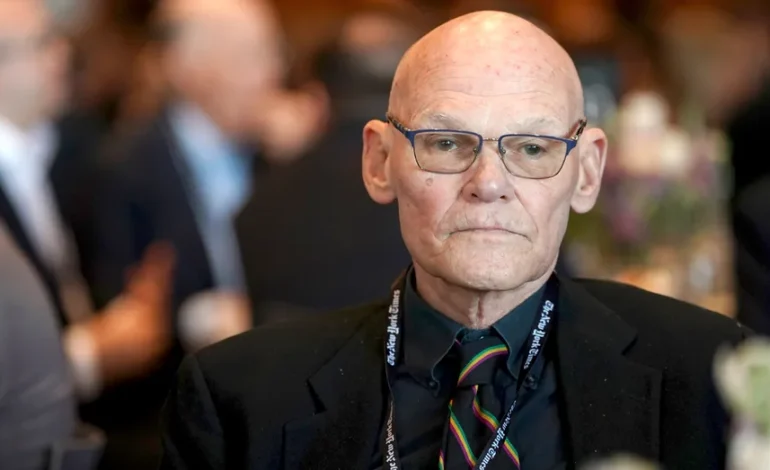

Veteran Democratic strategist James Carville predicts a significant ideological showdown within the Democratic Party in 2028, referring to it as a “reckoning.” However, he firmly believes that Democratic primary voters will ultimately reject a socialist candidate for the presidential nomination.
Carville’s 2028 Prediction: A Test for the Party’s Direction
Speaking on the program “Saturday in America,” Carville outlined his vision for the upcoming 2028 presidential primary. He stated that the crucial moment for the party will be its nominating process, emphasizing that the ultimate decision rests with the Democratic voters themselves. This prediction comes amidst a backdrop of recent electoral successes for candidates endorsed by the Democratic Socialists of America (DSA).
The growing influence of the DSA has prompted concern among some centrist Democrats. Despite these victories, Carville expressed strong conviction that the party’s base will not select a presidential nominee aligned with the DSA. “Let me assure you that Democratic voters are not going to nominate the DSA or anybody close to the DSA,” Carville asserted. “The Democrats have never nominated the most liberal candidate, and they’re not [going to] do it in 2028.”
DSA-Backed Candidates Gain Traction
Carville’s forecast notwithstanding, several candidates supported by the DSA have achieved primary wins this year. Notable victories have been recorded in states like New York and Colorado. Furthermore, prominent political figures, including New York City Mayor Zohran Mamdani, are associated with the DSA.
The specter of a socialist candidate potentially vying for the Democratic ticket in 2028 has sparked considerable debate. While Carville dismisses the likelihood of a DSA nominee winning the presidency, he acknowledges the talent of figures like Representative Alexandria Ocasio-Cortez, D-N.Y. He places her in a distinct category, describing her as “a very talented, very articulate person” with more potential than many on the left.
Carville anticipates that the DSA will indeed put forward a presidential candidate in 2028. However, he predicts such a candidate would struggle significantly, failing to advance beyond the initial primary contests in the first two states. He characterized the DSA as a “minor part of the Democratic coalition,” suggesting that while the party will continue to evolve, this particular faction’s influence on the national presidential ticket will be limited.
Alexandria Ocasio-Cortez and the DSA
Recent reports indicate that Representative Alexandria Ocasio-Cortez has rejoined the DSA after a seven-year hiatus. This development has fueled speculation about her potential presidential ambitions in 2028. The DSA confirmed her renewed membership in August 2026, stating she is a “member in good standing.”
The strategic positioning of socialist candidates within the Democratic Party presents a complex dynamic. While some see it as a sign of the party’s leftward shift, others, like Carville, view it as a temporary surge that will be tempered by the broader electorate’s preferences in a general election context. The internal debate within the Democratic Party regarding its ideological center and the role of progressive and socialist factions is likely to intensify as the 2028 election cycle approaches.
Looking Ahead: The Democratic Coalition
Carville’s perspective highlights a recurring tension within the Democratic Party: balancing the energy and policy goals of its progressive wing with the broader appeal needed to win national elections. The “reckoning” he foresees in 2028 will likely involve a robust debate over the party’s identity and its path forward.
The strategist’s comments underscore the importance of the nominating process as a critical filter for candidates. While the DSA and its aligned politicians have demonstrated success in specific local and congressional races, Carville suggests that the leap to a presidential nomination requires a different calculus, one that he believes will ultimately favor more centrist or broadly appealing candidates within the Democratic framework.
The coming years will undoubtedly see further discussion and maneuvering as various factions within the Democratic Party position themselves for the 2028 election. The extent to which socialist ideas and candidates influence the party’s platform and nominee remains a key question, with figures like Carville offering a clear prediction based on historical party trends and his extensive experience in political strategy.