




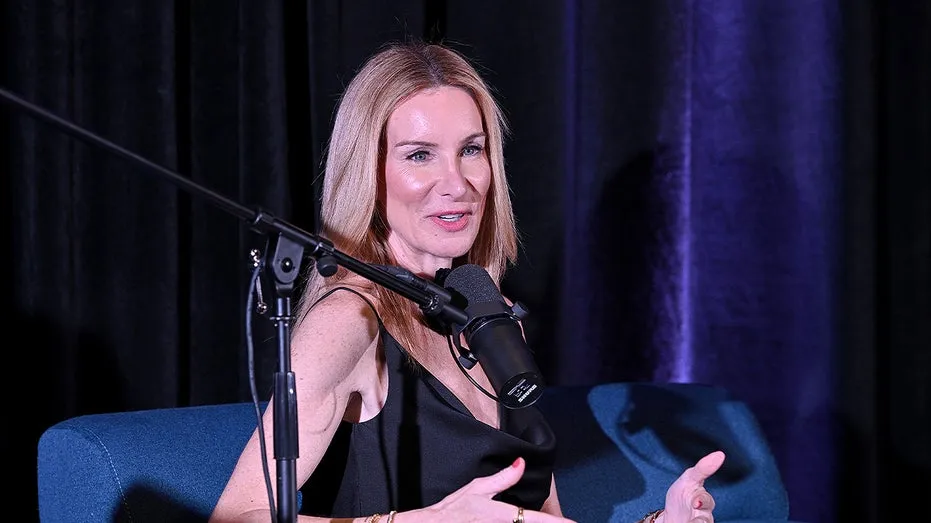
A prominent far-left podcast host has ignited a firestorm of controversy with her scathing remarks about homeschooling, labeling it a form of “trickle-down stupidity” and a “huge problem” in America. Jennifer Welch, co-host of the “I’ve Had It” podcast, unleashed a torrent of criticism against parents who choose to educate their children at home, suggesting it’s rooted in selfishness and a rejection of critical thinking.
Homeschooling Under Fire
During a recent episode, Welch and her co-host Angie Sullivan responded to a listener’s complaint about parents who, in their opinion, are unqualified to homeschool. Sullivan immediately jumped in, expressing her deep reservations about the practice. “I just think homeschooling is a bad idea, from soup to nuts,” Sullivan stated. She elaborated, finding the idea of being with one’s children constantly “f—ing weird as f—,” and questioned the adequacy of socialization in home-educated environments.
Sullivan also voiced suspicion about parents who opt for homeschooling, suggesting that some do it simply because it appears easier. “I don’t trust somebody that wants to be with their kids 24/7,” she remarked, implying that a desire for constant proximity might stem from a lack of capability rather than a desire for involvement.
‘MAGA on Steroids’ and ‘Child Abuse’ Allegations
Jennifer Welch escalated the criticism, linking homeschooling to specific political and cultural movements. She characterized it as “trickle-down stupidity,” “MAGA on steroids,” and associated it with “tradwife” and anti-vaccination sentiments. “This is the worst, worst, worst,” Welch declared, framing homeschooling as a symptom of what she perceives as a “fundamental crazy Christian problem” in America.
Her rhetoric intensified as she suggested that homeschooling could be considered a form of child abuse. “I think it’s all child abuse, honestly,” Welch asserted. She argued that parents who push a particular religion on their children before they are old enough to make their own informed decisions are acting selfishly. For Welch, hearing that someone was homeschooled often serves as a “red flag,” indicating potential underlying issues.
Broader Societal Concerns
The podcast hosts’ comments come at a time when homeschooling rates have seen fluctuations, particularly in the wake of the COVID-19 pandemic. While some see homeschooling as a flexible and beneficial alternative to traditional schooling, Welch and Sullivan view it as a detrimental trend that isolates children and promotes a narrow worldview.
Welch specifically accused homeschooling parents of attempting to “project a script onto their kids,” implying a lack of independent thought and critical engagement with the world. This, in her view, prevents children from developing their own perspectives and understanding diverse viewpoints.
Counterarguments from Education Advocates
The strong opinions expressed on the podcast have drawn sharp criticism from education policy advocates. Corey DeAngelis, a senior fellow at the American Culture Project, countered the hosts’ assertions by arguing that the truly “weird” position is outsourcing children to government institutions for the majority of their formative years.
DeAngelis highlighted concerns about the public school system, citing “documented abuse, bullying, fights, drugs, gangs, violence, and relentless socialist indoctrination.” He suggested that the “socialization” praised by the podcast hosts often comes at the expense of safety and genuine learning.
Furthermore, DeAngelis pointed out that homeschooling is not a modern invention but rather a return to historical norms. “Parents teaching their own children at home is how human beings learned for thousands of years,” he stated. He contrasted this with the “factory-model government schooling system,” which he attributed to 19th-century Prussian militarism and 20th-century progressive social engineering. According to DeAngelis, this system has demonstrably failed millions of children.
Parental Authority and Choice
DeAngelis concluded that the podcast hosts’ remarks reveal more about their “contempt for family and parental authority than they do about homeschooling.” He emphasized that parents choosing to educate their own children is a natural and fundamental aspect of raising a family, rather than an extreme political statement or a sign of ignorance.
The debate underscores a deeper societal discussion about parental rights, educational freedom, and the role of both families and institutions in shaping the next generation. While some critics view homeschooling with suspicion, proponents argue it offers a personalized and effective educational path, free from the perceived shortcomings of conventional schooling.


