




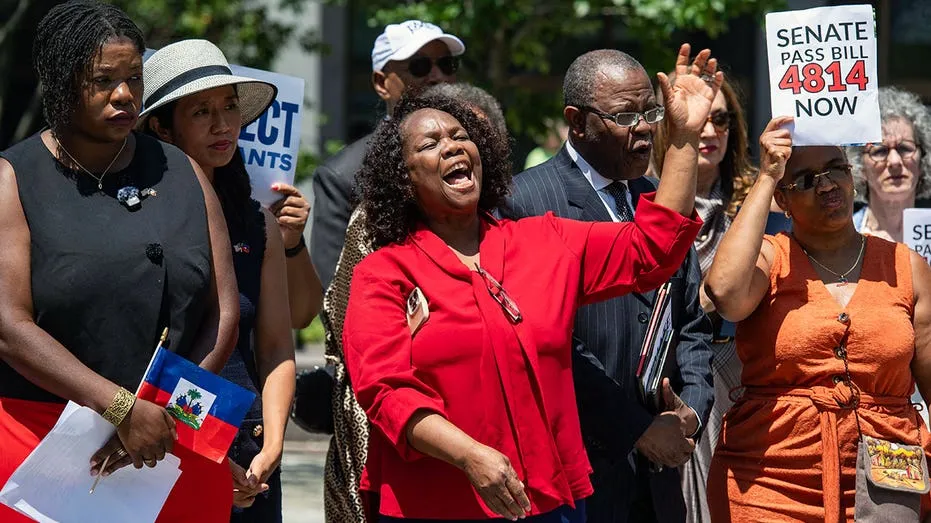
A federal judge has formally acknowledged that a previous court order blocking the Trump administration from ending Temporary Protected Status (TPS) for Haitian nationals is no longer in effect. This development follows a significant Supreme Court ruling that clears the path for the termination of these protections for hundreds of thousands of individuals residing in the United States.
Supreme Court Ruling Undoes Injunction
U.S. District Judge Ana Reyes stated in her order on Wednesday that her prior injunction, which had halted the Department of Homeland Security’s (DHS) efforts to end Haiti’s TPS designation, is now defunct. This action comes directly in response to the Supreme Court’s decision in the case of Mullin v. Doe, which addressed the legal framework surrounding the termination of TPS designations.
While the underlying lawsuit questioning the constitutionality of the termination process will continue, the immediate impact is that the administration is no longer legally prevented from proceeding with ending TPS for an estimated 330,000 to 350,000 Haitians. The core of the remaining legal challenge focuses on whether the decision to terminate TPS was motivated by unconstitutional racial bias.
A Long Legal and Political Battle
The legal fight over Haiti’s TPS status has been protracted, becoming a focal point in the immigration debate, particularly during the 2024 election cycle. Former President Donald Trump and his allies had frequently criticized the Biden administration’s expansion and continuation of TPS for Haitians, linking these policies to an increase in Haitian migrants arriving in the U.S., including in areas like Springfield, Ohio. Concerns raised by residents in such communities included impacts on public services, traffic safety, and cultural integration.
The controversy gained national attention, amplified by anecdotes shared by Trump regarding migrants’ alleged interactions with local wildlife and pets. The White House did not provide a comment on the matter by the time of publication.
Supreme Court’s Stance on Judicial Review
The Supreme Court’s ruling in June established that the TPS statute generally prohibits judicial review of administrative decisions to terminate TPS designations, unless the challenge involves constitutional claims. The Court found that the plaintiffs’ argument based on the Equal Protection Clause was unlikely to prevail and subsequently reversed the decisions of lower courts, sending the case back for further consideration.
James Percival, DHS General Counsel, clarified that Wednesday’s order from Judge Reyes did not, in itself, terminate Haiti’s TPS. He explained that the protections effectively ceased when the Supreme Court’s mandate was issued on July 27. Percival acknowledged Judge Reyes’s order as a formal recognition of this established legal reality.
“Haiti TPS ended when the Supreme Court mandate issued on July 27,” Percival stated on social media platform X. “I will give Judge Reyes kudos though for taking the L with grace and not doing something bonkers like many of her colleagues.”
Background of Haiti’s TPS Designation
Haiti was initially granted TPS following a catastrophic earthquake in 2010. The designation had been maintained for 16 years, spanning multiple presidential administrations. The Biden administration subsequently expanded and extended these protections for a large number of Haitians already living in the United States.
In a prior assessment of conditions within Haiti, former DHS Secretary Kristi Noem concluded that the country no longer met the necessary criteria for TPS. The administration announced its intention to terminate the designation, asserting that the program had exceeded its intended temporary scope. This decision initiated the legal proceedings that eventually led to the Supreme Court’s involvement.
Implications for Haitian Nationals and Employers
Following the Supreme Court’s decision, DHS officially declared the termination of Haiti’s TPS designation, effective July 27. Consequently, employment authorization documents issued under this status are no longer valid. The department has directed employers to re-verify the work authorization status of all employees who were previously covered by Haiti’s TPS.
The current situation in Haiti remains precarious. The U.S. State Department advises against travel to the country, maintaining a Level 4 “Do Not Travel” advisory due to widespread gang violence, kidnappings, and civil unrest.


