
Judge Halts Philadelphia Law Targeting Masked Federal Officers
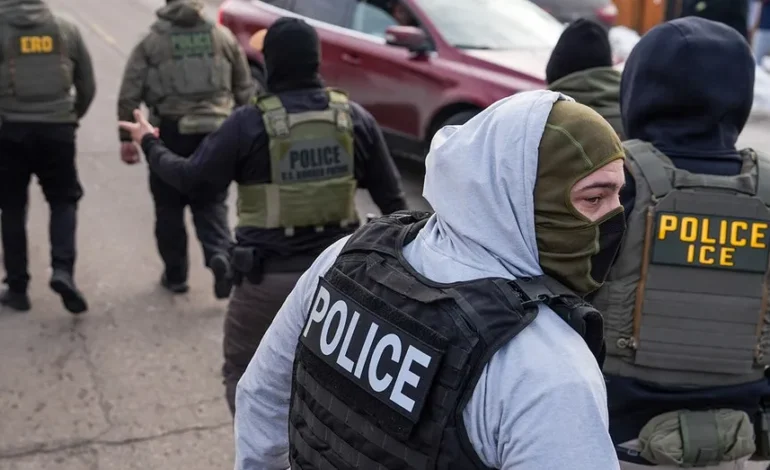

A federal judge has temporarily halted Philadelphia’s new law that aimed to restrict federal law enforcement officers from wearing masks, concealing their identification, and using unmarked vehicles. U.S. District Judge Chad Kenney issued a preliminary injunction on Thursday, preventing the city from enforcing these provisions against federal agents before they were scheduled to take effect on Tuesday.
City Overreach Challenged
The ruling came after the U.S. Department of Justice sued Philadelphia last month, arguing that the city ordinance was an unconstitutional overreach into federal authority. Judge Kenney agreed, stating that a city cannot dictate how federal officers conduct their operations. He emphasized that the Philadelphia City Council, by passing Bill No. 260060, had attempted to bypass constitutional mandates and a fundamental legal principle that has guided American law for over two centuries.
“Endorsing the City of Philadelphia’s position would mean… municipalities could decide whether to pass their own laws regulating how, when, where, and whether federal law enforcement officers can conceal their identities,” Kenney wrote, referencing the Constitution’s Supremacy Clause. This clause establishes that federal law takes precedence over state and local laws when conflicts arise.
Background of the Ordinance
Philadelphia’s City Council passed the measure earlier this year as part of a broader legislative package. The move occurred amidst a national discussion surrounding immigration agents who were seen conducting raids while wearing masks, targeting migrants in various communities. In some instances, these agents were involved in shootings, including an incident in Minneapolis in January where two U.S. citizens were shot.
While the ordinance was initially intended to apply to local, state, and federal law enforcement, Thursday’s injunction specifically blocks its enforcement against federal officers. The law would have prohibited officers from wearing masks or otherwise obscuring their identities while interacting with the public. However, it included exceptions for medical needs, religious coverings, certain tactical gear, and hazardous conditions.
Furthermore, the statute would have required officers to display visible badges and utilize marked vehicles under specific circumstances. Violators could have faced both civil and criminal penalties.
Mayor’s Stance and Legal Proceedings
Philadelphia Mayor Cherelle Parker, a Democrat, had initially declined to sign the bill. Her office had advised her that the legislation presented significant legal challenges. Judge Kenney acknowledged Mayor Parker’s actions, noting that she “acted with civic wisdom and courage to stand up for the Constitution and follow the rule of law where it led.” Despite the mayor’s reservations, the bill became law in May without her signature, as she allowed it to take effect.
The Justice Department expressed satisfaction with the court’s decision. A spokesperson stated that the department “will keep fighting jurisdictions that try to obstruct President Trump’s immigration enforcement with policies that endanger agents and public safety.”
Broader Legal Landscape
This Philadelphia case is the latest in a series of legal disputes between the Trump administration and state and local governments over measures affecting federal officers. Similar legal challenges have arisen in other states:
- On Tuesday, a federal judge blocked a new law in Virginia that aimed to bar federal law enforcement from wearing masks.
- In February, a federal judge halted a California law with similar provisions prohibiting federal officers from wearing masks while on duty.
- The Justice Department has also taken legal action against New Jersey to prevent the enforcement of a comparable mask ban targeting federal agents.
These ongoing legal battles highlight the tension between local attempts to regulate law enforcement conduct and the federal government’s assertion of authority over its agents.
Conclusion
The preliminary injunction issued by Judge Kenney ensures that federal officers operating in Philadelphia will not be subject to the city’s restrictions on masks, identification, and vehicle markings, at least for the time being. The ruling underscores the significant legal hurdles faced by municipalities seeking to impose their own regulations on federal law enforcement activities, particularly when those regulations conflict with federal authority.