
Judge Blocks Trump Order on Noncitizen Voting Ahead of Midterms

Federal Judge Halts Executive Order Targeting Noncitizen Voters
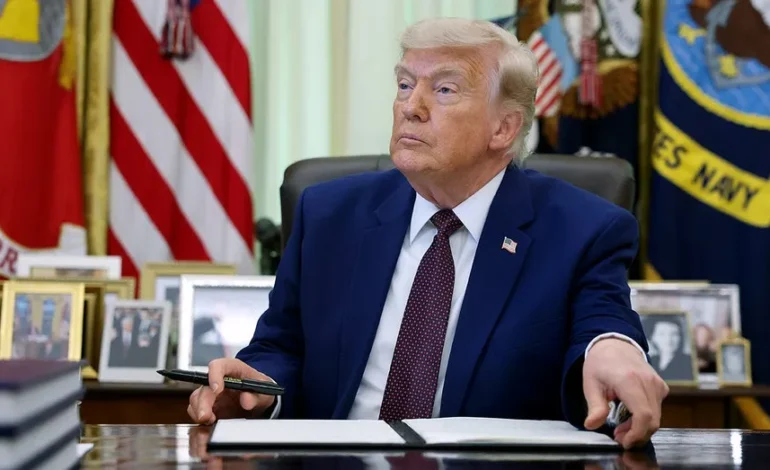
An executive order from President Donald Trump aimed at preventing noncitizens from registering to vote or casting ballots in federal elections has been blocked by a federal judge. The White House has expressed confidence in ultimately prevailing with the implementation of the directive.
The legal challenge centers on a March executive order that sought to establish a federal voter registration list and introduce new restrictions on mail-in voting eligibility. These measures were presented as part of a broader initiative by the administration to combat voter fraud.
Judicial Ruling Underscores Congressional and State Authority
U.S. District Judge Indira Talwani issued a ruling on Thursday, stating that the president does not possess the authority to unilaterally set election rules. The judge emphasized that such power rests with Congress and individual states.
Judge Talwani, who has served on the U.S. District Court for the District of Massachusetts since 2014, was appointed by then-President Barack Obama.
Broader Political Maneuvering Surrounds Election Integrity Efforts
The lawsuit arrives amidst a period of heightened political activity surrounding election integrity. President Trump had recently threatened to withhold support for the bipartisan 21st Century Housing Act, an effort to pressure Congress into passing the Safeguard American Voter Eligibility (SAVE) Act.
Administration officials noted that President Trump has been advocating for the SAVE America Act and other legislative proposals. These proposals aim to implement uniform photo identification requirements for voting, prohibit no-excuse mail-in voting, and end ballot harvesting, all intended to secure elections.
The executive order in question directed the creation of a federal voting registration list and instructed the U.S. Postal Service to deliver mail-in ballots exclusively to individuals on that list.
Ruling Impacts Upcoming Midterm Elections
Judge Talwani’s decision effectively prevents the administration from enforcing these provisions in advance of the November 3 midterm elections. The legal actions were initiated by a coalition of states, led by California Attorney General Rob Bonta, and joined by 22 other states and the District of Columbia, along with various voting rights organizations.
The ruling concluded that President Trump overstepped his executive authority by attempting to alter election rules through executive action, citing the Constitution’s allocation of this power to Congress and the states.
Previous Ruling Also Limited Executive Order Provisions
This development follows a separate decision earlier in the week that struck down other components of President Trump’s March executive order on election integrity, titled “Preserving and Protecting the Integrity of American Elections.” In that instance, U.S. District Judge Denise J. Casper, also an Obama appointee, determined that the order went beyond enforcing existing law and instead sought to create or modify election rules.
That earlier decision blocked the administration from mandating documentary proof of citizenship for federal voter registration, altering voting rules for military and overseas voters, or withholding federal funding from states that did not adhere to specific election rules, including the acceptance of ballots postmarked after Election Day.
President Trump recently canceled the signing of the 21st Century ROAD to Housing Act, issuing an ultimatum that passage of the SAVE Act was a prerequisite for his support. The Safeguard American Voter Eligibility (SAVE) Act includes long-standing proposals from Trump for voter ID and citizenship verification requirements ahead of the midterm elections.