




Judge Halts Trump Visa Ban Targeting ‘Censorship’ Critics
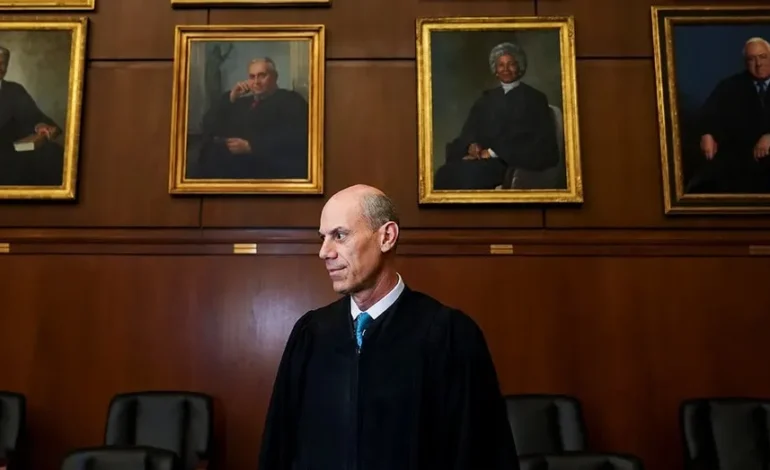

U.S. District Judge James Boasberg has temporarily put the brakes on a Trump administration initiative aimed at barring visas for individuals accused of perpetuating censorship against Americans. The ruling, issued earlier this month, blocks the State Department from denying entry to foreign officials and other nationals deemed responsible for or complicit in suppressing free speech within the United States.
Judicial Scrutiny of Free Speech Policy
Judge Boasberg, who has previously presided over significant legal challenges to Trump administration policies, acknowledged the government’s legitimate interest in addressing foreign officials who use their sovereign power to stifle protected expression in the U.S. However, he expressed concern that the policy might be engaging in viewpoint discrimination, a potential violation of the First Amendment.
“The policy, at its core, does not burden all speech about platforms, all research into content moderation, or all advocacy about online harms,” Boasberg wrote in his decision. He elaborated that the policy specifically targets those who advocate for greater content moderation, labeling of disinformation, restrictions on abuse, data sharing with researchers, or who believe platforms should bear more responsibility for amplified harms.
“The Government, in other words, has not set itself against everyone who speaks about platform governance. It has set itself against those whose work favors more moderation rather than less,” the judge added, highlighting a perceived bias in the policy’s enforcement.
Background: The Global Disinformation Index Controversy
The State Department’s policy emerged in the wake of a controversy during the Biden administration involving the Global Disinformation Index (GDI). GDI, an organization that reportedly produced “blacklists” of certain news websites, received federal funding. Conservative critics argued that GDI’s ratings led advertisers to withdraw revenue from conservative media outlets, raising free speech concerns about federal support for such an organization.
The policy that Judge Boasberg has now paused would have restricted visa access for individuals associated with GDI and similar entities. A spokesperson for the State Department stated that the administration believes individuals involved in censoring American citizens should face consequences, emphasizing that an American visa is a privilege, not an entitlement. Questions regarding the lawsuit were referred to the Department of Justice.
Judge Boasberg’s History with Trump Administration Cases
This is not the first time Judge Boasberg has been at the center of high-profile legal battles involving the Trump administration. He previously issued temporary blocks on the administration’s rapid deportation of Venezuelan migrants and ordered the preservation of Signal messages related to planned U.S. strikes in Yemen. These rulings have positioned him as a judicial counterpoint to several of the administration’s actions.
Boasberg’s decisions have drawn criticism from President Trump himself, who at one point called for his impeachment. The Justice Department also filed a misconduct complaint against the judge, alleging overreach. However, Chief Justice John Roberts dismissed the impeachment call as a response to an unfavorable ruling. Judge Boasberg was initially appointed to the federal bench by President Barack Obama in 2010.
Reactions and Next Steps
Senator Eric Schmitt, R-Mo., commented on the decision, writing on X (formerly Twitter) that “A visa is a privilege—not a constitutional entitlement.” He asserted that while the First Amendment protects Americans’ right to speak, it does not compel the nation to admit foreign actors who seek to restrict that speech.
The lawsuit challenging the State Department’s policy was initiated by the Coalition for Independent Technology Research (CITR), a nonprofit group representing academics and journalists. While Judge Boasberg has issued a temporary halt to the policy’s enforcement, he has yet to make a final ruling on the case’s merits. This means the policy could potentially be upheld in the future. Furthermore, the State Department retains the option to appeal Boasberg’s interim order blocking the policy.
Neither CITR nor the State Department provided comments when reached for requests following the ruling.