



Ex-Teammates Question Fairness of Trans Player Julie Tetart in Women’s Basketball
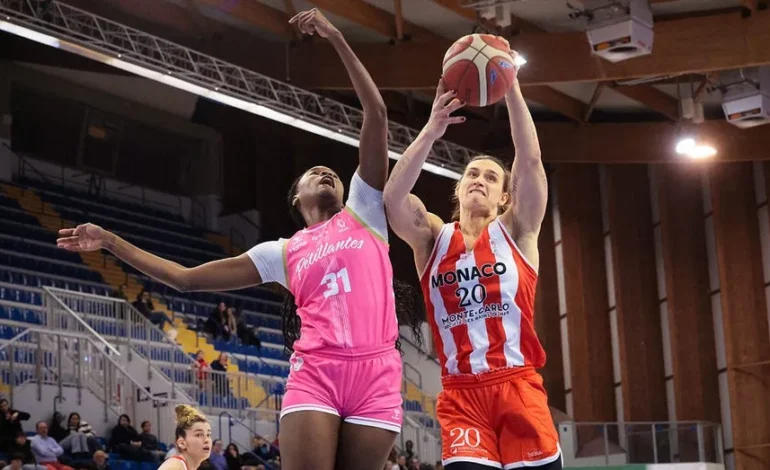

The question of competitive fairness for transgender athletes in women’s sports is once again in the spotlight, this time focusing on French basketball player Julie Tetart. According to former teammates who played alongside Tetart during the 2025-26 season, her physical prowess presents a significant challenge to the notion that she would not hold a competitive advantage in leagues like the WNBA. Their experiences, shared on the French podcast “Club Five,” paint a vivid picture of Tetart’s strength and power, with one describing it as akin to “a train coming into you.” Tetart herself, who averaged an impressive 20 points and 20 rebounds last season, has expressed openness to WNBA contact but acknowledges her age and the presence of other talented players.
Physicality Beyond Compare
Martina Bestagno, a veteran power forward who has competed against top international talent, including WNBA star Brittney Griner (6’9″, 219 lbs) and Isabelle Yacoubou (6’3″, 229 lbs), emphasized that Tetart’s impact goes beyond mere size. While acknowledging Griner and Yacoubou are physically imposing figures, Bestagno stated that Tetart’s combination of size and sheer strength is unprecedented in her experience within women’s basketball.
“It’s not just the size, it’s the combination of size and strength that it’s something that I never went against it before,” Bestagno explained. “I was blown away by the difference talking about strength. The difference is huge.”
Tetart, listed at 6’3″ and 200 pounds, presents a compelling case for consideration in elite women’s leagues. However, when asked if Tetart would “dominate” the WNBA, Bestagno offered a nuanced response. “No, not at all. Not at all,” she stated. “Physically, [Tetart] is probably the strongest that I ever faced. With that being said, basketball is not athletics. It’s not because you’re the strongest automatically you are the best player.” This suggests that while Tetart’s physical attributes are exceptional, the complexities of the game itself might temper the degree of dominance.
Concerns Over Fairness and Opportunity
The discussion raises fundamental questions about inclusion and fairness in women’s sports. Sara Crudo, another former teammate, voiced strong opinions on the matter, questioning the equity of Tetart’s participation in women’s leagues.
“Is it unfair to let [Tetart] play? Yeah, absolutely yes. This is too much, and I’m sorry to say this, but I don’t understand why no one says it,” Crudo stated. She elaborated on the dedication required to reach professional basketball levels, drawing a parallel to her own journey.
“Imagine me when I was 13 years old. I start to travel as a kid, you follow this dream that you have,” Crudo said. “You fight for it. You don’t arrive there in first league by chance, because you work your ass off. And then maybe there is a situation like someone like Julie, that at 30 years old—after she already went through puberty—can come in. I fight for my whole life to reach this level. She’s taking a spot [from] another woman.”
Crudo’s perspective highlights the concerns of some athletes regarding the potential displacement of cisgender women from opportunities within the sport due to the inclusion of transgender athletes who may retain physical advantages developed during male puberty. The narrative suggests a conflict between the WNBA’s stated commitment to inclusivity and the perceived competitive balance within the league.
Tetart’s Current Status and Future
Despite her standout performance in the French league, Tetart currently plays in the French second division. Her team, Monaco, is set to begin its season in September. The WNBA has previously stated its inclusive policies regarding transgender players, but Tetart has not yet received a call from the league. The ongoing debate underscores the complex challenges sports organizations face in balancing inclusivity with ensuring fair competition for all athletes.
The experiences shared by Bestagno and Crudo provide a critical perspective from within the sport, adding layers to the broader conversation about transgender participation in women’s athletics. As Tetart continues her career in France, the discussions surrounding her potential impact on leagues like the WNBA are likely to persist, reflecting the evolving landscape of sports and gender identity.