




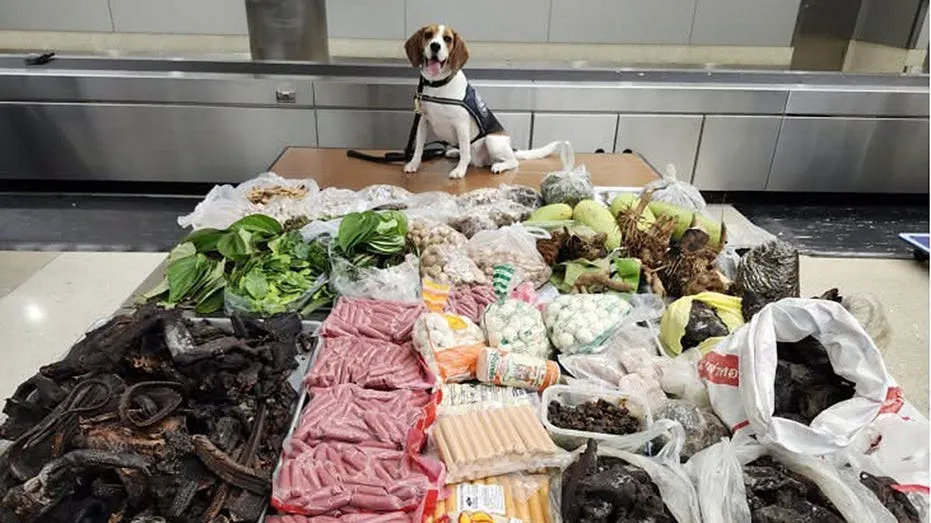
A sharp-nosed canine agent named Maisy has once again proven her mettle, sniffing out a staggering amount of prohibited items packed into a single suitcase arriving from Thailand. U.S. Customs and Border Protection (CBP) agriculture detector dogs like Maisy are trained to detect the scent of potential threats, and this particular dog led officers directly to a bag brimming with illicit meat, plants, and even wildlife products.
A Smorgasbord of Smuggled Goods
The discovery, which authorities reported as weighing nearly 100 pounds in total, included a substantial quantity of meat, raw and otherwise, amounting to about 50 pounds. Alongside the meat were 33 pounds of fresh mangoes, along with garlic, bamboo, and banana plants. Perhaps the most unusual find, however, was approximately 16 pounds of Bengal monitor lizard, a species that requires special handling and permits for import.
CBP officials noted that the U.S. Fish and Wildlife Service took custody of the monitor lizard, underscoring the seriousness of importing restricted wildlife. The agency shared a photo of Maisy, looking quite pleased with herself, posing behind the eclectic collection of contraband, humorously captioning the image with, “If you discovered all this in a suitcase, wouldn’t you be this happy?”
Why the Strict Scrutiny?
Agriculture specialists at CBP play a critical role in safeguarding the nation’s agricultural and natural resources. Their work involves meticulously inspecting international luggage for items that could harbor pests, animal diseases, or invasive species. These threats, if introduced into the U.S., could have devastating consequences for American agriculture, ecosystems, and even public health.
The prohibited items seized in this case represent a clear risk. For instance, unchecked meat products can carry diseases like foot-and-mouth disease, which could decimate livestock populations. Invasive plant species can outcompete native flora, disrupting delicate ecosystems and potentially harming biodiversity. Wildlife, like the monitor lizard, can also become invasive if they escape into the environment, posing a threat to native species and habitats.
A Separate Smuggling Bust Highlights Broader Concerns
In a separate incident occurring around the same time, a joint effort between the California Department of Fish and Wildlife (CDFW) and the National Oceanic and Atmospheric Administration (NOAA) at the San Ysidro Port of Entry uncovered another significant seizure. Officers inspecting a vehicle discovered approximately 436 fish, including popular species like rockfish, lingcod, sheephead, and yellowtail.
The individuals traveling in the vehicle reportedly lacked valid Mexican fishing licenses. Authorities determined that the fish were intended for commercial sale in the United States. The entire catch was confiscated as evidence, and legal proceedings are underway concerning the alleged unlawful fishing in Mexico, the unlicensed fishing, and the illegal importation of the fish into the U.S.
The Stakes of Agricultural and Wildlife Smuggling
These incidents serve as stark reminders of the ongoing efforts to prevent the illegal importation of goods that could harm the nation. The consequences for individuals caught attempting to smuggle prohibited items can be severe. Beyond the seizure of goods, penalties can include hefty fines and even significant prison sentences, depending on the nature and quantity of the contraband.
For example, a single mistake involving cannabis at an airport could potentially lead to a decade behind bars and a $15,000 fine, illustrating the strict legal framework surrounding border security and contraband. Similarly, the fish seizure highlights concerns about sustainable fishing practices and the illegal trade of wildlife and marine resources.
Maisy’s Mission Continues
The success of K9 Maisy in detecting such a diverse range of prohibited items underscores the vital role that these highly trained animals play in border security. Their ability to identify specific scents far surpasses human capabilities, making them indispensable partners in the fight against smuggling. CBP agriculture detector dogs are deployed at ports of entry across the country, working tirelessly to protect the U.S. from agricultural pests, diseases, and invasive species.
The ongoing vigilance of officers and the keen senses of K9 units like Maisy are essential in maintaining the safety and integrity of the nation’s borders and its valuable natural resources. These efforts protect not only the economy but also the environment for future generations.


