




Kansas School District Faces Funding Threat Over Transgender Student Policy
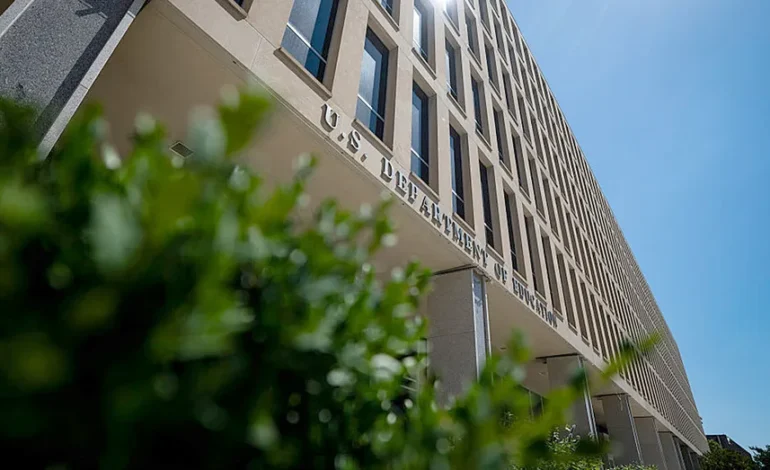

The Trump administration has signaled its intent to take enforcement action against the Kansas City, Kansas Public Schools district, potentially leading to the withholding of federal funding. The dispute centers on the district’s policies regarding the privacy of transgender students and parental notification.
Federal Concerns Over Student Privacy and Parental Rights
At the heart of the matter is the district’s practice of not informing parents when a student identifies as transgender. The U.S. Department of Education contends that this policy violates the Family Educational Rights and Privacy Act (FERPA), a federal law that protects the privacy of student education records. The department announced it is collaborating with the Department of Justice to pursue “appropriate enforcement measures,” which could include legal proceedings and the ultimate loss of federal funds for the district.
Frank Miller, Director of the Student Privacy Policy Office at the Education Department, stated that the district’s alleged actions—including efforts to “sidestep FERPA, conceal its true policies, and obstruct parents’ lawful access to their children’s education records”—constitute a “serious and deliberate breach of federal law.” He emphasized that a “strong and coordinated enforcement partnership” between the two federal departments would ensure accountability and uphold parental rights.
According to the government’s interpretation, the district’s policy directs school personnel not to disclose information that might reveal a student’s transgender status or gender nonconforming presentation, even to their parents. The Education Department indicated that despite a proposed resolution agreement outlining steps the district could take to rectify FERPA violations, the district has continued to disregard federal law concerning parental rights.
Broader Context of Federal Scrutiny on Transgender Policies
This action against the Kansas City, Kansas Public Schools district is not an isolated incident. The administration has previously indicated it would examine or take action against other school districts nationwide over policies concerning transgender students. Earlier in the year, the Education Department identified policies in four Kansas school districts, including Kansas City, Kansas Public Schools, as potentially violating federal law.
The administration’s stance on transgender issues has also been evident in other policy areas. President Donald Trump previously issued an executive order aimed at preventing transgender women and girls from participating in women’s and girls’ sports. This policy direction aligns with a broader pattern of federal engagement on issues related to gender identity in educational and athletic settings.
In a related development, the U.S. Supreme Court recently issued a ruling that allows states to prohibit transgender women and girls from competing in women’s sports. This decision upheld laws in Idaho and West Virginia, while not mandating such bans in states that do not currently have them.
Understanding FERPA and Parental Rights
The Family Educational Rights and Privacy Act (FERPA) is a cornerstone of student privacy in the United States. Enacted in 1974, it grants parents certain rights with respect to their children’s education records. These rights transfer to the student when they reach the age of 18 or attend a school beyond the high school level. FERPA generally prohibits educational institutions that receive federal funding from disclosing personally identifiable information from a student’s education records without the written consent of the parent or eligible student.
However, FERPA does contain exceptions. For instance, schools may disclose information without consent under certain circumstances, such as to school officials with legitimate educational interests, in health and safety emergencies, or in response to a court order or subpoena. The interpretation of what constitutes a “legitimate educational interest” or a situation requiring disclosure, particularly concerning a student’s gender identity and parental notification, has become a point of contention in various legal and policy debates.
The core of the dispute in Kansas City, Kansas Public Schools appears to hinge on whether a student’s transgender status is considered part of their education record that requires parental consent for disclosure, or if the school’s policy of non-disclosure is a permissible approach to protecting student privacy and well-being, especially when parental notification might lead to negative consequences for the student.
Potential Ramifications for the School District
The threat of losing federal funding carries significant weight for public school districts. Federal funds often support a wide range of programs, including special education, free or reduced-price lunch programs, and various instructional initiatives. A substantial reduction or complete loss of this funding could force difficult budgetary decisions, potentially impacting staffing, educational resources, and student services.
The legal basis for the federal government’s action rests on FERPA. The Department of Education’s stance suggests that the district’s policy, by withholding information about a student’s gender identity from parents, is not in compliance with the Act’s provisions regarding access to and disclosure of education records. The involvement of the Department of Justice indicates a willingness to pursue judicial avenues to enforce federal law, underscoring the seriousness with which the administration views this matter.
As the situation unfolds, the Kansas City, Kansas Public Schools district faces a critical juncture. It must navigate the complex legal landscape of FERPA, parental rights, and the evolving understanding of transgender student issues, all while confronting the potential loss of vital federal financial support.