

Katy Perry Slams White House for Unauthorized Use of ‘Firework’ in Military TikTok
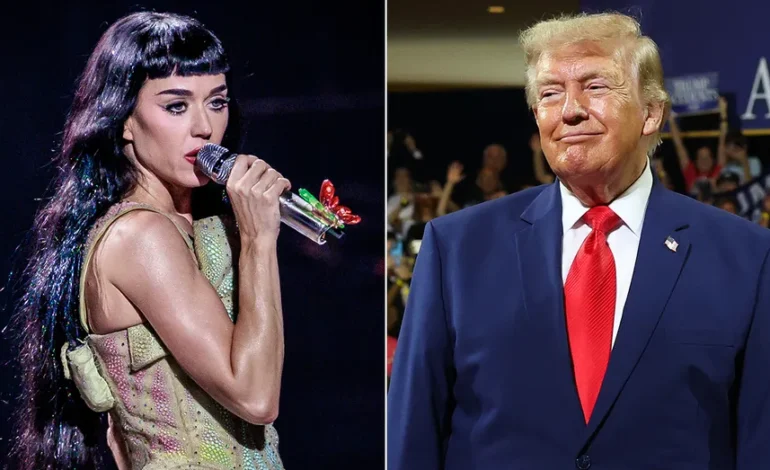

Pop superstar Katy Perry has voiced her strong disapproval after the White House utilized her iconic 2010 hit song ‘Firework’ in a TikTok video without her consent. The incident occurred years after Perry sold a significant portion of her music catalog in a deal reportedly valued at $225 million.
‘Firework’ Used in Controversial TikTok
On Thursday, the White House’s official TikTok account posted a video featuring black and white footage of recent military strikes on Iranian targets. The clip was set to the distinctive “boom, boom, boom” lyric from Perry’s anthem ‘Firework.’ The caption accompanying the video stated, ‘Iran has been warned,’ accompanied by a firework emoji.
Perry, 41, took to X (formerly Twitter) on Saturday to express her outrage. “I am deeply appalled and angry to see ‘Firework’ used on the @WhiteHouse TikTok account as a backing track for video footage of military strikes,” she wrote. “I did not approve this, I was not asked, and I absolutely do not condone it.”
Artist’s Intent vs. White House Usage
The singer emphasized the original message behind her song, explaining, “I wrote this song to be an anthem of hope, healing, and inner strength for people going through their darkest personal moments.” Perry stated that witnessing her song, intended to promote self-worth and upliftment, being “weaponized to soundtrack destruction and violence is a complete violation of everything my song stands for.” She concluded her statement by asserting, “My music is for bringing people together, not celebrating warfare.”
White House Response and Catalog Sale Details
The White House’s use of the song came amid a tense geopolitical climate following recent U.S. military actions and ongoing diplomatic efforts concerning Iran. When approached for comment, the White House referred inquiries to an X post by Kaelan Dorr, Deputy Assistant to the President and Deputy Communications Director.
Dorr responded to Perry’s post by sharing a montage of clips from her 2012 music video for ‘Part of Me,’ which depicts the singer undergoing U.S. Marine training. “This you?” Dorr captioned the video, seemingly questioning Perry’s stance given her past portrayal in a military context.
It is pertinent to note that in September 2023, Katy Perry finalized an agreement with Litmus Music, a subsidiary of The Carlyle Group, selling the rights to her music catalog from her first five studio albums. This extensive deal, reportedly worth $225 million, encompassed her interests in master recording royalties and music publishing rights for albums including ‘One of the Boys’ (2008), ‘Teenage Dream’ (2010), ‘PRISM’ (2013), ‘Witness’ (2017), and ‘Smile’ (2020).
‘Firework’s’ Impact and Legacy
‘Firework,’ released in 2010 as the third single from the Grammy-nominated album ‘Teenage Dream,’ achieved significant commercial success. It held the number one spot on the Billboard Hot 100 chart for four consecutive weeks and became one of the defining hits of Perry’s career. The album ‘Teenage Dream’ itself made history, tying Michael Jackson’s ‘Bad’ for the most number-one singles from a single album, with five chart-toppers. The catalog sale also included other major hits such as ‘I Kissed A Girl,’ ‘Hot N’ Cold,’ ‘Roar,’ ‘California Gurls,’ and ‘Dark Horse.’
A Pattern of Musical Disputes
Katy Perry is not the first artist to express objections to the Trump administration’s use of their music in official social media content. Several other prominent musicians, including Ariana Grande, Kesha, Sabrina Carpenter, and Bruce Springsteen, have previously raised concerns.
In June, Ariana Grande publicly criticized the administration for using her song ‘Bye’ in a TikTok video related to Immigration and Customs Enforcement (ICE) arrests. She vehemently stated, “please do not ever use my music in relation to this barbaric, inhumane, heinous nonsense. f– ice.” The White House later issued a statement defending its actions, framing illegal immigration as the ‘barbaric, inhumane, and heinous’ issue. The song was subsequently removed from the video.
Similarly, in March, Kesha denounced the White House on social media after her 2010 hit ‘Blow’ was featured in a TikTok video depicting a fighter jet launching a missile. She argued that the administration was using her music to “incite violence and threaten war,” calling attempts to “make light of war disgusting and inhumane.” Kesha affirmed her disapproval of her music being used to “promote violence of any kind.”
In response to these artist objections, Kaelan Dorr, from the White House communications team, made a statement on X suggesting that such criticisms were counterproductive, stating, “All these ‘singers’ keep falling for this. This just gives us more attention and more view counts to our videos because people want to see what they’re b—-ing about.” White House Communications Director Steven Cheung echoed this sentiment, implying that the attention generated by these disputes benefited their social media engagement.
Conclusion
The incident involving Katy Perry’s ‘Firework’ highlights an ongoing tension between artists’ intentions for their music and its appropriation by political entities for potentially conflicting messages. While the White House maintains its right to use publicly available music for its platforms, artists like Perry are asserting their creative control and the integrity of their artistic messages, particularly when dealing with sensitive themes like warfare and violence.