




In a twist that has drawn significant attention, British Prime Minister Keir Starmer reportedly contacted FIFA to influence a scheduling decision ahead of a crucial England match, a move that contrasts sharply with the outcry over a previous intervention by former U.S. President Donald Trump. The situation highlights a perceived double standard in how political interference in international sports governance is viewed, depending on the nation involved.
The Folarin Balogun Red Card Controversy
The recent controversy began when FIFA decided to suspend a red card punishment for U.S. Men’s National Team striker Folarin Balogun. This decision ignited a firestorm of criticism from various European soccer bodies and commentators. Organizations like the Union of European Football Associations (UEFA) expressed outrage, deeming the delay of Balogun’s automatic one-match suspension as a violation of established principles. UEFA issued a statement asserting that such suspensions are non-discretionary and should not be subject to exceptions, especially mid-tournament, noting that other players had served similar bans without issue.
However, critics pointed out that UEFA’s stance appeared inconsistent. For instance, when FIFA previously postponed a three-match red card suspension for Cristiano Ronaldo ahead of the World Cup, using the same regulatory basis as in Balogun’s case, there was no comparable outcry from European football authorities. This selective indignation fueled accusations of hypocrisy.
Donald Trump’s Involvement and Media Reaction
Adding another layer to the controversy was the involvement of former U.S. President Donald Trump. His reported phone call to FIFA leadership to question the Balogun decision drew sharp criticism from some quarters, particularly from media figures like British host Piers Morgan. Morgan accused the U.S. team of “cheating” and disregarding the rules. The argument centered on the principle that politicians should not meddle in the affairs of international sports federations to influence outcomes.
Despite the strong reactions, proponents of the U.S. team’s position argued that no rules were actually broken and that Trump’s call was an attempt to ensure fair play, not to cheat. The intense media focus on Trump’s actions and the subsequent accusations of unsportsmanlike conduct underscored the sensitivity surrounding political influence in sports.
Keir Starmer’s Intervention with FIFA
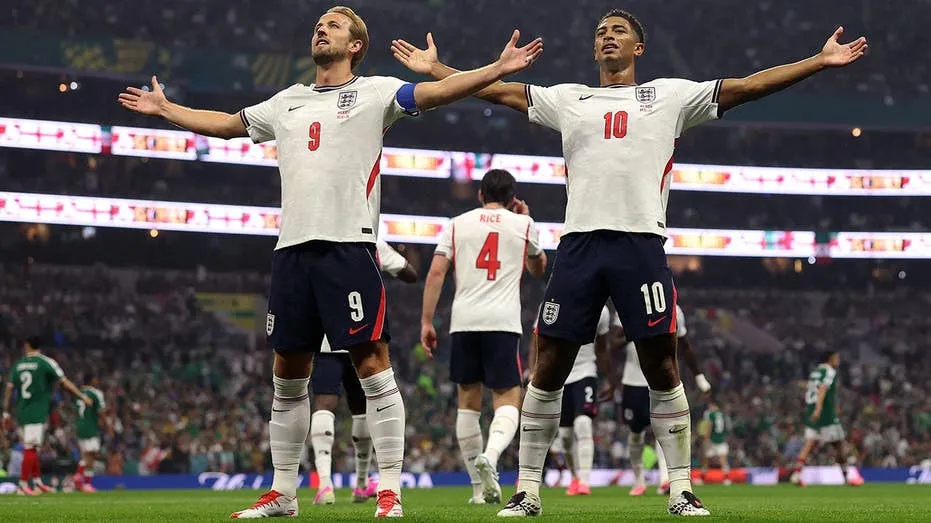
Amidst this charged atmosphere, a parallel situation involving British Prime Minister Keir Starmer came to light. According to a report in The Sun, Starmer contacted FIFA to intervene regarding the scheduling of a match between England and Mexico. The match, held at the Azteca stadium, was potentially subject to an early start time to avoid forecast thunderstorms.
A source cited by The Sun suggested that Mexican officials were pushing to move the game earlier, potentially to disrupt England’s preparations. The concern was that a sudden shift in schedule could disadvantage England, particularly concerning acclimatization to the high altitude of Mexico City. Keir Starmer reportedly intervened, suspecting this scheduling change might be a tactic to undermine England’s performance. He is said to have insisted that the original schedule be maintained, effectively preventing the game from being moved up.
The report indicated that Starmer’s intervention was successful, and the match proceeded as originally planned. England ultimately secured a 3-2 victory over Mexico in a closely contested game.
The Double Standard Debate
The revelation of Starmer’s call to FIFA has sparked a debate about perceived hypocrisy. While Donald Trump’s alleged interference drew widespread condemnation, particularly from European media and officials, Keir Starmer’s similar action on behalf of the English national team has been met with significantly less public outcry, especially from the same critics who were vocal about Trump’s involvement.
Commentators have questioned why a politician intervening to benefit his country’s team is deemed acceptable in one instance but scandalous in another. The contrast raises questions about whether political influence is judged based on the nationality of the politician or the team being supported, rather than on the principle of non-interference itself. If England were to achieve success in their tournament, some argue that this intervention could cast a shadow over their accomplishments, suggesting an unfair advantage was sought.
Broader Implications for Sports Governance
This series of events underscores the complex relationship between politics and international sports. While governing bodies like FIFA aim to maintain neutrality and fair play, the reality often involves pressure from national interests and political figures. The differing reactions to the interventions by Trump and Starmer highlight the challenges in establishing and enforcing consistent standards regarding political influence in sports.
The core issue remains whether any political interference in the decision-making processes of sports organizations is appropriate. The Balogun red card situation and the England-Mexico scheduling dispute, along with the respective reactions, suggest that perceptions of fairness and legitimacy can be heavily influenced by national allegiances and political biases. As international sports continue to grow in global significance, navigating these delicate political waters will remain a critical challenge for organizations like FIFA.
Conclusion
The contrasting responses to political interventions concerning FIFA decisions, involving both former U.S. President Donald Trump and British Prime Minister Keir Starmer, have brought a perceived double standard to the forefront of sports governance discussions. While the debate over Folarin Balogun’s suspended red card and the scheduling of the England-Mexico match continues, the underlying question of political influence in sports remains a contentious issue, prompting a closer examination of how such actions are perceived and judged across different nations and media landscapes.


