
USC’s Lincoln Riley Hints at Notre Dame Game Cancellation Over Broken Promises
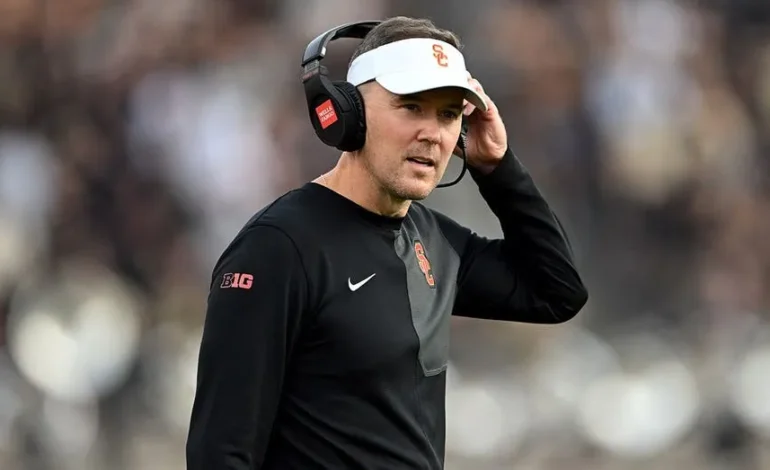

The highly anticipated 2026 college football season is on the horizon, promising a slate of compelling matchups fueled by the strength of major conferences. However, a notable absence from this year’s schedule is the storied rivalry between the USC Trojans and the Notre Dame Fighting Irish. Negotiations for the 2026 game reportedly collapsed, leading to its cancellation, a development that USC head coach Lincoln Riley suggested was due to unfulfilled assurances from the Notre Dame side.
The Fading Allure of Non-Conference Showdowns
In an era of expanded playoff formats and conference realignments, the strategic incentive for top-tier college football programs to schedule challenging non-conference games appears to be diminishing. While marquee matchups like Ohio State-Texas and Oklahoma-Michigan are still on the docket, the traditional drive to lock horns with historic rivals outside of conference play seems to be waning. This shift in philosophy has cast a shadow over what has long been celebrated as “the greatest intersectional rivalry in college sports” – the annual clash between USC and Notre Dame.
This historic rivalry, played 96 times over a century with brief interruptions for World War II and the COVID-19 pandemic, consistently captivates fans with its rich tradition, iconic stadiums, and frequent national significance. The battle for the Jeweled Shillelagh, however, will not grace the 2026 season, a casualty of failed discussions between the two institutions.
Riley Points to Unmet Statements in Game Cancellation
Initial blame for the 2026 game’s demise was largely directed at USC’s head coach, Lincoln Riley. Yet, subsequent statements from Notre Dame officials have also drawn scrutiny. Speaking at Big Ten media week, Riley reiterated his desire to play the game, implying that its absence stems from a failure to uphold prior commitments. “Nothing’s changed from my vantage point. We want to play the game. I want to play the game. We would be playing the game had some things come true that were said,” Riley stated during his press conference. “And so hopefully we get to that point.”
Conflicting Statements on Game Timing
The crux of the disagreement appears to revolve around the scheduling of the game. USC reportedly sought to move the traditional late-season matchup to Week 0, an earlier slot in the college football calendar. While such a shift might seem inconsequential to Notre Dame, which benefits from avoiding conference play and a potential conference championship game, it significantly impacts USC’s scheduling, particularly in seasons where they are the away team.
Notre Dame head coach Marcus Freeman had previously expressed a flexible stance on the game’s timing. In 2025, he was quoted as saying, “It’s pretty black and white for me. You want my opinion? I want to play them every single year. When? I don’t care. I don’t care when we play them. Start of the season, middle of the season, end of the season — I don’t care. I want to play USC every year because it’s great for college football.”
However, when faced with USC’s proposal to move the game to Week 0, Notre Dame reportedly declined. Freeman later commented on the situation, stating, “You know, I don’t listen to a lot of noise. Look, I’ve said this before: That rivalry’s important for college football, and I’m confident that with Ron Powlus and Pete Bevacqua we’ll get that rivalry back. You know me, I’m a competitive individual, and I wanna go and go play anytime, anywhere. But at the same token, it’s important that I make decisions too that are best for the program. And to move a game that we were pretty sure was gonna be Week 12 to Week Zero isn’t what’s best.” This pivot left many questioning the rationale, especially given his earlier “anytime, anywhere” declaration.
Potential Motivations and Future Outlook
Riley’s remarks suggest that Notre Dame may have had strategic reasons for avoiding the proposed Week 0 slot. With the expanded playoff guaranteeing a spot to teams ranked in the top 12 by the selection committee, avoiding a potentially difficult road game against a resurgent USC program could be seen as a prudent decision. USC, bolstered by significant NIL investments, has recently secured the nation’s top recruiting class, presenting a formidable challenge, especially at home in the Coliseum.
The Irish, known for their recent dominance in the series, might be hesitant to risk a loss that could impact their playoff aspirations, particularly with a relatively manageable schedule that appears to pave a smoother path to the postseason. The decision to not play in Week 0, despite earlier statements, could indicate a desire to avoid such risks.
The situation also draws parallels to Notre Dame’s decision to withdraw from the Pop-Tarts Bowl after missing the College Football Playoff. At the time, Freeman’s comments about being “proud” of his players for not participating were met with some confusion, especially when a player later indicated the decision was emotional rather than purely strategic.
As the college football landscape continues to evolve, the future scheduling of the USC-Notre Dame rivalry remains uncertain. Whether the game can be resurrected and what its placement will be in future seasons are questions that fans will be watching closely, alongside whether Notre Dame’s approach to postseason participation will see further shifts.