




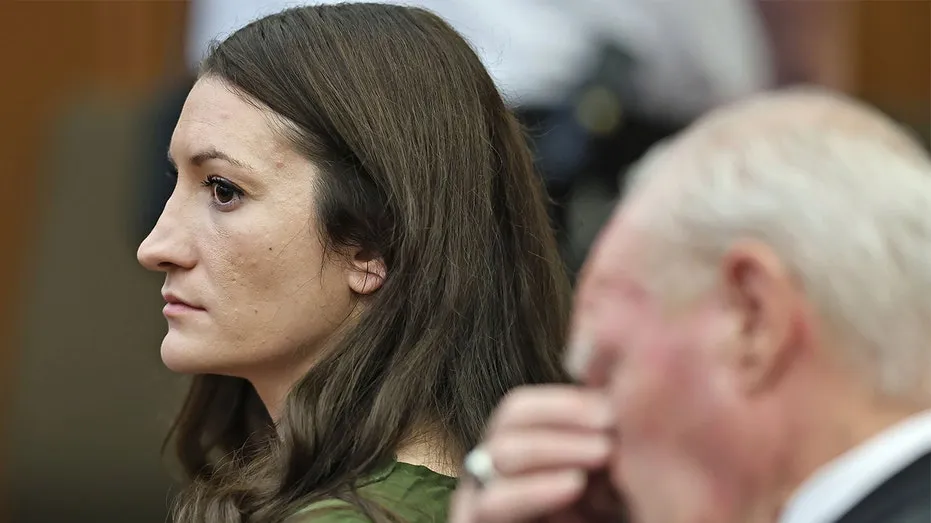
The legal and psychological complexities surrounding Lindsay Clancy’s case, where she faces charges of murdering her three young children, could hinge significantly on the opinions of mental health professionals aligned with the prosecution, according to a retired Massachusetts judge. This scenario echoes historical cases, drawing parallels to the infamous Constance Fisher killings in Maine.
The ‘Prosecution Doctors’ and Insanity Defense
Retired Massachusetts Superior Court Judge Jack Lu explained that a verdict of not guilty by reason of insanity, while a potential legal avenue for Clancy, would not necessarily lead to a swift release. Instead, Lu suggested that the individuals tasked with assessing her mental state and recommending release—often referred to as ‘prosecution doctors’—tend to favor outcomes that keep individuals institutionalized, especially in high-profile criminal cases.
Clancy, 36, is accused of strangling her children, Cora, Dawson, and Callan, all under the age of six, in their family home in January 2023. If found not guilty by reason of insanity, Lu stated, Clancy would likely face a prolonged period of commitment in a mental health facility. He elaborated that a panel of mental health experts would periodically review her commitment status. However, Lu noted that these professionals often align with the prosecution’s perspective and are frequently called upon to testify on their behalf.
“They’re viewed as an arm of the prosecution,” Lu remarked about these officials. “I’m going to be very frank, they kind of view this through the lens of if in doubt, lock them up…The people making release decisions have a prosecutorial mindset.”
Navigating Commitment and Release
Lu anticipates that if committed, Clancy could remain institutionalized for an extended period, potentially “year after year after year.” He emphasized the difficulty of securing release from a mental health commitment stemming from a serious criminal case in Massachusetts. “It is very difficult,” he stated.
There is, however, an alternative pathway to release even after an insanity defense is accepted. This route involves the courts if the medical professionals do not recommend release. In such instances, the government would need to continue seeking commitment, and if doctors don’t concur with the need for continued confinement, the case could move to a judge. The judge would then determine if the individual poses a danger to themselves or others. “It could be more of a contested hearing, and if she were to win that contested hearing, that is the second way that she gets out,” Lu explained.
Echoes of the Constance Fisher Case
Clancy’s tragic case has drawn comparisons to that of Constance Fisher, a woman from Maine who, in 1954, drowned her three children. Fisher was committed to a mental hospital and was eventually released. However, she was later accused of drowning three more children in 1967, leading to her recommitment. Her story took a further dark turn when she escaped the facility and was later found deceased in the Kennebec River.
Jury Deliberations Continue
Meanwhile, the jury in Lindsay Clancy’s trial, comprised of nine women and three men, concluded its third day of deliberations without reaching a verdict. The jurors requested to be dismissed for the day on Monday afternoon and are scheduled to resume their discussions on Tuesday morning. The composition of the jury, particularly its female majority, has been noted as a potential factor in how the case might be perceived, with some observers suggesting it could introduce a unique dynamic to the deliberations.
The legal proceedings underscore the profound challenges in balancing justice, mental health, and public safety, particularly in cases involving alleged acts of extreme violence stemming from severe mental distress.


