




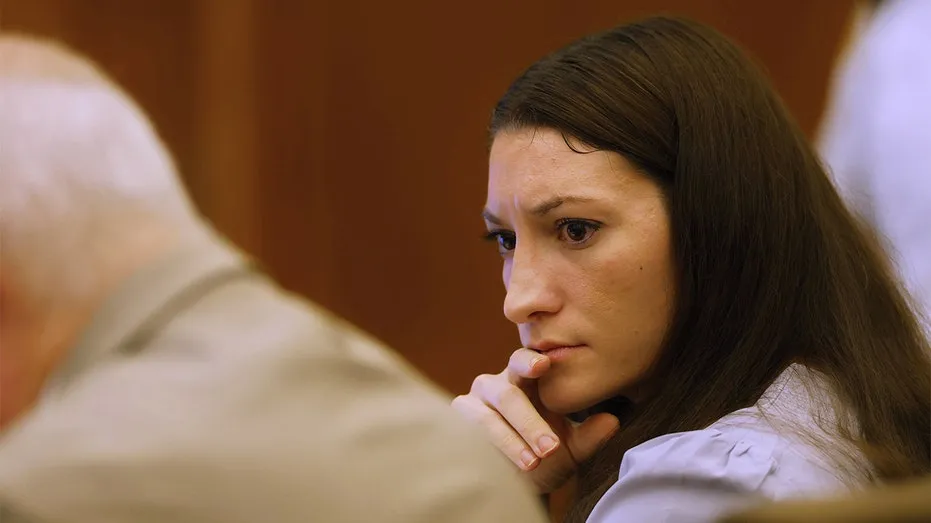
In a Massachusetts courtroom on Tuesday, Lindsay Clancy formally agreed to a stipulation that will allow prosecutors to treat certain forensic findings as established facts in her upcoming murder trial. This development comes as investigators reported recovering no usable fingerprints from a knife and three exercise bands found at the scene where her three young children died. The agreement, reached before Judge William Sullivan, aims to streamline the trial by focusing the jury’s attention on the central question of Clancy’s criminal responsibility at the time of the tragic events.
Stipulation Focuses Trial on Mental State
Clancy, responding with clear “Yes, Your Honor” affirmations, confirmed her understanding that the stipulation means the prosecution will not need to present evidence to prove these specific facts. “You understand that by signing the stipulation, you’re agreeing that the Commonwealth does not have to prove these certain facts that are contained in the stipulation,” Judge Sullivan explained. Clancy affirmed her voluntary agreement, stating she was neither forced nor threatened into accepting the terms. The judge ultimately found Clancy competent to enter the agreement knowingly, intelligently, voluntarily, and willingly.
Defense attorney Kevin Reddington indicated that the stipulation would significantly reduce the need for prosecutors to call numerous witnesses solely to establish the chain of custody for biological evidence, blood, bodily fluids, and DNA. “We have not been contesting the government’s case in chief, if you will,” Reddington stated. It is crucial to note that this stipulation is not an admission of guilt or a plea of responsibility for the deaths of Cora, 5, Dawson, 3, and Callan, 8 months.
Expert Analysis of Defense Strategy
Margaret McLean, a former criminal prosecutor and current law instructor at Boston College, offered insights into the defense’s strategic move. She explained that the agreement allows the defense to steer the jury’s focus away from the graphic details of the crime and toward Clancy’s mental state at the time of the incident. “The legal strategy behind the move by the defense is to steer the jury’s focus away from the horrific nature of the acts and to that central issue of criminal intent, or what we would call mens rea,” McLean said.
McLean cautioned that Clancy’s composed demeanor in court on Tuesday should not be misconstrued as indicative of her mental condition on January 24, 2023, the date of the children’s deaths. “She sounded rational. She understands what she’s doing,” McLean observed. “But remember, the Commonwealth’s burden of proof is to prove that she was sane beyond a reasonable doubt at the time the crimes were committed — not today, not two weeks ago.”
Fingerprint Evidence and Potential Jury Speculation
Massachusetts State Police Trooper Jonathan O’Loughlin testified regarding the forensic examination of a knife and three exercise bands recovered from the Clancy residence. O’Loughlin reported that while a knife showed an area of friction-ridge impression, it lacked sufficient detail for identification. “There was not enough characteristics or minutia to do any comparison,” he stated, classifying the impression as having “no value.” Similarly, the yellow, black, and blue exercise bands yielded no usable prints.
Reddington directly questioned O’Loughlin, confirming, “The bottom line is that you didn’t get any fingerprints.” The trooper concurred. O’Loughlin elaborated on the delicate nature of fingerprints, explaining they are highly susceptible to environmental conditions, the texture of a surface, movement, grip pressure, and the possibility of being wiped clean.
Navigating the Absence of Evidence
The absence of identifiable fingerprints on critical items could potentially lead jurors to speculate about the use of gloves or the deliberate wiping of surfaces, McLean noted. Such speculation might be interpreted by some as evidence of premeditation. However, she advised that the defense can counter such lines of reasoning by reminding the jury that their deliberations must be based on the evidence presented, not on conjecture.
“They can use their common sense when they go to the table and they deliberate,” McLean said, “but they can’t speculate [about] things that are not in the evidence.” This legal principle will be a key consideration as the trial progresses, with the defense likely emphasizing that the jury should not infer planning from the lack of prints, but rather focus on the established facts and the crucial issue of Clancy’s mental state.
Conclusion: The Path Forward
The stipulation regarding forensic evidence and the testimony about the lack of fingerprints mark significant procedural steps in the Lindsay Clancy case. As the trial moves forward, the legal teams will focus on presenting arguments and evidence related to Clancy’s mental state, aiming to persuade the jury on the question of criminal responsibility. The absence of direct fingerprint evidence, while potentially raising questions, also presents an opportunity for the defense to argue against jury speculation and keep the focus squarely on the legal standard of mens rea.


