



Children’s Victims Overlooked in Lindsay Clancy Trial, Advocate Says
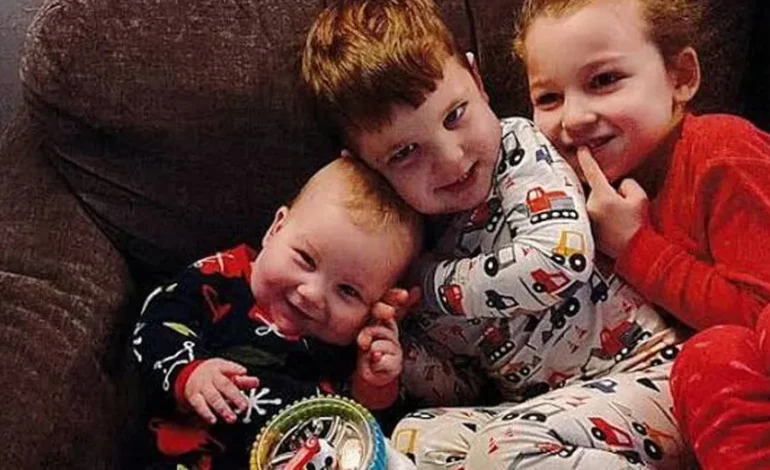

As the murder trial for Lindsay Clancy, accused of killing her three young children, progresses, a mother of six argues that the focus has shifted away from the victims themselves. Bethany Mandel, a conservative columnist and mother of six, expressed concern that the narrative surrounding the case has become centered on Clancy, overshadowing the memory of Cora, Dawson, and Callan, who were all under the age of six when they died. Clancy, 36, faces three counts of first-degree murder in connection with their deaths in January 2023. The prosecution concluded its presentation of evidence on Monday morning, with the defense beginning its arguments, asserting that Clancy was suffering from postpartum psychosis at the time of the killings.
Focus on the Defendant, Not the Victims
Mandel highlighted what she perceived as a concerning trend in public discourse and even in the demonstrations of support outside the Plymouth Superior Court. She noted that while hundreds gathered in pink attire to advocate for maternal mental health awareness and support for mothers experiencing postpartum conditions, the three children who lost their lives seemed to be an afterthought. “We all know her name,” Mandel stated, referring to Lindsay Clancy, “Very few people know the names of her children.”
She observed that the women participating in the rallies, while emphasizing their support is not an endorsement of the alleged crimes, rarely mentioned the three young victims. “When you listen to interviews with all of the women who are standing out, they almost never mention the three child victims,” Mandel said.
A Shift in Legal and Public Focus
The legal proceedings themselves have also seen a debate over Clancy’s mental state. Expert witnesses for both the prosecution and defense have testified regarding her mental condition at the time of the deaths. Dr. Phillip Resnick, a forensic psychiatrist specializing in filicide, testified that Clancy appeared to be functioning normally for much of the day her children died, even engaging in activities like building a snowman. However, he noted that she later experienced a hallucination and what he termed a “delusion of influence,” feeling a loss of control over her body and describing herself as a “puppet.”
Conversely, Dr. Avram Mack, a child and forensic psychiatrist who testified for the prosecution, presented a different perspective. He described Clancy’s actions on the day of the killings as methodical and organized, suggesting she retained the capacity for criminal responsibility. “My opinion is that she retained the capacity required for having criminal responsibility for these actions,” Mack stated.
Jonathan Hatami, a deputy district attorney in Los Angeles County, echoed Mandel’s sentiment that the public and media conversation has disproportionately focused on the defendant rather than the victims. “This shouldn’t be about the defendant even though it’s become that, it’s became this entire show about her, really should be about the victims and what the defendant did to those victims,” Hatami commented. He expressed disappointment that the focus on the children who died seemed to have been lost in the case’s broader narrative. “In this specific case, and it’s really disappointing, and people don’t realize these children matter,” he added.
The Path Forward in the Trial
The defense’s argument centers on the contention that Clancy was experiencing postpartum psychosis, a severe mental health condition that can involve delusions and hallucinations. If found not guilty by reason of insanity, Clancy would not be released but would instead be committed to a state psychiatric hospital, subject to ongoing reviews.
Meanwhile, Clancy’s ex-husband, Patrick Clancy, has publicly expressed forgiveness towards her. In a GoFundMe message posted shortly after the tragedy, he wrote, “I want to ask all of you that you find it deep within yourselves to forgive Lindsay, as I have…The real Lindsay was generously loving and caring towards everyone – me, our kids, family, friends, and her patients.”
Closing arguments are anticipated to begin soon, after which the jury will deliberate on the case. The trial has drawn significant attention, particularly on social media, where discussions about Clancy’s mental state and the events leading up to the children’s deaths have been widespread.
Remembering Cora, Dawson, and Callan
The case serves as a stark reminder of the devastating impact of severe mental health crises, particularly in the context of postpartum conditions. While the legal proceedings focus on determining criminal responsibility and understanding the mental state of the accused, advocates like Mandel stress the importance of not losing sight of the innocent lives lost. The memory of Cora, Dawson, and Callan, and the tragedy they represent, remains central to the heartbreaking reality of this case, even as the trial unfolds.