




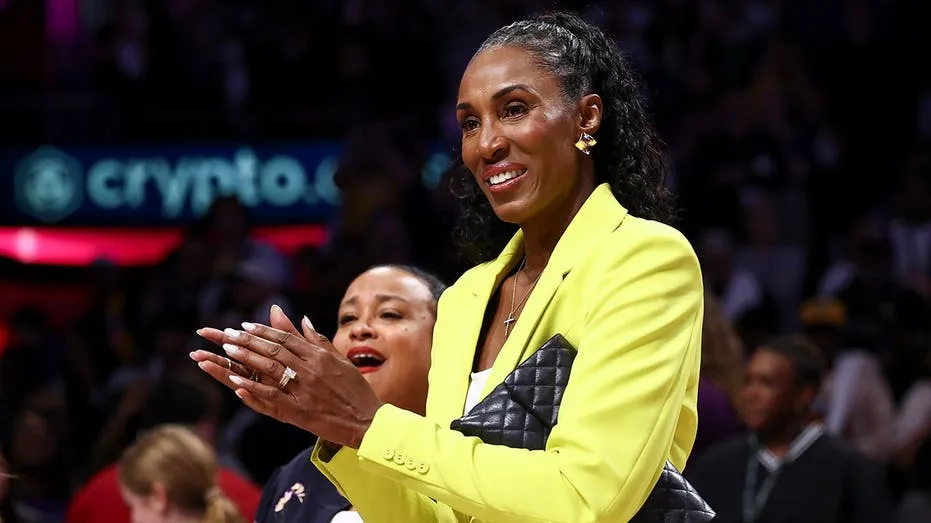
The WNBA is facing renewed scrutiny over officiating and player conduct following a contentious play involving star rookie Caitlin Clark and Phoenix Mercury forward Alyssa Thomas. Basketball legend Lisa Leslie, speaking on CBS Sports’ “We Need To Talk,” weighed in on the incident, emphasizing the need for improved standards both on and off the court.
The controversy erupted during a recent game when Thomas made contact with Clark’s throat. While the play was reviewed and Thomas subsequently received a suspension, Leslie believes the initial on-court officiating missed a critical moment, highlighting broader issues within the league.
Leslie’s Take on the Officiating
Leslie, a three-time WNBA MVP and Olympic gold medalist, acknowledged the inherent difficulty of officiating professional basketball. However, she expressed disappointment that the specific incident between Thomas and Clark was not immediately flagged by the referees.
“In this particular situation, I thought that the last official should have been able to catch that,” Leslie stated. “I was actually watching this game, and I was like, ‘Oh, wow — that was a bit much.'”
Her observation underscores a sentiment shared by many fans and analysts: if the play was visible and impactful enough for a spectator, including a former player of Leslie’s caliber, to notice, it should have been apparent to the officials tasked with enforcing the rules in real-time.
Player Responsibility and League Standards
Beyond the officiating, Leslie also touched upon player accountability. While she understood the league’s decision to suspend Thomas, she found it “tough” that the call was missed initially and that a replay review wasn’t immediately initiated.
“I think, overall, the league has got to do better, the officials have got to do better, but also players — players have to clean it up,” Leslie urged. She reminisced about a past era of the game, suggesting a shift in on-court dynamics.
“We used to play in a way that we protected one another,” she recalled. “Yeah, I want to play physical, I want to play hard, but I’m not here to hurt you.” This sentiment points to a desire for a return to a more respectful, albeit still competitive, brand of basketball.
Potential Ramifications and Consistency
Leslie further speculated that Alyssa Thomas might have faced a less severe consequence had she approached Caitlin Clark differently after the play, perhaps offering an apology. However, given the circumstances, Leslie felt the league’s disciplinary action was justified.
“That’s not what happened, so I think the league got it right, but, overall, I think that Coach Tibbetts is correct,” Leslie said, referencing comments made by Phoenix Mercury head coach Nate Tibbetts regarding consistency. “Consistency is important. It needs to get cleaned up for all players, regardless of what their accolades are.”
This call for consistency is crucial. As the WNBA continues to grow in popularity, particularly with the influx of high-profile players like Clark, ensuring fair and consistent application of rules is paramount for maintaining the integrity of the game and protecting its stars.
The Bigger Picture: Evolution of the Game
The incident serves as a microcosm of the challenges facing the WNBA. The league is experiencing unprecedented attention, drawing new fans who are captivated by the talent and intensity of its players. This increased spotlight, however, magnifies every aspect of the game, from spectacular plays to controversial moments.
For officials, the pressure is immense. They must navigate a league that is becoming increasingly physical while also protecting its marquee talent. Missed calls, especially those involving star players, can lead to significant backlash and raise questions about the standard of officiating.
Players, too, are adapting. The competitive fire that drives elite athletes can sometimes lead to actions that cross the line. Leslie’s comments about “protecting one another” suggest a hope that the league’s culture can evolve to balance fierce competition with mutual respect. This isn’t about coddling players but about fostering an environment where the game’s physicality doesn’t devolve into dangerous play.
The suspension of Thomas, while perhaps warranted, also brings up the ongoing debate about how the league handles disciplinary actions. Consistency is key, as Leslie and Tibbetts both noted. Players, coaches, and fans need to feel confident that the rules are applied fairly across the board, irrespective of a player’s reputation or past performance.
Looking Ahead: A Call for Collective Improvement
Lisa Leslie’s remarks encapsulate a broader sentiment within the WNBA community: a desire for continuous improvement. It’s a call directed not just at the officials, but at everyone involved in the league – players, coaches, and the league administration itself.
The goal is to ensure the WNBA remains a premier professional sports league, celebrated for its incredible athleticism, competitive spirit, and the high caliber of its athletes. Addressing officiating inconsistencies and reinforcing positive player conduct are vital steps in achieving this objective. As the league navigates this exciting period of growth, maintaining high standards across all facets of the game will be essential for its sustained success and the well-being of its players.
Key Takeaways
- Basketball legend Lisa Leslie commented on the recent incident involving Alyssa Thomas and Caitlin Clark.
- Leslie believes the officiating crew missed a crucial call during the play.
- She emphasized that the league, officials, and players all need to improve standards.
- Leslie suggested a past emphasis on player protection and mutual respect on the court.
- She called for greater consistency in officiating and disciplinary actions for all players.
Frequently Asked Questions
What happened between Alyssa Thomas and Caitlin Clark?
During a WNBA game, Phoenix Mercury player Alyssa Thomas made contact with Indiana Fever star Caitlin Clark’s throat area with her fist. The incident led to a review and a subsequent suspension for Thomas.
What was Lisa Leslie’s reaction to the incident?
Lisa Leslie, a former WNBA star, stated that the officials should have caught the play in real-time and expressed that the league, officials, and players need to elevate their performance and conduct.
What did Lisa Leslie say about player conduct?
Leslie expressed a desire for players to “clean it up” and return to a mentality of protecting one another, balancing physical play with a commitment not to intentionally harm opponents.


