



Little League Coach’s Faith Message Sparks Debate During World Series Game
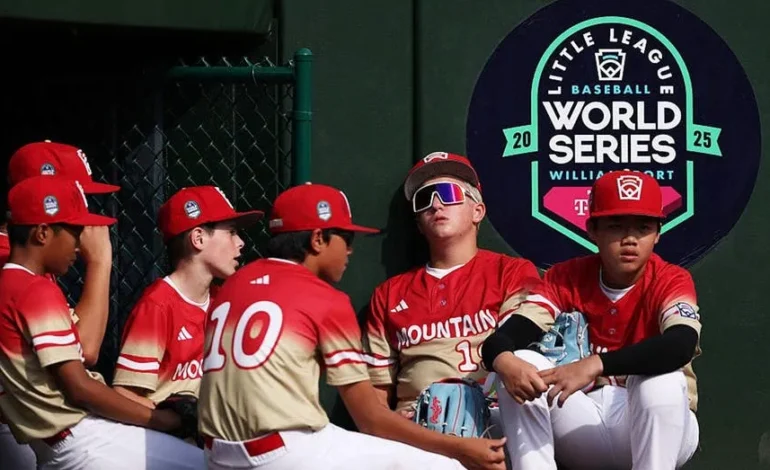

A moment of faith during a high-stakes Little League World Series regional game has ignited a firestorm online, dividing opinions on the best way to coach young athletes. Drew Breivogel, a coach for an Arizona team, found himself at the center of attention Wednesday night when an ESPN hot mic captured his unconventional mound visit.
With the game on the line in the fourth inning and two runners on base, Breivogel called time and approached his pitcher. Instead of discussing baseball strategy, he delivered a message rooted in his Christian faith, aiming to calm the young player’s nerves.
“I’m so proud of you,” Breivogel told the pitcher, whom he’s known since the player was eight years old. He then referenced the biblical story of Zacchaeus, drawing a parallel between the man climbing a tree to see Jesus and the importance of faith. “Salvation. We’re talking salvation,” Breivogel continued. “It’s a baseball game, right?… If you walk the next five guys Jesus is still Lord. If you strike out the next five guys, guess what? Jesus is still Lord. I love you. Have some fun.”
A Divided Internet Reacts
The video clip quickly went viral, prompting a wide range of reactions across social media. Many viewers applauded Breivogel’s heartfelt approach, seeing it as a positive reinforcement of values beyond the game itself. Some commented that the message was reminiscent of their own childhood experiences with coaches who emphasized character and faith.
However, a significant portion of the online audience expressed confusion and criticism. Detractors argued that the coach’s words lacked practical baseball advice at a critical juncture. They pointed out that the pitcher received no guidance on mechanics, pitch location, or how to navigate the challenging situation.
Following the mound visit, Hawaii went on to score four runs in that inning, ultimately winning the game 5-2 and avoiding elimination. This outcome fueled the criticism.
“How about a scouting report?” one commenter questioned, echoing the sentiments of many who felt the coach missed an opportunity for strategic guidance. “Some advice about mechanics? Something that may actually help the kid learn baseball? If I was the pitcher I would of pushed my coach away.”
Another social media user stated, “If I’m struggling on the mound on national tv and my coach comes up to me and starts this BS instead of advice or mechanical changes, I’m quitting.”
A third critic suggested the coach’s actions were performative: “Then the next 3 hitters reached base safely because there was no gameplan instilled during the mound visit. This was a coach using TV to make himself look good he knew he was Mic’d up, that was his BIG moment.”
Context and Perspective in Little League
While acknowledging the validity of these points, others emphasized the unique context of Little League baseball. These are 12-year-old children, and the pressure of a World Series regional game, while significant, is different from professional sports. The argument is that at this age, a coach’s role might extend beyond pure strategy to include emotional support and life lessons.
The nature of Little League itself, often described as the “Wild Wild West,” means that coaches and players are still developing. The level of strategic depth expected or even possible in such games can vary greatly.
The incident also brought to mind a common sentiment among youth sports participants: the desire for coaches to connect with players on a human level. While Breivogel’s method was unusual, his intention appeared to be one of support and love for his young player, regardless of the game’s outcome.
One individual recalled a similar, though less faith-focused, piece of advice from their own Little League coach during nervous pre-game moments: “If you strike out, there are a billion people in China who won’t care tomorrow.” This anecdote highlights how coaches have historically used various techniques to manage young athletes’ anxieties.
Ultimately, the situation presents a classic dilemma in youth sports coaching: balancing the drive for competitive success with the developmental and emotional needs of children. Breivogel’s faith-based message, while sparking controversy, undeniably offered a unique perspective on handling pressure, reminding everyone that for some, faith provides a foundation that transcends wins and losses.