




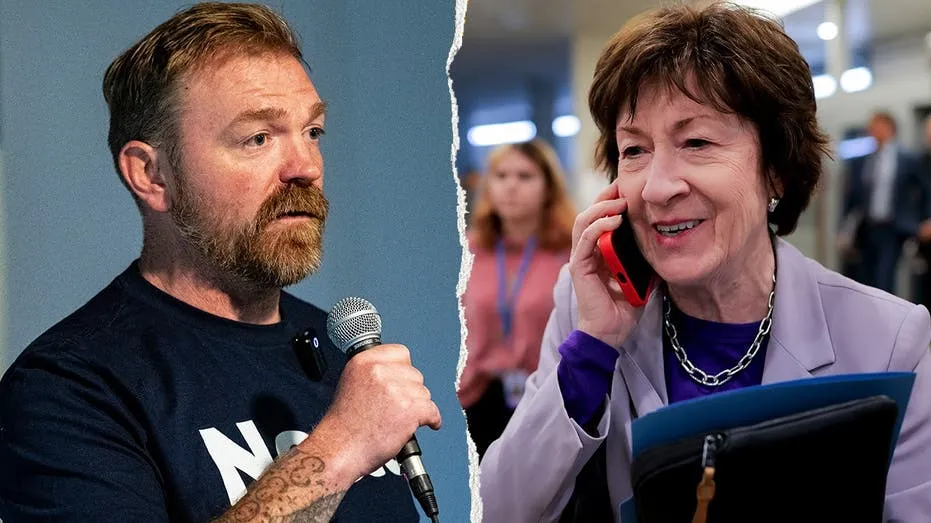
A recent poll indicates that Democratic Senate candidate Graham Platner’s carefully crafted image as a working-class oyster farmer may not be connecting with the voters he needs most in Maine. While the overall Senate race is too close to call, a significant divide has emerged among non-college-educated voters, a key demographic in the state.
Oyster Farmer Persona Struggles to Resonate
The poll, a collaboration between The New York Times, Portland Press Herald, and Siena College, released Monday, reveals that incumbent Republican Senator Susan Collins holds a substantial lead among registered voters without a four-year college degree. Collins is ahead by 21 percentage points, 58% to 37%, in this crucial group. This finding contrasts sharply with Platner’s performance among White college-educated voters, where he holds a 37-point advantage.
This data suggests a disconnect between Platner’s campaign narrative and the perceptions of a significant portion of Maine’s working-class electorate. Despite Platner’s consistent messaging against “corporate greed” and the “billionaire oligarchy,” his appeal to these voters appears to be faltering. Social media commentary has echoed this sentiment, with some observers suggesting his portrayal of a working-class lifestyle is inauthentic.
Ryan Girdusky, founder of the 1776 Project PAC, commented on the social platform X, formerly Twitter, stating that Platner embodies a college-educated person’s idea of what a working-class individual should be, and that working-class people perceive him as a “fraud.” Similarly, journalist Melissa Braunstein posted on X that “blue collar voters can tell he’s not one of them.”
Questions Surround Platner’s Background and Income
Platner has built a significant part of his campaign around his identity as an oyster farmer and former harbor master, aiming to project a blue-collar image for his progressive platform. However, scrutiny of his financial disclosures has raised questions about the economic reality of his oyster farming endeavors. Reports suggest that his income from oyster farming is relatively modest, with the majority of his earnings reportedly coming from veteran’s disability payments.
Adding another layer to this narrative is Platner’s own background. He attended private schools, including the prestigious and costly Hotchkiss School in Connecticut, a detail that appears at odds with the working-class persona he is attempting to project. This perceived discrepancy has led some to question his authenticity.
State Representative Laurel Libby, a Republican from Maine, emphasized the importance of authenticity for Maine voters. “Mainers know authenticity, and they can spot a pretender from a mile away,” Libby stated. “Maine voters aren’t looking for a performance, they’re looking for someone who understands their lives and will fight for them — that has always been Susan Collins.”
Broader Controversies and Their Impact
Beyond the questions surrounding his economic background, Platner has faced a string of other controversies during his campaign. These include allegations of infidelity, accusations of physical abuse involving an ex-girlfriend, a tattoo linked to a Nazi group, disparaging remarks about the military, and self-identifying as a “communist.” These issues appear to be weighing on his public image.
The poll reflects these concerns, with only 44% of respondents believing Platner possesses “good character,” while 47% consider him “too extreme” for Maine. These numbers suggest that the cumulative effect of these controversies may be hindering his ability to gain broader support, particularly among undecided or moderate voters.
A Tight Race with Shifting Dynamics
Despite these challenges, the poll also indicates that Platner holds a narrow two-point lead over Collins in the overall race, a result attributed in part to his pitch as a combat veteran willing to challenge the establishment across both parties. This suggests that while his working-class image may be struggling, other aspects of his candidacy are still finding traction.
The race is seen as potentially pivotal for the balance of power in the U.S. Senate. Nationally, 54% of poll respondents expressed a desire for Democrats to regain the Senate majority, a figure slightly higher than the 49% who support Platner. Notably, Senator Collins is attracting support from 10% of voters who prefer Democratic control of the Senate, highlighting her ability to draw crossover appeal.
Collins Faces Her Own Voter Concerns
While Collins enjoys a lead among non-college-educated voters and maintains a generally strong position, the poll also points to potential vulnerabilities. A majority of respondents believe she might be too aligned with former President Donald Trump. Furthermore, some of her own supporters have expressed concerns about her age, with 73% of respondents questioning whether she is too old to effectively serve as senator.
The dynamics of this Maine Senate race underscore the complex interplay of candidate image, background, policy positions, and broader political trends. As the election approaches, both campaigns will be closely watching how these factors continue to shape voter sentiment in this closely contested state.


