




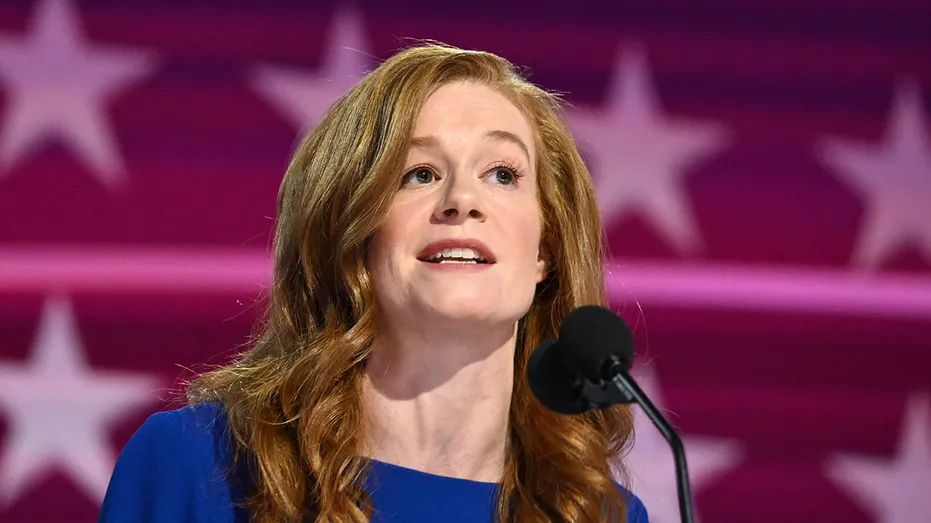
Michigan State Senator Mallory McMorrow announced Sunday that she is stepping away from her U.S. Senate campaign, narrowing the Democratic primary field just weeks before voters head to the polls. Her departure leaves a two-person contest between U.S. Representative Haley Stevens and former Wayne County Health Department Director Abdul El-Sayed. Despite her withdrawal, McMorrow’s name will still appear on the Aug. 4 primary ballot, as election materials, including absentee ballots, have already been printed and distributed.
In a video shared on social media platform X, McMorrow did not offer a specific reason for ending her bid for the Senate seat. Instead, she expressed gratitude to her campaign team and supporters, highlighting the grassroots nature of her campaign, which she noted was fueled by small-dollar donations and eschewed corporate Political Action Committee (PAC) funding. McMorrow pledged her full support to whichever Democrat emerges victorious from the primary, emphasizing the importance of securing the Senate seat for the party in what is anticipated to be a closely contested general election against Republican Mike Rogers in November.
“So here’s what we do next. Every day through November 3rd. We win this Senate seat and send Mike Rogers back to Florida for good,” McMorrow stated, underscoring her commitment to the party’s ultimate goal. “Whoever wins this primary on August 4th will have my full support.”
Fellow Candidates React to McMorrow’s Exit
Following McMorrow’s announcement, Representative Haley Stevens lauded her fellow Democrat, describing McMorrow as a significant voice advocating for policies beneficial to Michigan families. Stevens positioned herself as the strongest candidate to win the primary and subsequently defeat Mike Rogers in the general election. “As we enter the final month of the primary election, I’m excited to continue to make my case to Michiganders why I’m the strongest Democrat to defeat Mike Rogers this November, lower costs, protect manufacturing jobs, and stand up to Trump’s abuses of power,” Stevens remarked.
Abdul El-Sayed also released a statement praising McMorrow for her “courage” in challenging what he characterized as a compromised political system. El-Sayed suggested that elements within the Democratic Party establishment, including corporate PACs and influential figures like Senate Majority Leader Chuck Schumer (who has endorsed Stevens), have invested heavily to sway the primary outcome. He extended an invitation to McMorrow’s supporters to join his progressive movement, aiming to counter the influence of large financial contributions in politics and challenge the established political order.
“Throughout this campaign, Senator McMorrow showed what it looks like to fight back against politics that rigs the system against too many of us,” El-Sayed said. “While we have policy disagreements, I never questioned whether Senator McMorrow would fight for a better America for my daughters and hers.” He further elaborated on the challenges faced by candidates like himself and McMorrow, stating, “The same party insiders she had the courage to challenge have been bullying anyone who opposes their chosen candidate. After spending $30 million to drown Senator McMorrow and me out, they’re now spending even more to attack me. It’s everything we are standing up against.” El-Sayed concluded by welcoming McMorrow’s supporters, saying, “We cannot allow the establishment to decide our nominee for us.”
The Road to November
McMorrow’s withdrawal reshapes the landscape of the Michigan Senate race. The contest between Stevens and El-Sayed is expected to intensify as both vie for the Democratic nomination. The eventual winner will face Republican Mike Rogers in November, in a race that national observers have flagged as crucial for control of the U.S. Senate. The dynamics of the primary, including the influence of party endorsements and campaign funding, will likely continue to be a central theme as the election cycle progresses.
The decision by McMorrow, who had positioned herself as a progressive alternative, signals a strategic shift for the Democratic party in Michigan. Her campaign’s emphasis on grassroots support and rejection of corporate PAC money resonated with a segment of the electorate. Her endorsement of the eventual primary winner is seen as a significant factor in consolidating support for the party’s nominee in the critical general election matchup.
As the primary election nears, voters will weigh the different approaches and policy platforms of Stevens and El-Sayed. The outcome will not only determine the Democratic nominee but also set the stage for a high-stakes general election battle that could significantly impact the balance of power in Washington.


